
31 Stunning Nostalgic Christmas Tree Ideas You Need to Try This Year
Pinterest is drowning in nostalgic Christmas trees right now, and for once the algorithm got it right. The 2026 version is not about buying a whole new theme — it is about mercury glass, tinsel, and the ceramic light-up tree your grandmother plugged in every December. We spent serious time browsing Etsy, Amazon, Target, and a stack of estate-sale listings to bring you only what is worth your attention this year, from roughly $12 for a set of vintage-look baubles to about $480 for a collector’s mercury glass showpiece.
Inside are 31 curated ideas covering vintage glass ornaments, retro ceramic tabletop trees, flocked blue-green palettes, mercury glass, and full traditional red-and-gold rooms, with budget swaps and splurge versions compared side by side. Nostalgia is the trend driving 2026 holiday decor, but it is showing up as collected over time rather than bought in one cart. Go ahead and save this — you are going to want to reference it.
1. Flocked Blue-Green Tree with Copper and Teal
A flocked tree does something sneaky to color: the white frosting softens every ornament by roughly a shade, so deep reds go dusty and dark blues go gray. That is why the copper and teal spheres here stay bright — both are mid-value colors that gain contrast against a blue-green frost. Keep to three ornament sizes (about 2, 3.5, and 5 inches) and hang the biggest ones in the bottom third, where the tree is widest. Small pieces disappear up top.
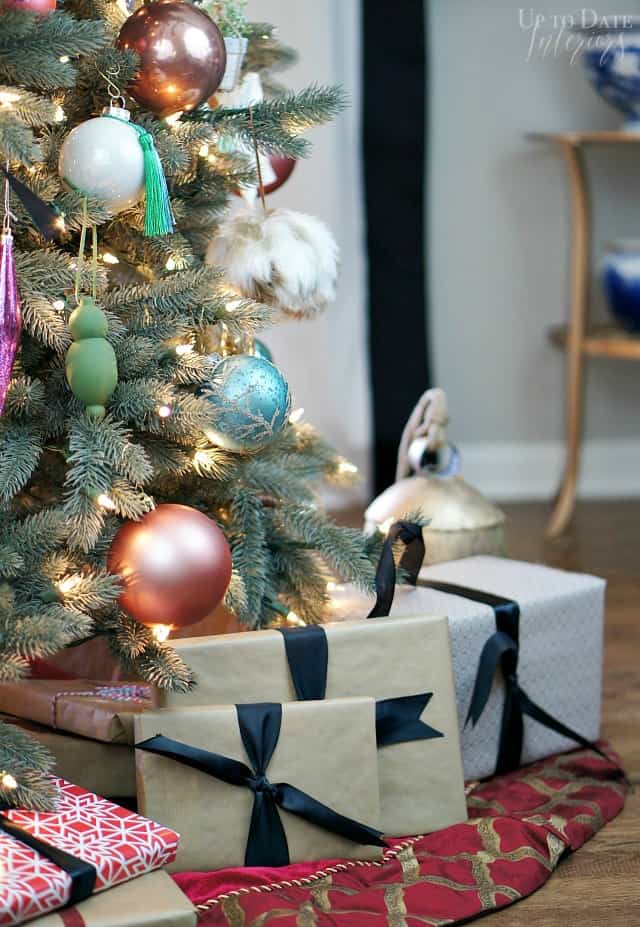
Two things are carrying this tree: temperature and texture. The flocked foliage is cool, the copper is aggressively warm, and that push-pull keeps your eye traveling around the branches. Then there is the white furry pom-pom sitting between smooth glass spheres. Without that one fuzzy outlier, the whole thing reads like a store display. A single matte, tactile ornament every eight to ten inches is enough to break up the shine.
2. Nutcracker and Ballerina Tree with a Plush White Skirt
The nutcrackers are the whole story. Take them out and you are left with a perfectly nice tree that says nothing at all. Six or more wooden figures are tucked in at different heights, and pairing them with soft pink and white ballerinas is what keeps the scheme from tipping into toy-soldier territory — the nutcrackers are stiff and vertical, the ballet ornaments are round and romantic. Regimented against soft. That tension is the entire design.
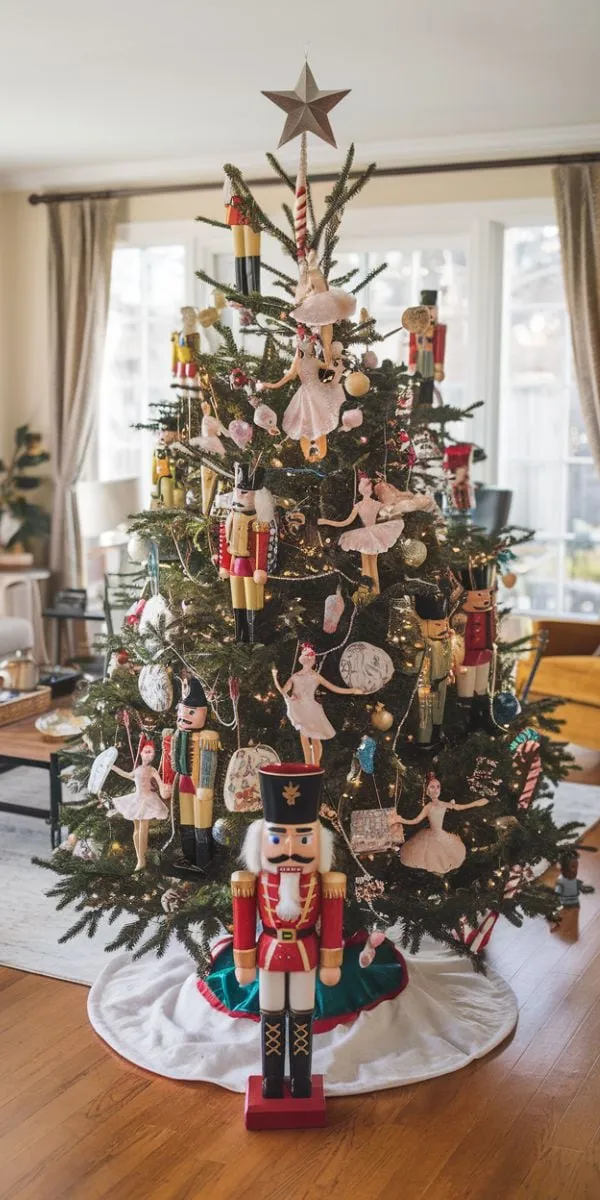
- Tree: real 7-ft Fraser fir, $70–$150 (a faux version runs $120–$300 and comes back every year)
- Lighting: 700 warm white minis, $20–$45
- Textiles: plush white skirt with green and red trim, $30–$70
- Decor: wooden nutcracker ornaments, $4–$12 each (six); ballerina ornaments, $6–$14 each (six); glass baubles, $3–$9 each (about twenty)
- Topper: star, $15–$40
3. Victorian Red Room with a Grand Gold-and-Red Tree
Red patterned wallpaper, red draped valances, and a fully lit red-and-gold tree is a whole lot of red. In person it works because the room is enormous and the dark wood piano and table give your eye somewhere to rest — but in a standard twelve-by-fourteen living room, this scheme goes muddy fast. If you want the Victorian feeling without the visual pileup, keep the ornaments red and gold and let the walls stay cream. The chandelier and lace do the period work for you.
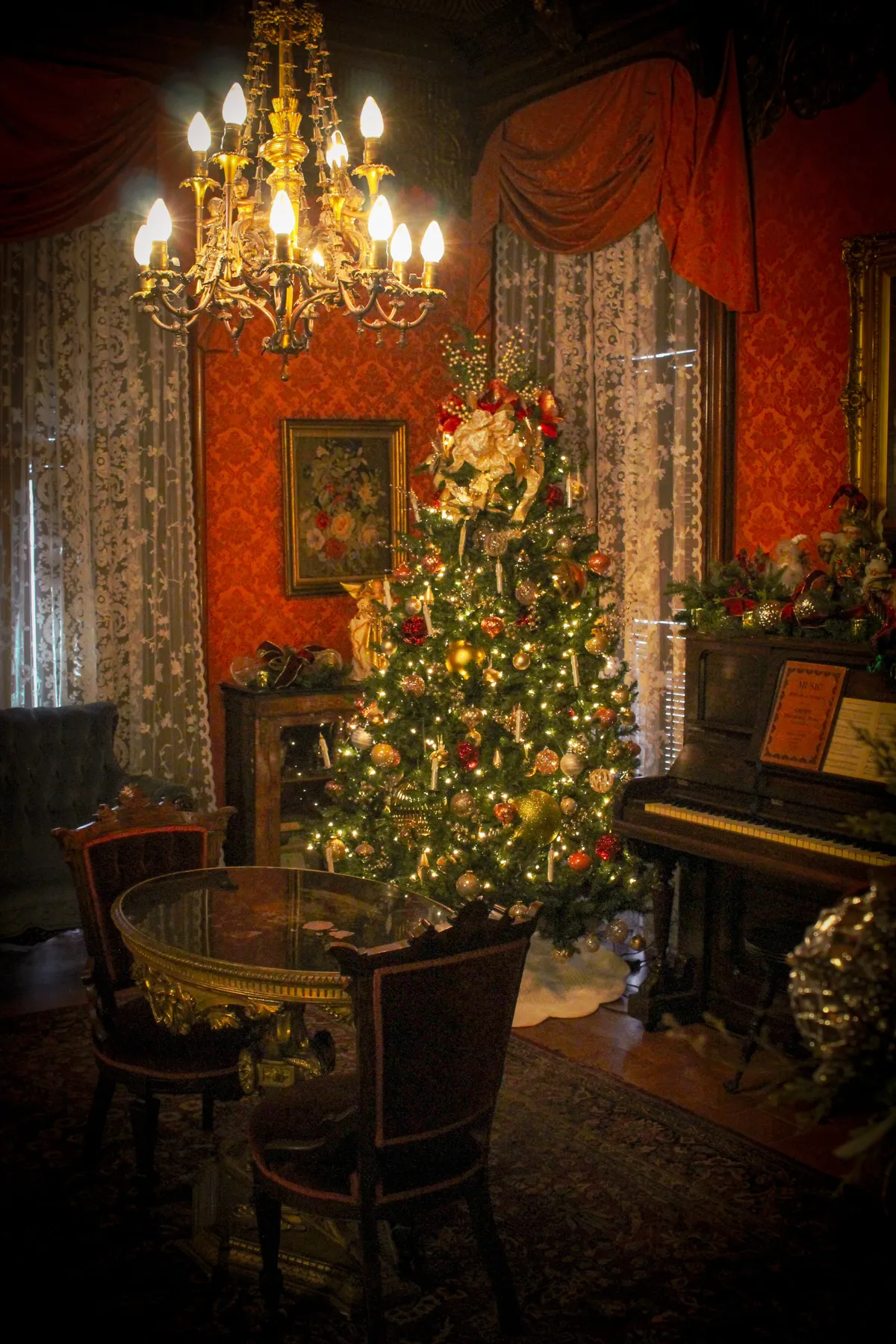
This look needs air: nine- to ten-foot ceilings, at least 200 square feet, and a tree in the seven-and-a-half- to nine-foot range so it does not get swallowed by tall moldings and a hanging fixture. If your ceiling is eight feet, compare with Idea #21 — same warm, layered greenery, scaled down for smaller rooms. In a narrow space, push the tree into a corner and let the valance frame it.
4. Light Green Ornament with Hand-Painted Black Strokes
How to fake this ornament for under ten dollars:
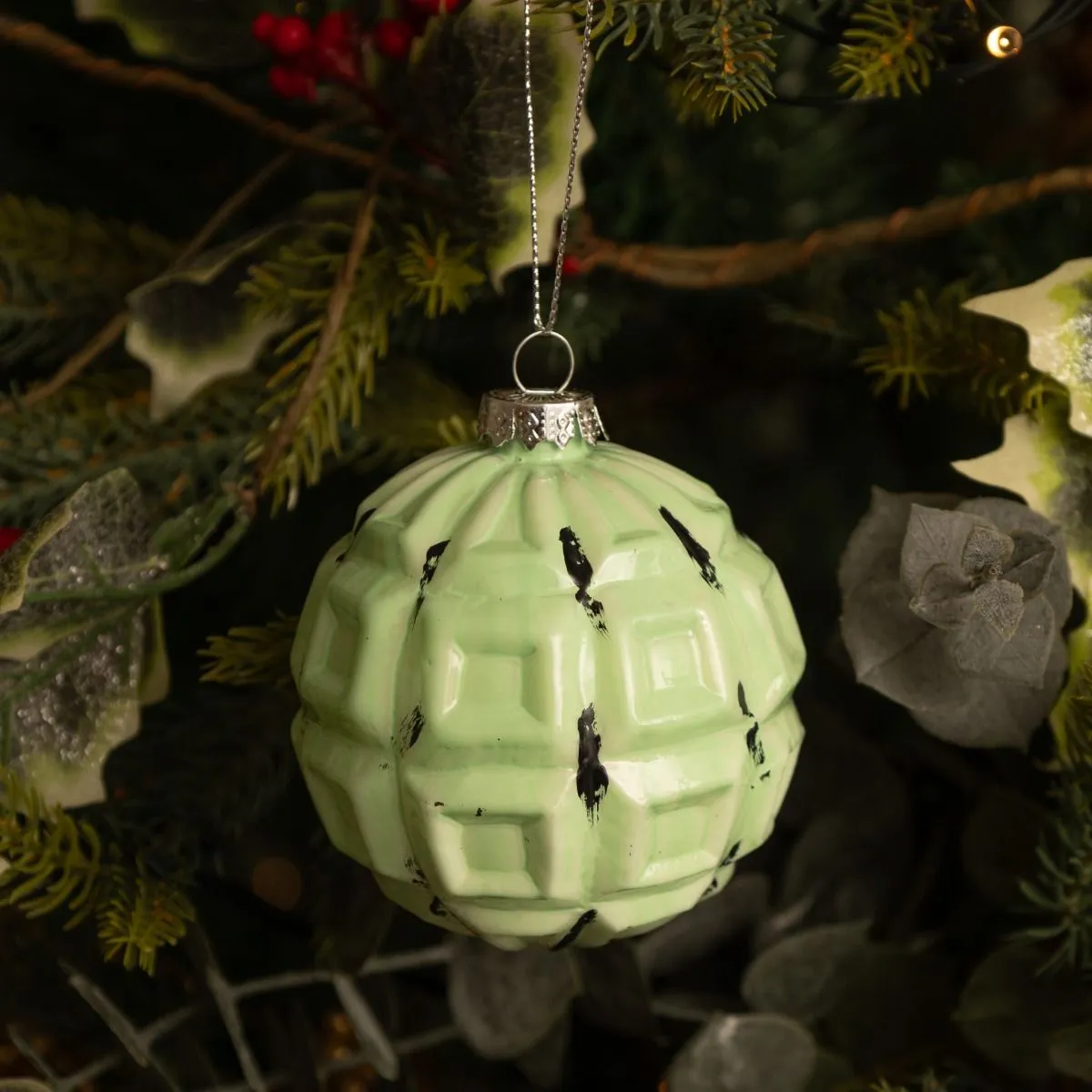
- Buy plain matte light-green baubles — a six-pack runs about $6 at craft stores.
- Wipe each one with rubbing alcohol and let it dry; paint will not stick to factory oils.
- Load a small flat brush with black acrylic and drag it in one quick, confident stroke. Two or three strokes per ornament, no more.
- Let them cure 24 hours, then seal with matte acrylic spray so the black does not chip.
Time: about an hour for six ornaments. Materials: $12–$15.
Scale is everything here. A single oversize ornament photographed this close looks like sculpture, but the same piece on a tree is a punctuation mark — one matte, dark-ink shape floating in a sea of glitter. The red berries and glittered holly behind it stay deliberately small and shiny. Matte next to glitter, giant next to tiny, and the painted detail stays the subject.
5. Ribbed Mercury Glass in Speckled Silver
The formula: 70% deep green foliage + 20% speckled mercury glass + 10% warm amber glow from the lights. That is it — no red, no ribbon. Swap the silver for champagne gold and the tree softens; swap it for bronze and it turns rustic. The percentages matter more than the colors. Once glass exceeds about a third of your ornaments, the tree starts looking like a mirror ball instead of a tree.
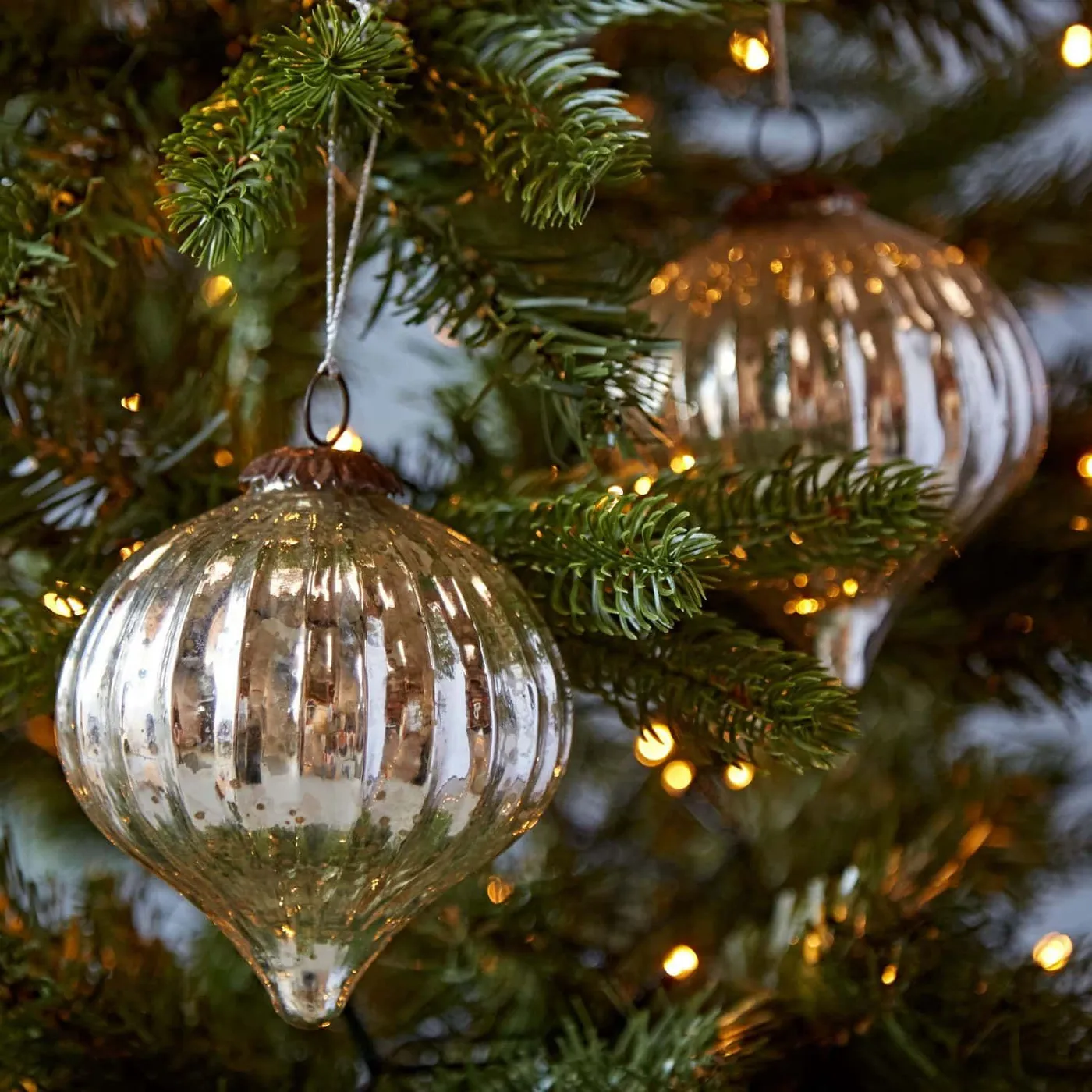
It is the ribbing that does it. Mercury glass is beautiful, but a smooth silver bauble at this scale would just reflect a blob of light. The vertical ribs fracture that reflection into stripes, so the ornament looks lit from inside even when it sits in shadow. If you only buy one style of ornament this year, buy the fluted or ribbed finish — it does more visual work per dollar than any other surface treatment.
6. Faux Pine with Red, Silver, and a Disco Ball
You do not need a $400 ornament set. Dollar Tree sells matte and shiny 2.5-inch baubles in packs of six for about $1.25, and a mixed red, silver, and gold set from Target runs $15–$25 for thirty pieces. Thrift stores and Facebook Marketplace are goldmines for mirrored ornaments because people donate them constantly. Spend your money on lights instead — 700 warm white LED minis for $25 will do more for the glow than any single bauble.
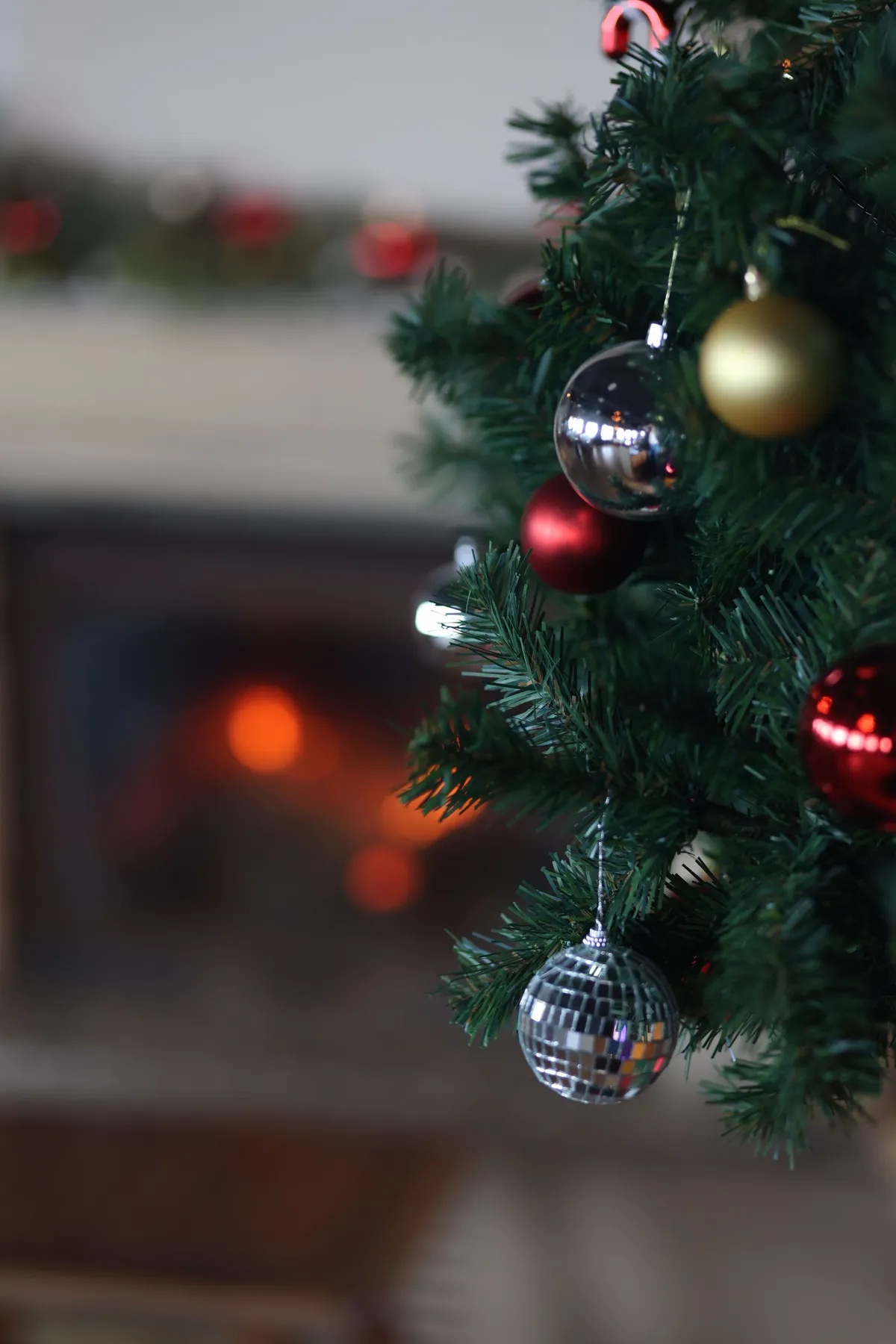
Hang your disco ball ornaments high and near a light strand, and cap yourself at three or four. Mirrored facets multiply whatever light hits them, which is why one disco ball in a dense tree photographs like three. Place them around eye level, roughly five feet, where they catch the room’s ambient light instead of being buried at the bottom where nothing reaches them.
7. Clear Ribbed Glass, Pinecones, and Gold Bead Sprays
- Main: a set of clear ribbed glass baubles, $14–$32 for six
- Filler: gold beaded twig sprays, $8–$16 each (you want four to six)
- Natural: pinecones, free from a walk or $12–$20 for a scented bag
- Lighting: one 100-light warm strand to backlight the glass, $12–$20
- Wall/paint: nothing needed — the glass carries the contrast
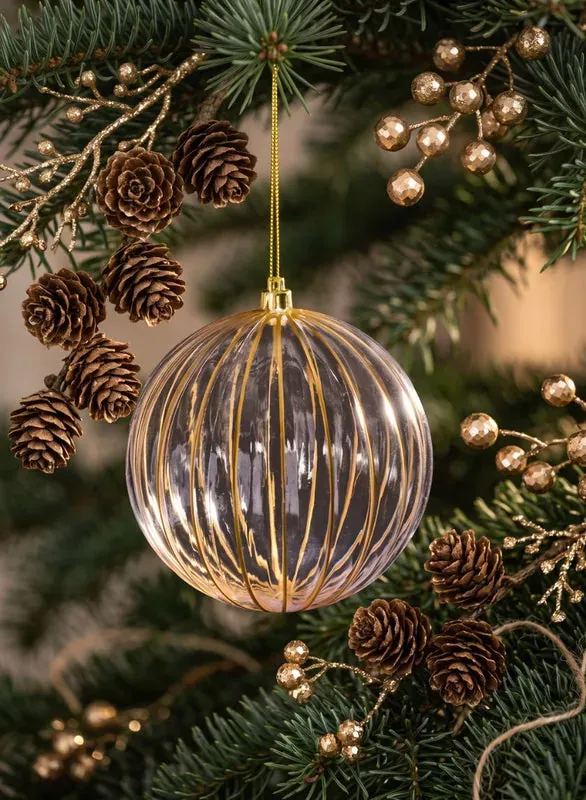
Pinecones shed. Not dramatically, but you will find flakes in the tree skirt every time you move the tree, and the scented ones lose their smell after a single season. Glass ornaments chip at the cap if you stack them in a box, so wrap each one in tissue. Real dried botanicals also collect dust like nobody’s business — a quick pass with a hair dryer on cool air, once in December, handles that.
8. A Flat-Lay Collection of Vintage Glass Ornaments
Collecting is the 2026 holiday trend nobody saw coming. Search interest in vintage glass ornaments has climbed steadily as shoppers push back on matched sets, and the flat-lay — dozens of indented, striped, and hand-painted spheres on crinkled white paper — has become its own genre of photography. These are the ornaments people find at estate sales, church bazaars, and Etsy for $4–$18 apiece. They do not match, and that is the entire point.
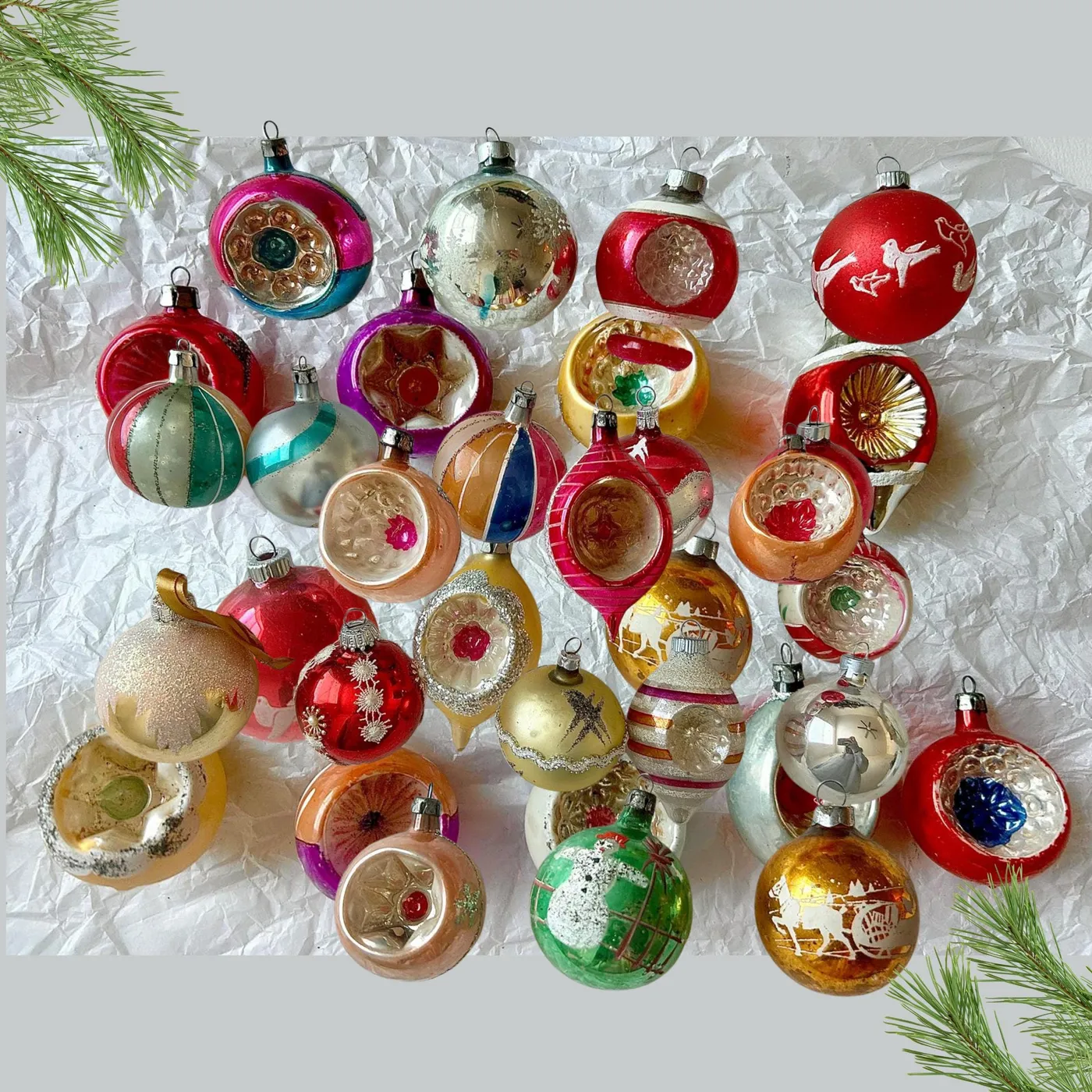
Vintage ornaments are typically smaller than modern ones — most run two to three inches — so they need a smaller tree to look right. A six- to seven-foot tree with a dense silhouette is ideal; on a nine-footer, a collection of forty small glass spheres simply disappears. With eight-foot ceilings, keep the tree at seven feet so there is room for a topper. For tight rooms, see Idea #27.
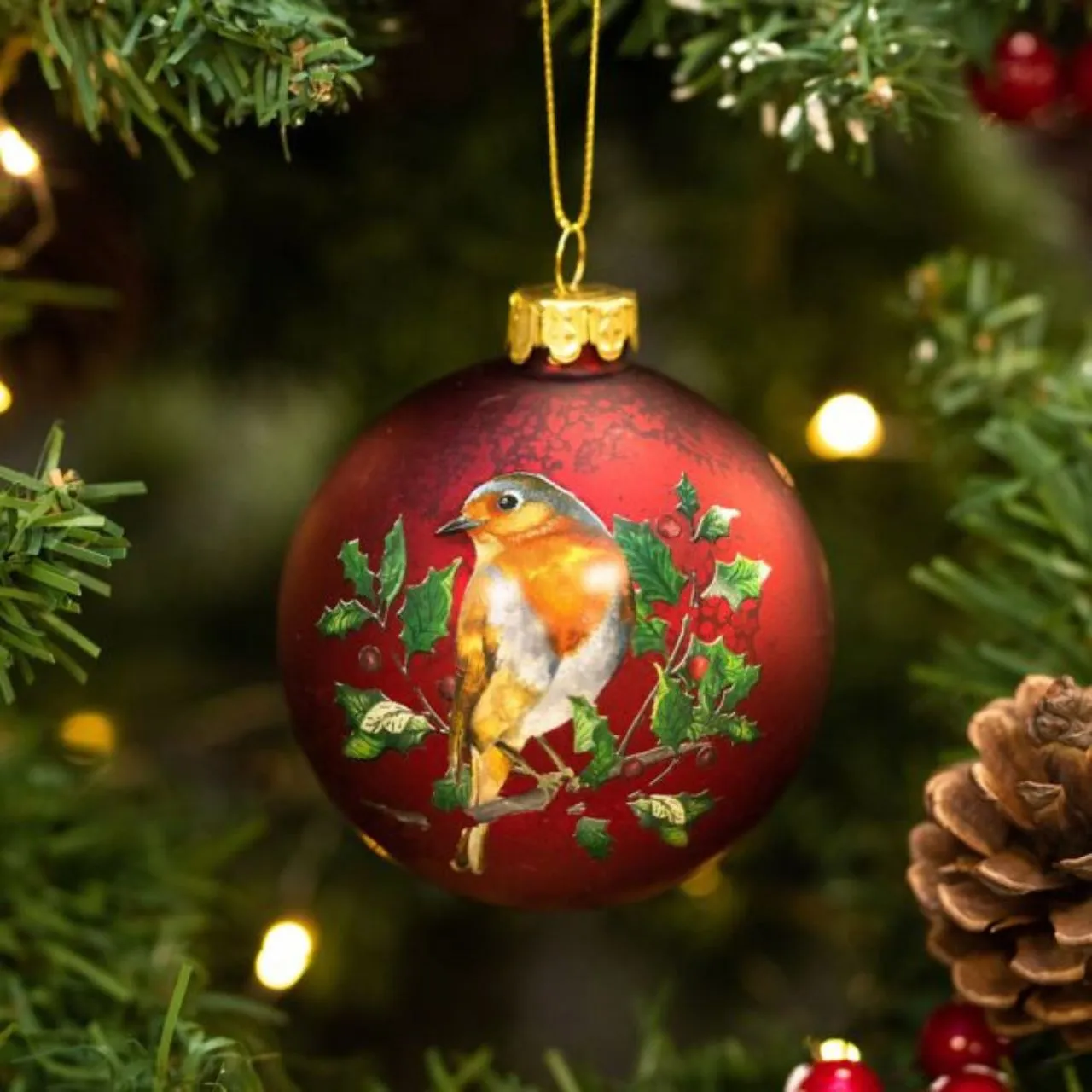
9. Deep Red Bauble with a Painted Robin
Matte finish is the quiet hero. A glossy red bauble would bounce the fairy lights straight back at you and wash out the painted robin, but because this one is matte, the artwork stays readable even with lights glowing behind it — the ornament absorbs light instead of throwing it. The gold-toned cap and thin gold string are deliberate too. They are the only metallic notes on the piece, which makes the painting feel like the subject rather than the packaging.
- Hang every painted or illustrated ornament first, before any filler baubles.
- Face each one outward the moment you hang it, then resist the urge to spin the tree afterward.
- Keep illustrated ornaments ten to twelve inches apart so two pictures never compete.
- Place them between four and six feet, the height most people actually stand at.
- Back each one with a plain matte ornament so the painting gets a clean background.
Time: twenty minutes. Cost: zero.
10. Shiny Red Mercury Glass on Antique Lace
- Measure your tray or shelf — the lace panel needs a two-inch border of visible wood on all sides.
- Check the lace for existing tears; antique cotton shreds further once it is weighted down with glass.
- Confirm the surface is not in direct sun, which fades both the red glass and the lace.
- Count ornaments against the tray: three to five small baubles is the sweet spot, seven reads as clutter.
- Decide where the mini evergreen goes before you place anything, because it is the anchor.
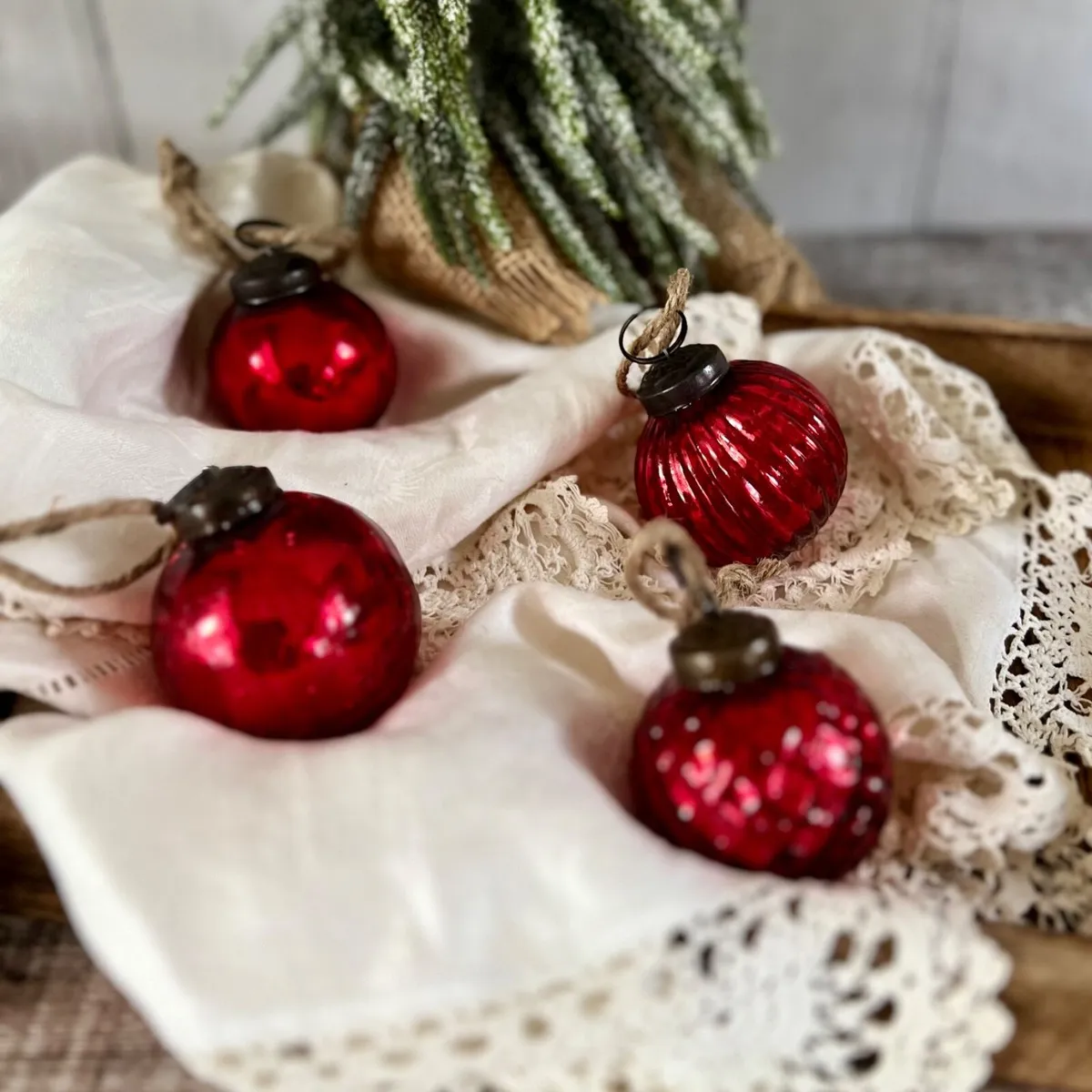
Shiny mercury glass scratches, and it scratches visibly. If you style this on a low coffee table, kids and pets will reach it, and a dropped red bauble on a wood floor leaves a permanent mark on both. Antique lace also yellows unevenly and cannot be bleached. If you want the look with zero anxiety, display it above four feet and use reproduction mercury glass at $3–$6 per ornament instead of $20 and up.
11. Glass Reindeer in Polka-Dot and Patterned Scarves
Whimsical figural ornaments read as clutter when they are spread evenly across a tree. Cluster them. Hang three at a time within a twelve-inch area, then leave eighteen inches of plain greenery before the next group. Odd numbers look intentional; even numbers look accidental. And stagger the clusters vertically — one at five feet, one at three, one at six — so your eye travels around the tree instead of scanning a single row.
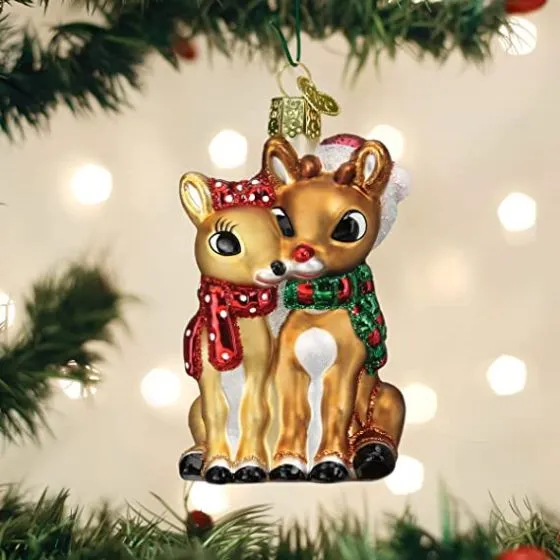
The scarves are the thing. A plain glass reindeer is a nice ornament; a reindeer wearing a red polka-dot scarf and a green patterned one is a character. That tiny painted detail is doing all the nostalgic work, and it is the reason you smile instead of nodding politely. When you shop vintage or secondhand, always choose the figure with one unexpected painted detail over the smooth, perfect one.
12. Miniature Ornament Tree on a Gold Pedestal
The formula: 80% ornament mass + 15% gold beaded garland + 5% gold pedestal base. Those proportions are almost absurdly lopsided on purpose, because this little tree is nearly all decoration and no foliage. Tuck the beaded garland between the baubles instead of draping it on top, and let the pedestal stay plain. Swap the pink and mint ornaments for red and green and the same formula becomes a tiny traditional tree; swap for silver and white and it turns icy.
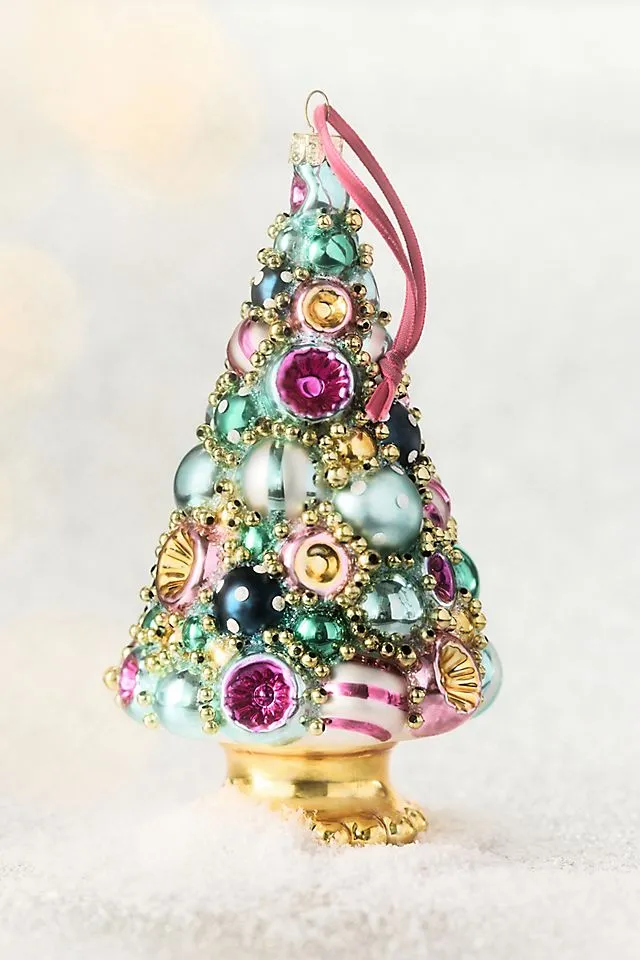
Vintage versions of these ornament trees sell for $80–$250 at antique malls, which is a lot for something eight inches tall. Build your own: a $6 cone-form styrofoam tree from a craft store, a candleholder for the pedestal, and every stray ornament you have accumulated for a decade. Hot glue the biggest baubles at the bottom and work upward, filling gaps with dollar-store bead garland. Under $25 total.
13. Brass Star Ornament with a Crystal Drop
Ornaments with real hardware need breathing room, not density. On a seven-foot tree, hang three to five of them across the front-facing third, spaced at least fourteen inches apart, between four and six feet high. On a tabletop tree under three feet, one is plenty. In a room with a chandelier or pendant — like the Victorian setup in Idea #3 — you can hang these where they will catch and refract that fixture’s light.
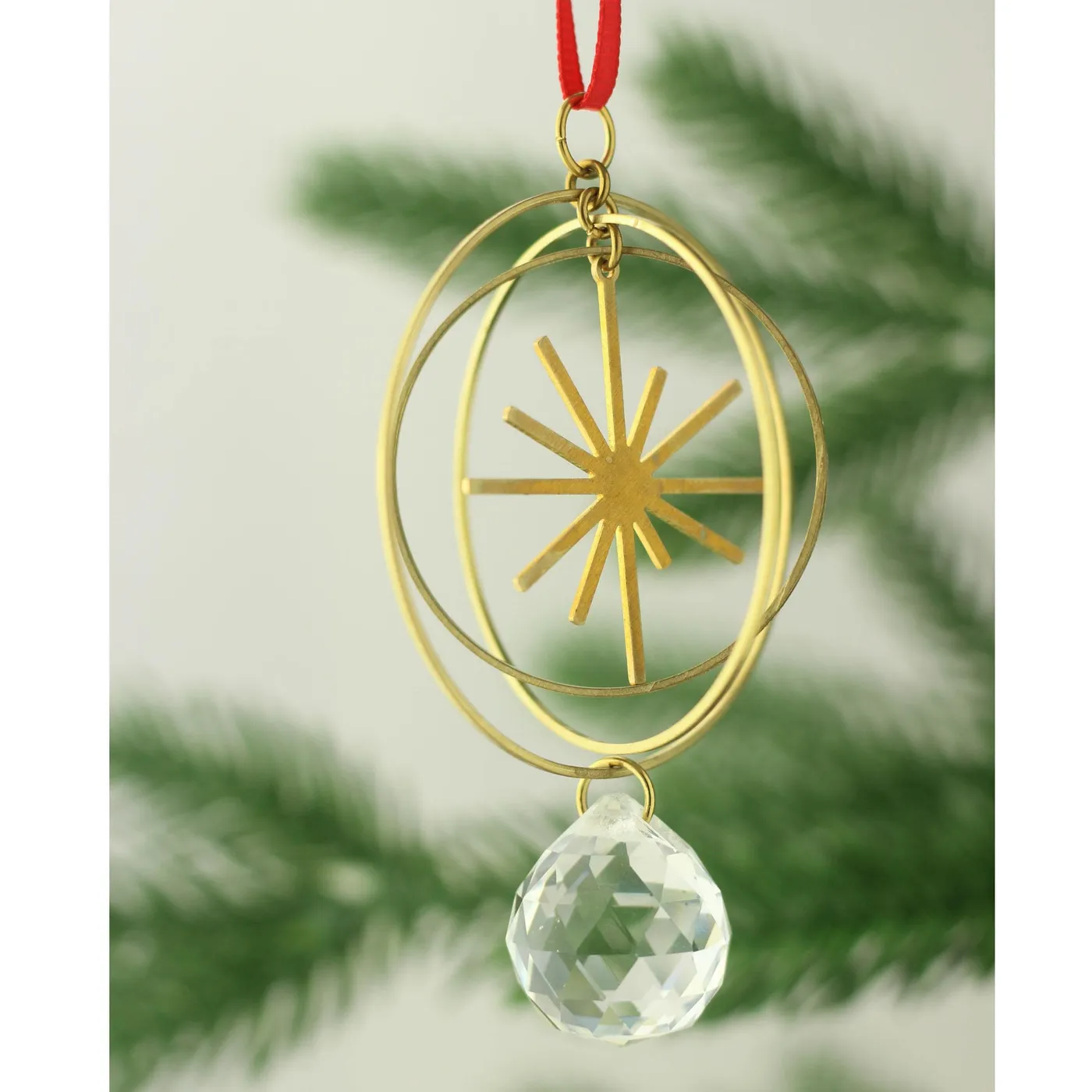
Swap the metal hooks for ribbon and nothing about the design changes, but everything about how it looks does. Cut eight- to ten-inch lengths of quarter-inch satin or grosgrain, thread the ribbon through the cap, and tie a bow. It hides the hardware, holds the ornament straighter, and keeps heavier pieces from popping off the branch on a dry winter day. One roll covers an entire tree.
14. Green Ceramic Tree with a Glowing Yellow Star
Ceramic trees are nearly indestructible until they are not. The bulbs are the weak point — most use small push-in plastic wedges that loosen over the years, and replacements are still sold in mixed packs for $6–$12. Never yank a bulb out by the shard; grip the base. Keep the tree away from radiators, since older wiring gets brittle near the plug. Wipe the glaze with a damp cloth, never soak it, and keep it out of the dishwasher forever.
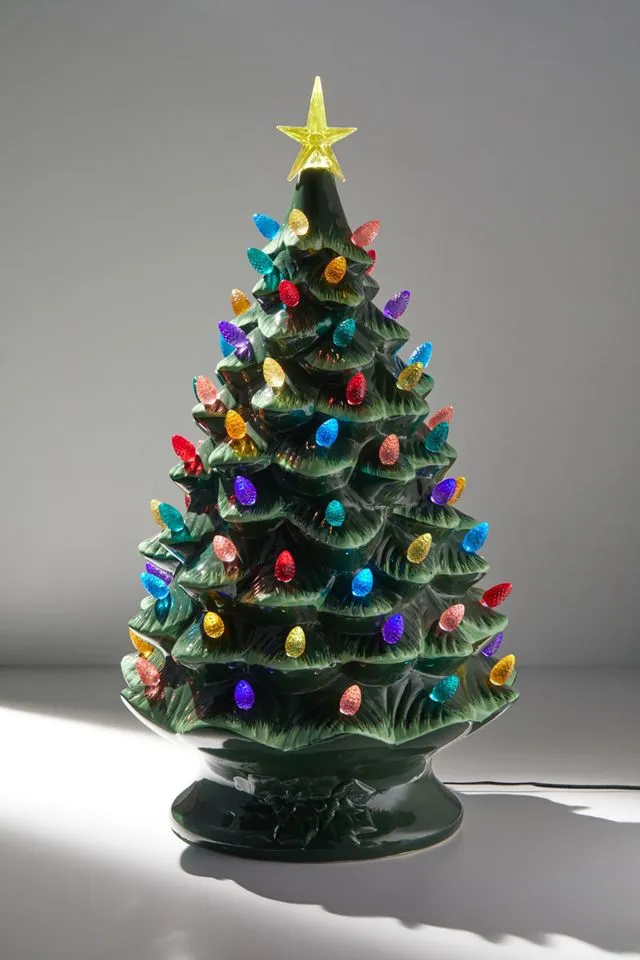
Part of the charm is the light source itself. Those faceted plastic bulbs throw tiny colored stars onto the wall behind the tree, a soft, uneven, slightly imperfect glow that a string of LEDs simply cannot reproduce. The yellow star on top is the only warm note among the cooler reds, blues, and purples, which gives your eye a place to land. Perfect symmetry keeps the whole thing feeling like a display piece rather than clutter.
15. Nativity Bauble with a Royal Blue Satin Ribbon
- Decor: nativity scene bauble, $9–$22 each; a set of three runs $28–$55
- Textiles: royal blue satin ribbon, $4–$8 for a 10-yard spool
- Tree: snow-flocked 6-ft artificial, $90–$220
- Gift wrap: patterned paper and gold ribbon, $15–$30
- Wall/paint: none — the flocking and blue ribbon carry the whole look
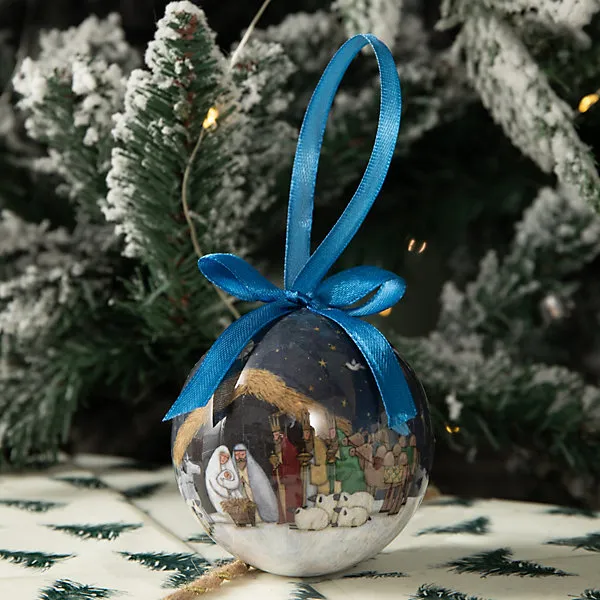
Faith-forward holiday decorating has been climbing quietly for three years. Interest in nativity ornaments is up, and shoppers are choosing fewer, more meaningful pieces over bulk sets — one ornament, one story. The royal blue and white palette helps, because it reads as reverence rather than kitsch. That is a big part of why it is replacing red-and-green on a lot of mantels in 2026.
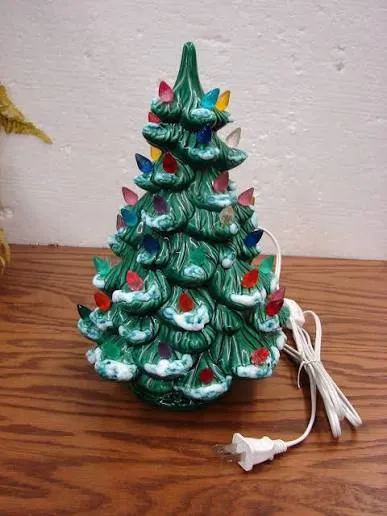
16. Ceramic Tabletop Tree with Snow-Tipped Branches
Nobody warns you about the cord. Most ceramic tabletop trees come with a short white cord and no switch, so you will be crawling behind the console to unplug it every night unless you add an inline cord switch for about $10. The bulbs also get warm — not hot enough to burn, but warm enough that you should not tuck one against a stack of wrapping paper. And if you have a cat, this is a floor-bound toy.
- Clear a surface at least fourteen inches wide so the flared base is not hanging off an edge.
- Run the cord along the back and secure it with a clear cord clip, with no loops to grab.
- Plug into an inline switch or a smart plug so you are not reaching behind furniture.
- Style a small wood riser or linen runner underneath to separate it from the tabletop.
- Add one fresh pine sprig beside it for a scent cue and a texture contrast.
Time: fifteen minutes. Cost: $0–$15.
17. White Tinsel Garland Draped Through Green
The tinsel garland is the design. Take it away and you have a plain green tree with white balls — pleasant, forgettable. That thick iridescent strand gives the branches a spine, and the way it twists rather than drapes makes the tree look decorated rather than dressed. Everything else is support staff: smooth matte white spheres that echo the garland’s color without competing with its shine.
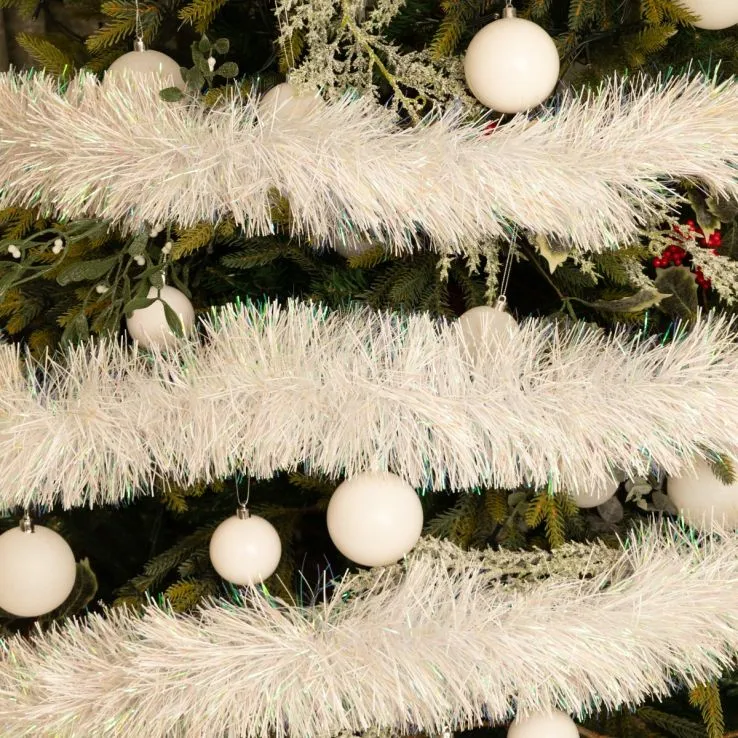
The formula: 60% green foliage + 30% white and iridescent + 10% matte. The white count is high, which is exactly why the matte balls matter — they are the only non-reflective surface in the scheme, so they give your eye a place to rest. Trade the white tinsel for silver and the tree turns colder and more modern; trade it for champagne and it goes vintage. Keep the balls matte either way.
18. A Toddler, a Beaded Garland, and a Big Window
The most-saved holiday photos stopped being perfectly styled trees and started being people mid-decorating, holding a toddler, garland still unspooled. In 2026 that is the dominant aesthetic — proof of life over polish — and it happens to be honest about how decorating actually goes. The red beaded garland here is the workhorse of nostalgic trees: inexpensive, forgiving when a kid yanks it, and it fills a branch gap in seconds.
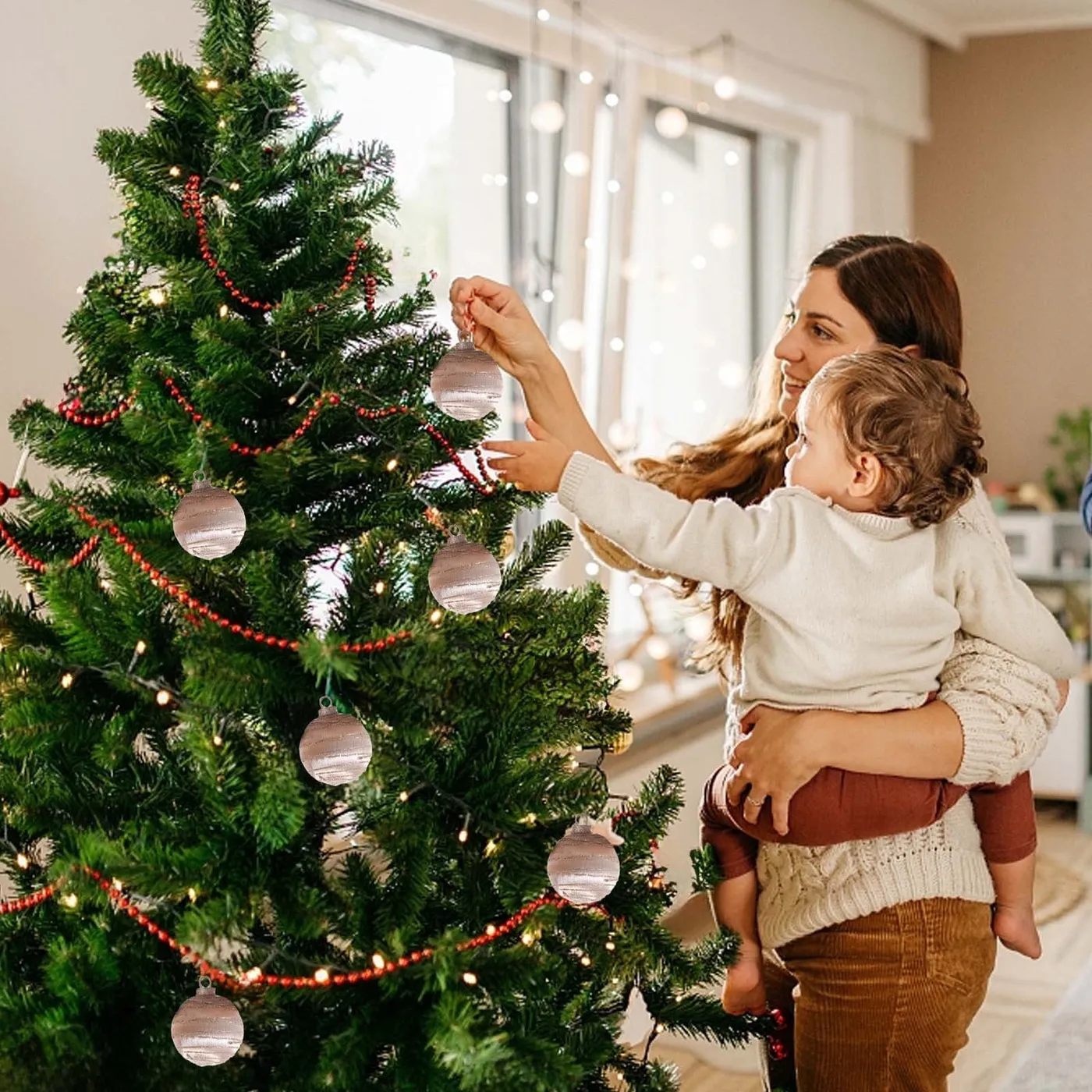
If you are placing your tree near a big window, keep it eighteen to twenty-four inches off the glass so daylight rims the branches instead of blowing them out. Trees under seven feet suit rooms up to about 200 square feet; anything larger and you want eight feet or more. Windows with direct afternoon sun will fade dyed ribbons and cheap beads within two seasons, so look at the fabric bows in Idea #22 for something that holds up better.
19. Cozy Tree with Vintage Glass and Beaded Garland
Density plus distance creates the glow. There is no single showstopper here — the tree works because ornaments are packed at roughly twenty per square foot of front-facing surface, which sounds like a lot until you realize gaps are what make trees look sparse in photographs. Wrapped presents on the wood floor extend the composition past the skirt and pull the eye downward, which makes the tree read taller than it actually is.
Use 100 lights per foot of tree height, and do not wrap the strand along the branch — weave it in and out, pushing the wire toward the trunk so the light comes from inside the tree rather than sitting on top of it. On a seven-foot tree that is 700 lights. A strand of 100 warm white LEDs draws about six watts, so even 700 lights costs pennies to run all season.
20. Retro Striped Mercury Glass Trees and a Waving Santa
Original 1950s striped mercury glass trees run $60–$180 apiece at antique malls, and glossy Santa figurines can hit $90. You can fake the whole vignette for under $40: dollar-store glass cone trees, a can of looking-glass silver spray paint, and craft paint in red, green, and magenta for the stripes. Mask vertical lines with painter’s tape, spray, then stripe. A thrifted ceramic Santa hit with clear gloss reads nearly period.
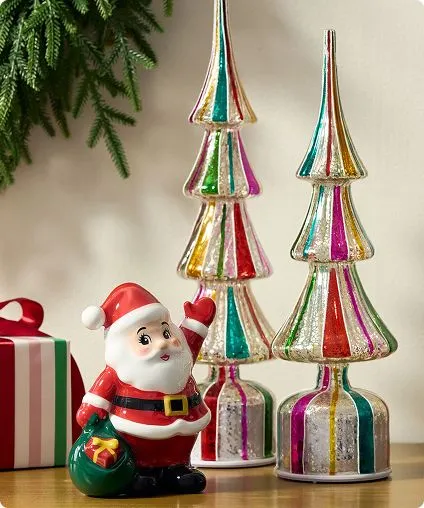
- Decor: two tiered mercury glass trees, $60–$180 each new, $20–$40 thrifted
- Accent: glossy ceramic Santa figurine, $15–$90
- Greenery: pine bough cluster, $8–$25
- Gift: one striped wrapped box, $5–$15
- Wall/paint: none — a bare wood tabletop is the right backdrop
21. Dried Orange Garland and White Velvet Bows
- Slice oranges a quarter inch thick — thinner burns, thicker never dries.
- Blot with a paper towel and bake at 200°F for three to four hours, flipping once.
- Cool completely for a full day, or they will mold inside the garland.
- Thread a needle with jute twine and run it through the rind about an inch from the edge, spacing slices two inches apart.
- Hang it and let the ends drape in a shallow U between two anchoring points.
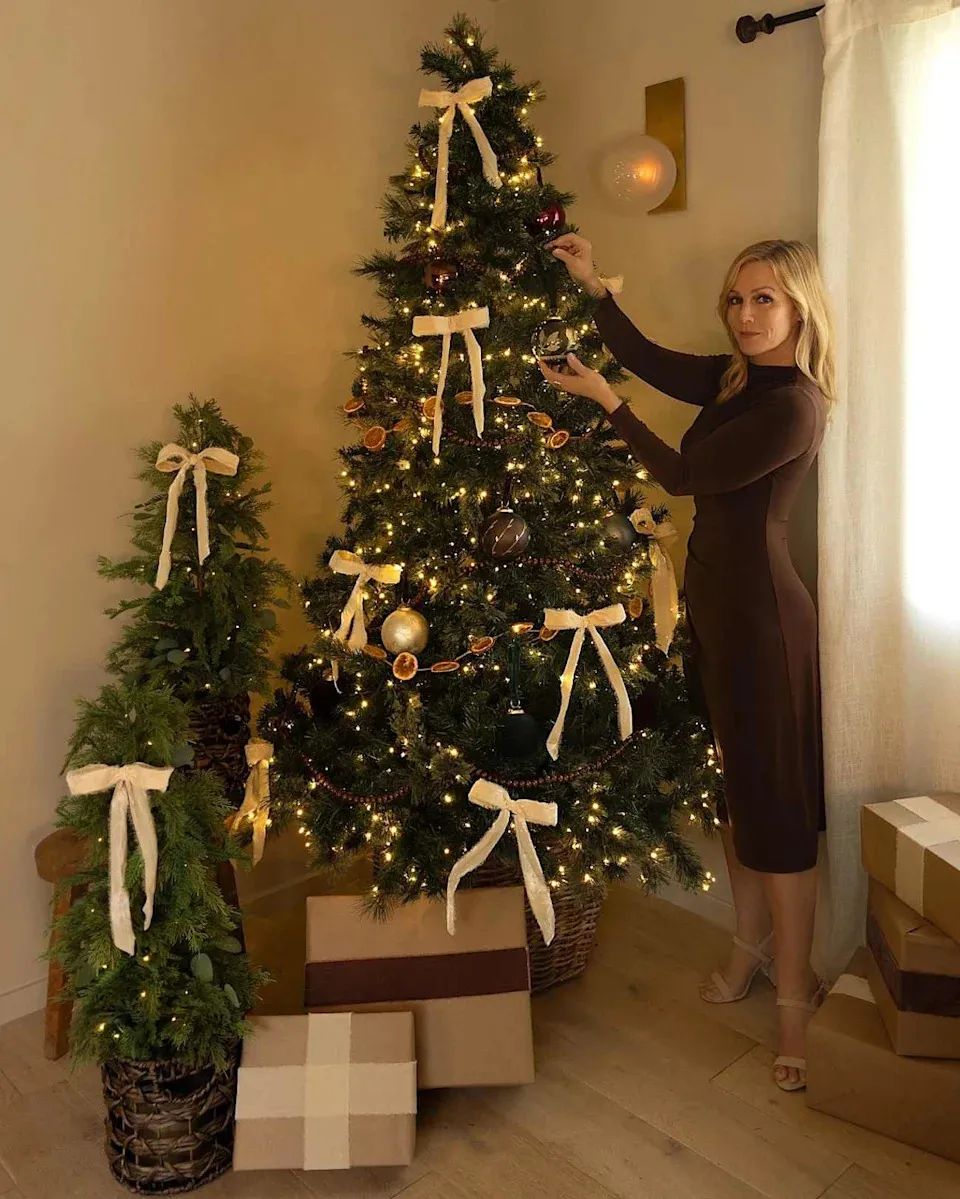
Time: four to five hours, mostly hands-off. Cost: $10–$14 for oranges and twine.
The formula: 60% green foliage + 25% warm beige and cream + 10% natural wood and brown + 5% brass. There is barely any red, which is precisely why this feels calmer than a traditional tree. Push the beige higher and it goes Scandinavian; push the brass higher with matching sconces and candlesticks and it turns slightly glam. Four or five white velvet bows, not fifteen.
22. Green and White Tinsel Spiraled Tight
- Measure height and circumference — you need roughly two feet of garland per foot of tree.
- Buy two shades if you are spiraling, plus one spare of each; tinsel always runs short.
- Check that your skirt or collar fits the stand before you wrap, not after.
- Decide your bow count up front — twelve to twenty small bows, not one per branch.
- Vacuum-proof the area, because static makes tinsel stick to everything nearby.
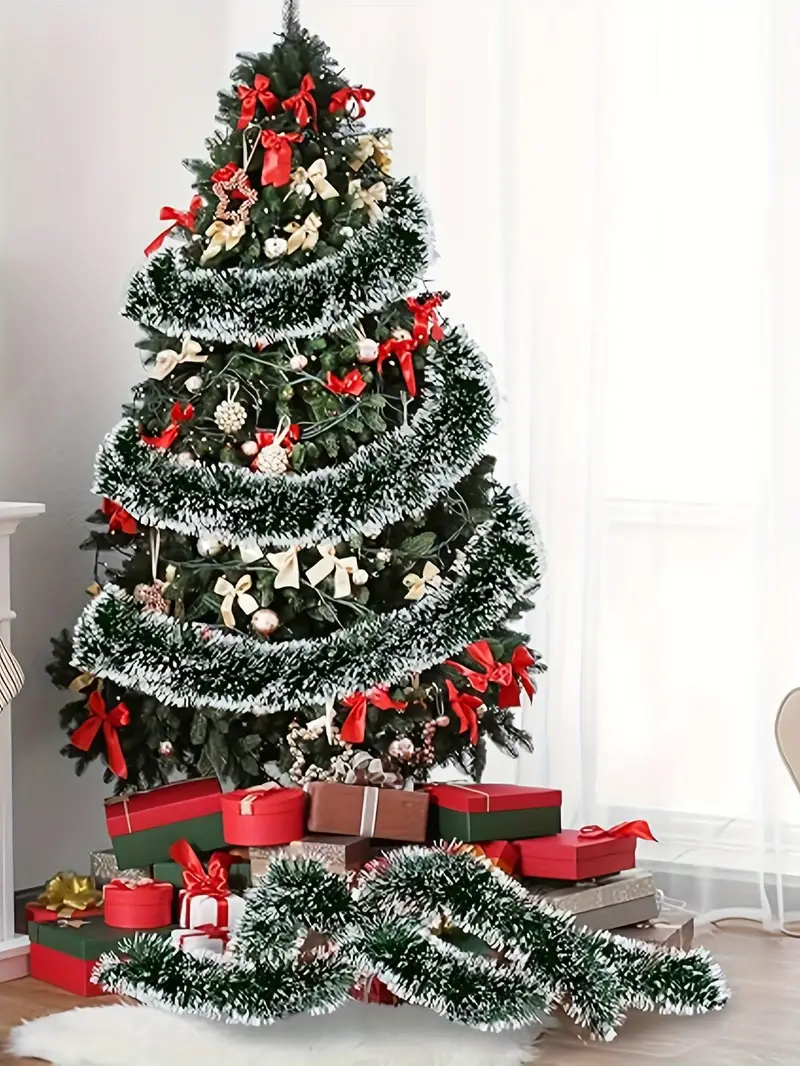
Tinsel sheds for years. Not the first season — the third, when you open the storage bin and find a snowstorm. It is also a static magnet, so it grabs dust, pet hair, and loose glitter. And if you have a cat, you will be fishing strands out of places you would rather not think about. Fabric ribbon or wooden bead strands give you the same spiral effect with none of the shedding.
23. Clear Glass Nativity Globe on a Flocked Branch
The scene is inside the glass. A printed nativity ornament would be perfectly fine; this one is painted on the interior surface, which means the depth of the glass adds a soft, slightly hazy atmosphere that no exterior print can duplicate. It is the same old technique used on vintage indented ornaments, and it is why these read as heirlooms rather than souvenirs. The hand-tied royal blue satin ribbon is the second-best detail.
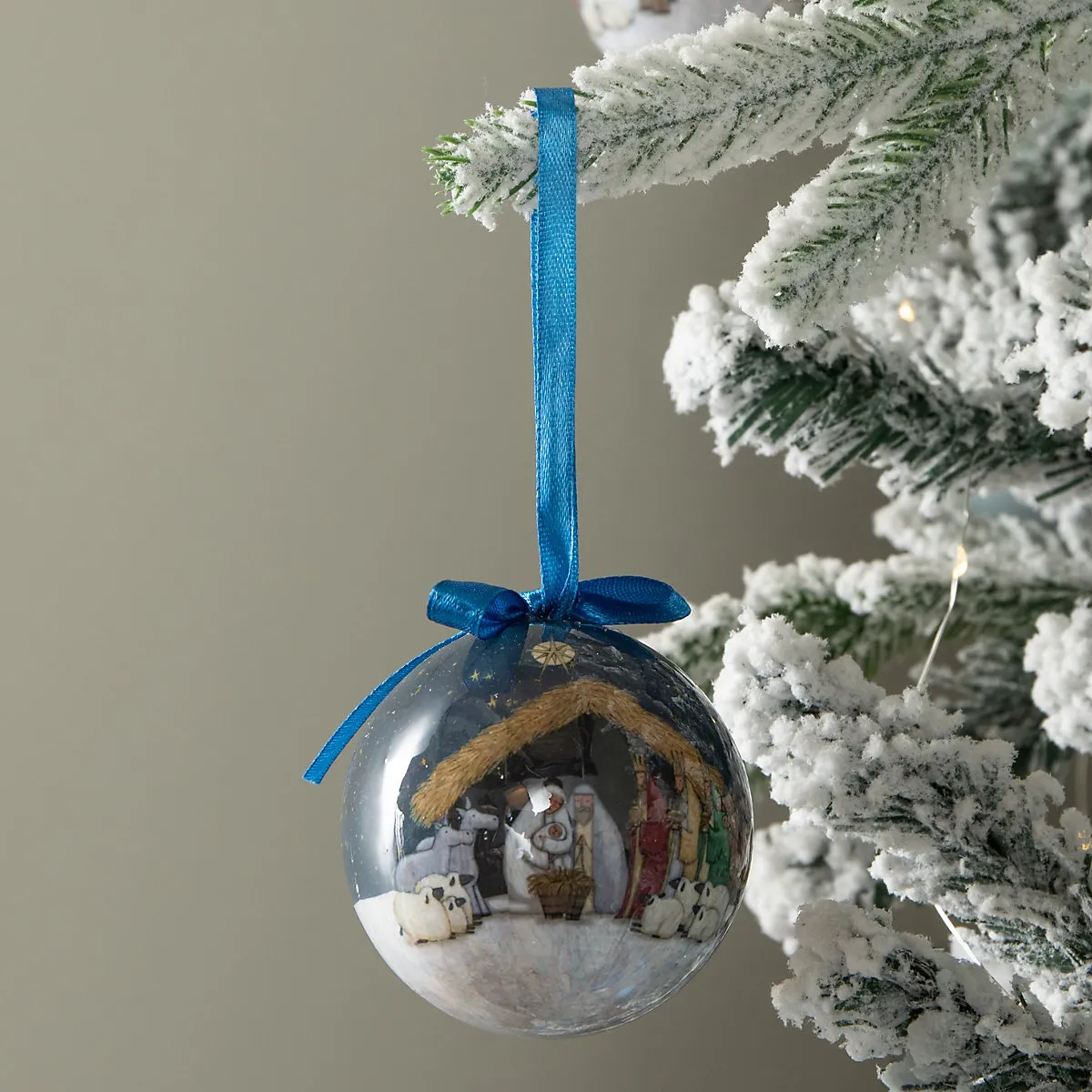
You can build one for about $14. Buy clear fillable glass globe ornaments ($10 for six), print a small nativity image on vellum, and curl it inside so it presses against the glass wall. Thread a royal blue ribbon through the cap and tie a bow. It will not have the painted depth of a true interior-painted globe, but from arm’s length on a flocked branch, nobody will know.
24. Beaded Garlands and Vintage Baubles at 7.5 Feet
A seven-and-a-half-foot tree needs about twenty-seven feet of garland if you want three passes, and that is the number most people underestimate. For rooms between 150 and 300 square feet, 7.5 feet is the sweet spot — tall enough to make a statement, short enough that you can reach the top without a ladder. Under 150 square feet, drop to six or 6.5 feet and borrow the compact formulas from Idea #10 and Idea #12.
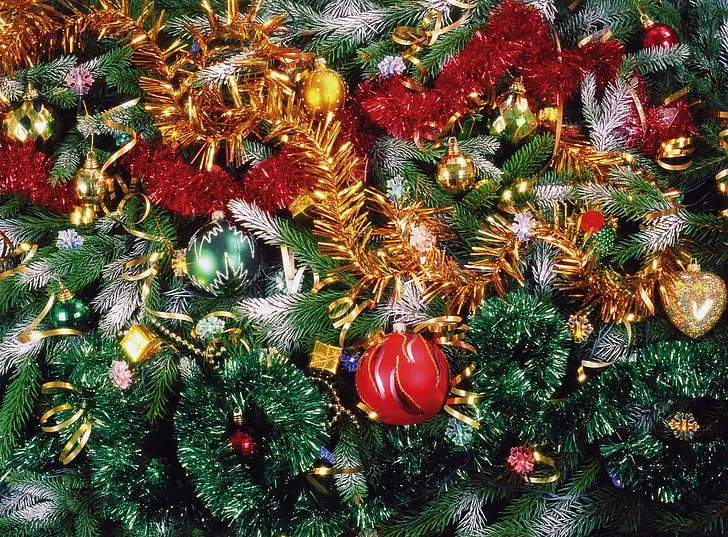
Drape garland on a 45-degree diagonal, not a horizontal loop. Horizontal swags flatten a tree into a wedding cake; a diagonal that travels upper-left to lower-right and back keeps the eye moving around the whole silhouette. Anchor it every eighteen inches by twisting a branch tip around the strand — no wire, no visible ties. Work bottom to top so the loose ends hide in the upper branches.
25. Mercury Glass Teardrop with an Indent Reflector
Mercury glass is silvered on the inside, and that silvering fails first. Never submerge one in water — moisture gets past the cap and clouds the interior permanently. Dust with a soft dry brush or microfiber cloth, since paper towels scratch the exterior. Store in a single layer with tissue between pieces, and keep them out of attic heat, which speeds the flaking that turns silver to gray. Treated gently, good ones last decades.
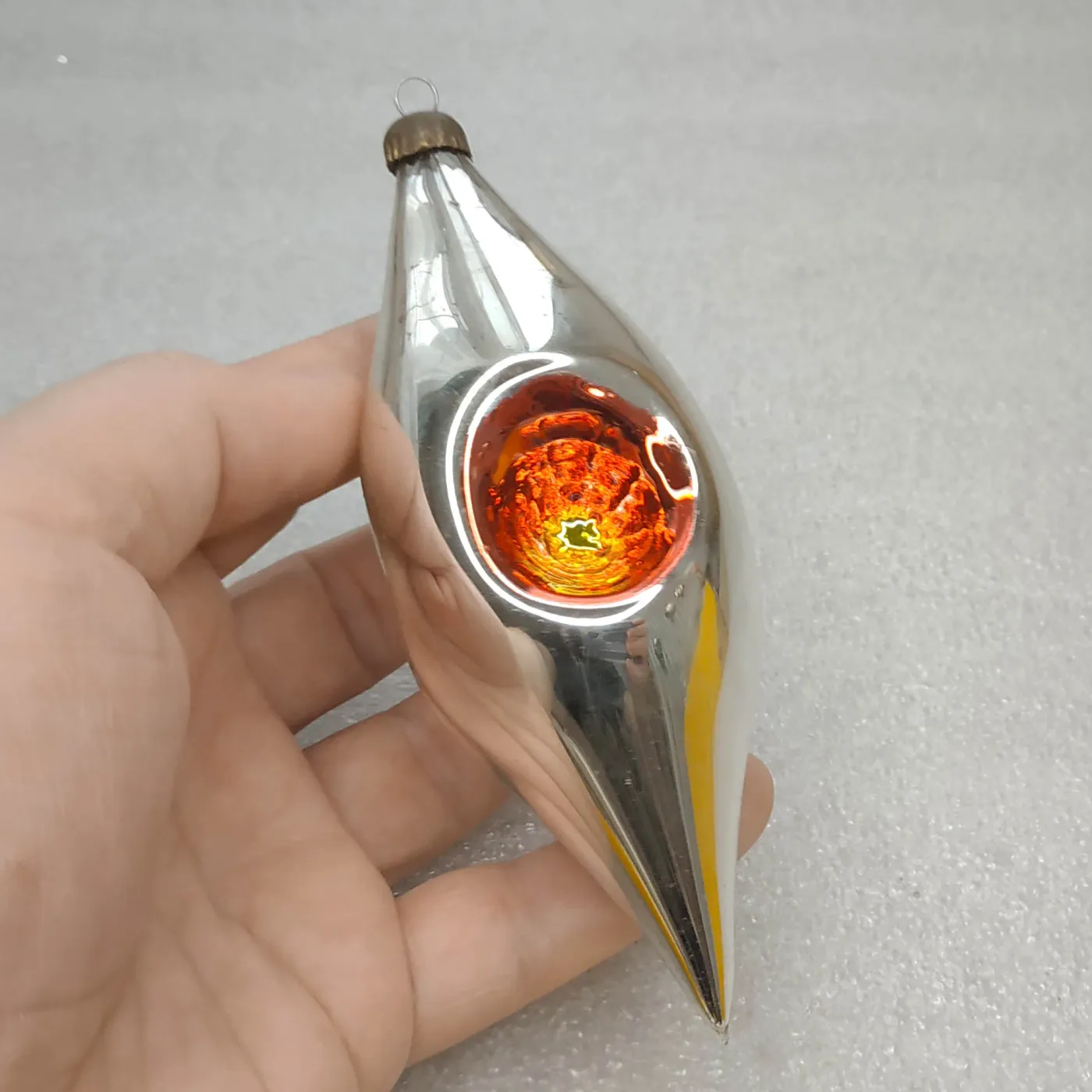
The indented reflector is the point. That round dimple in the center is not decoration — it is a small concave mirror that collects light and throws it back in orange and yellow, which is why this ornament looks lit even when it is not. Vintage glassblowers put reflectors on dozens of shapes for exactly that reason. On a modern tree, three or four reflective pieces do the work of an entire extra strand of lights.
26. Shiny Red and Silver Glitter on Evergreen
- Decor: thirty mixed red and silver ornaments, $18–$45
- Accent: one silver glitter statement ornament, $6–$14
- Lighting: 600 warm white LED minis, $22–$40
- Tree: 6.5-ft artificial, $80–$200
- Wall/paint: nothing — the ornaments carry the contrast
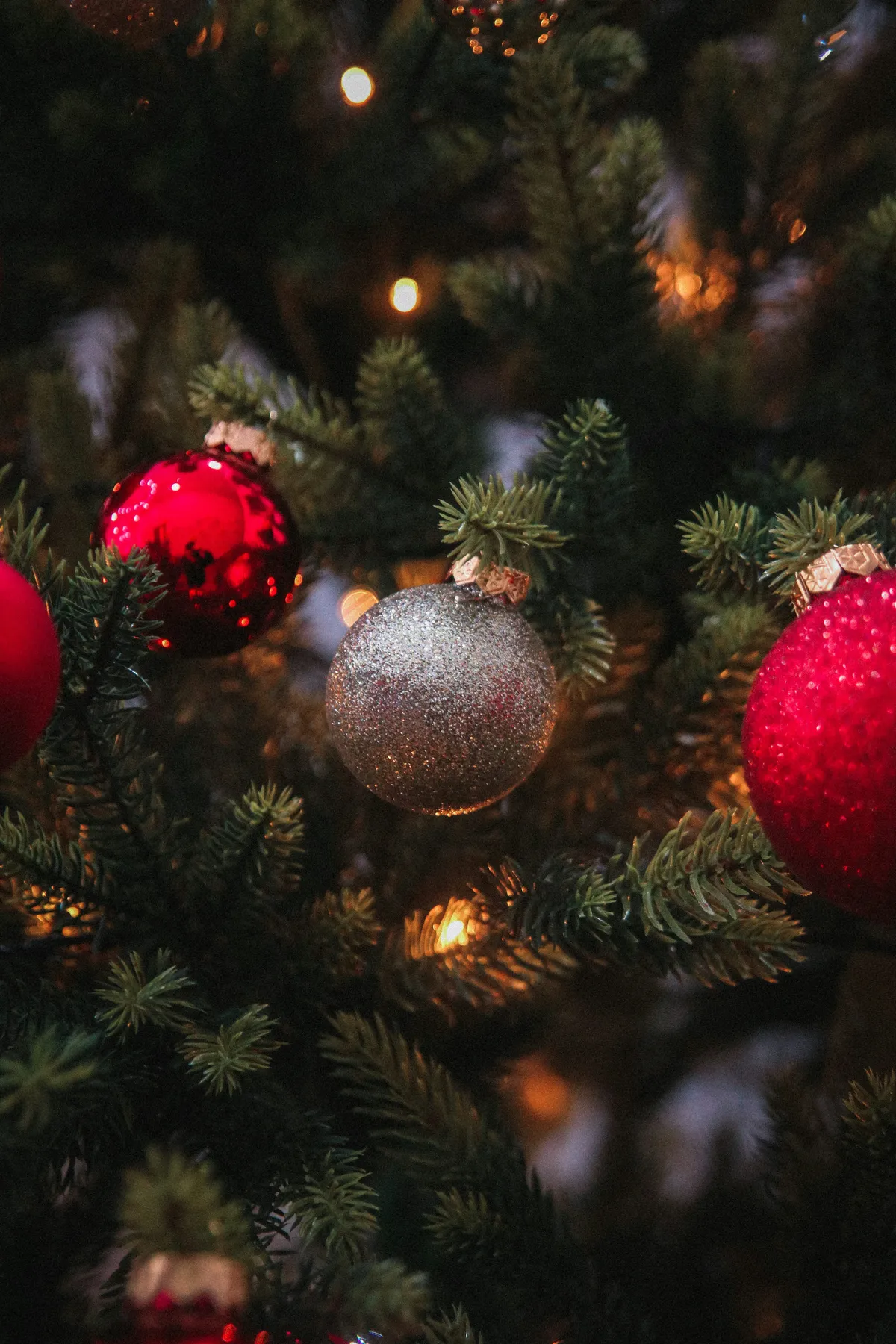
- Test-hang one glitter ornament and check for shedding before committing.
- Seal loose glitter with a light coat of matte acrylic spray, held ten inches away.
- Let it dry thirty minutes outside or in a garage — the fumes are strong.
- Hang glitter pieces above the light strands so stray flecks land on needles, not bulbs.
- Vacuum the tree skirt weekly with a brush attachment, never a crevice tool.
Time: forty-five minutes including drying. Cost: about $8.
27. Vintage-Style Baubles in a Wicker Basket Skirt
A wicker basket looks charming right up until you are watering a live tree inside it. The basket traps moisture against the stand, which warps the wicker and stains wood floors, and lifting a heavy basket to check the water level gets old by week one. Use a basket with a hidden liner, or commit to a faux tree if this is the look you want. With a live tree, a flat collar that lifts off is the honest choice.
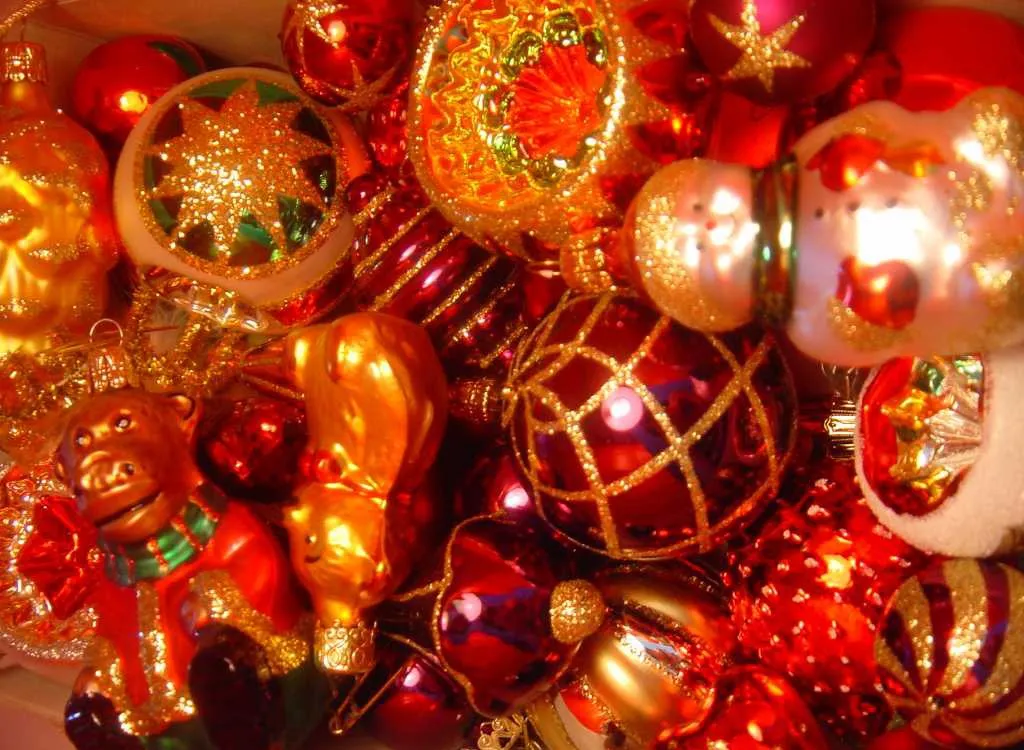
Standard tree stands run twenty to twenty-four inches across, so a basket skirt needs an interior diameter of at least twenty-four inches and a rim height of ten to twelve inches to hide the stand on a 7.5-foot tree. On a six-footer, eighteen inches is plenty. If your room is tight, compare with the compact styling in Idea #8 — same vintage baubles, half the footprint on the floor.
28. Glossy Ceramic Tree with Molded Tiered Branches
Original molded ceramic trees from the 1960s and 70s sell for $45–$150 depending on size and condition, and the rare large ones go higher. You can get the same silhouette new for $18–$35 at big-box stores and craft shops, and the newer ones often have better wiring and an actual switch. If you are hunting vintage, shop in July, when antique malls price ceramic trees at offseason rates instead of December markups.
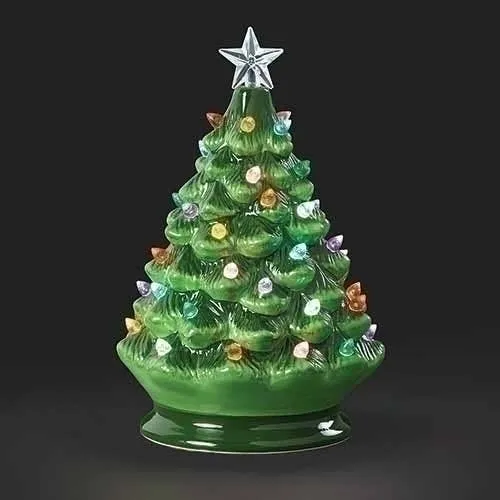
The tiered branches work because they repeat. Eight or nine identical scalloped layers stacked on a single vertical axis is pure symmetry, and symmetry reads as intentional from across the room. Then the multicolored bulb tips break it up — your eye gets order from the shape and surprise from the color. That combination is why these survived forty years of changing taste.
29. Retro Ceramic Tree Glowing on a Dark Shelf
- Check every bulb socket before plugging in — loose sockets are the most common fault on older trees.
- Confirm the original bulb count; missing bulbs make the tree look moth-eaten.
- Test the cord for brittleness by bending it at the plug, not in the middle.
- Measure your display surface — a sixteen-inch base needs twenty inches of clearance.
- Decide the plug location first, since these trees have no on/off switch.
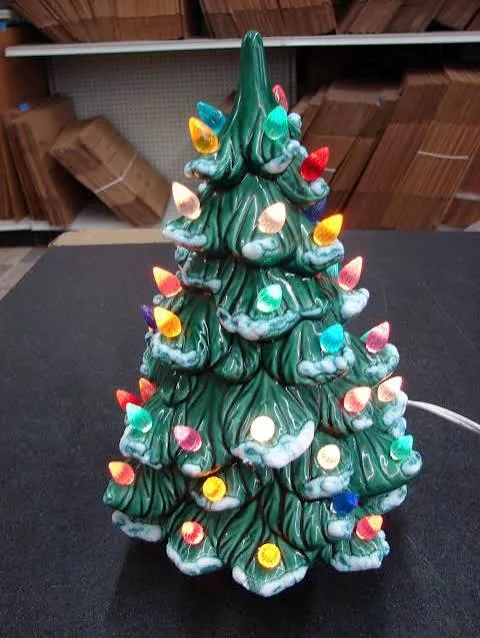
These bulbs get warm to the touch, and older ceramic trees sometimes run on wiring that predates polarized plugs. If yours has a two-prong ungrounded cord and any crackling, replace the cord assembly or use it unplugged as a sculpture. The white snow texture also chips at the branch tips if you cram the tree into a storage bin. Wrap it loosely in a towel instead of a box.
30. Gold Snowflakes, Jingle Bells, and Fuzzy Pom-Poms
Style the base in three layers, not one. Layer one is the collar or basket, which should sit ten to twelve inches tall to hide the stand. Layer two is the ornament spill — gold snowflakes tucked into the lowest branches so they hang almost to the floor. Layer three is the gifts, which should cover no more than two-thirds of the collar’s front. That visible remaining third is what keeps the arrangement from looking like a pile.
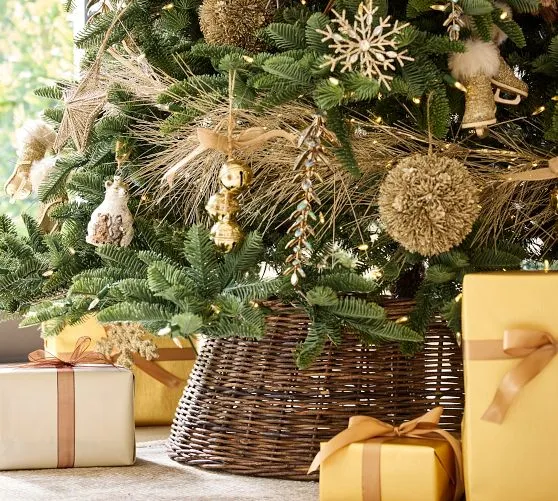
The formula: 70% green + 20% gold metallic + 10% cream and brown wicker. Gold is doing two jobs here — glitter snowflakes and fuzzy pom-poms — so it pulls double weight at the same percentage. Swap gold for rose gold and the tree softens; swap it for bronze and the whole base turns rustic. Keep the wicker brown either way, since it is the only matte, non-shiny element in the zone.
31. Sparse Feather Tree with Hand-Painted Glass Ornaments
The gaps are the design. A feather tree has visible wire stems and negative space, and that sparseness is the entire aesthetic — ornaments need air around them or they vanish into a green blur. Hang eight to twelve pieces maximum on a three-foot tree and let the brown central trunk show. Swap this for a dense evergreen and the same hand-painted ornaments become unremarkable. The silhouette is doing the work.
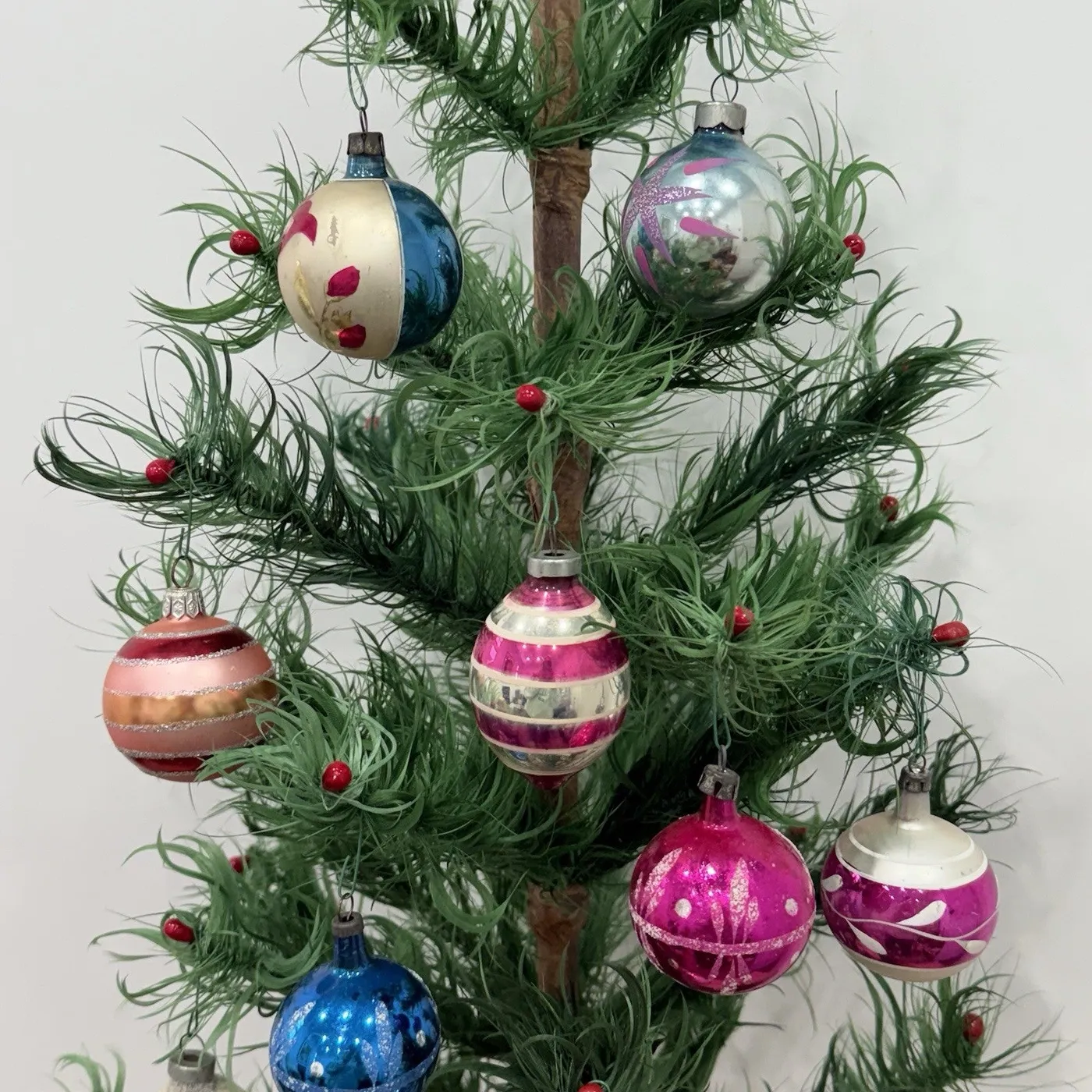
Feather trees are the oldest artificial Christmas tree in America — German-made, goose-feather branches dyed green, once sold door to door in the early 1900s. Their return is part of the same collected-not-coordinated shift driving vintage ornament hunting, and it is especially strong among renters and small-space dwellers who cannot host a seven-footer. Expect the sparse silhouette to keep showing up in 2026 as contrast against maximalist styling.
Bring Back the Tree You Actually Remember
Nostalgia is not about recreating a catalog page — it is about the refracted glow of a mercury glass ornament, the smell of dried oranges, the ceramic tree your grandmother plugged in beside the couch. Pick one idea here, start with the ornaments you already own, and add the rest slowly.
📌 Pin this guide to your Christmas board so it is waiting for you when the boxes come down from the attic.
