
28 Stunning White Christmas Tree Decorating Ideas You Need to Try
Somewhere in your saved folder there’s a photo of a frosted white tree that stopped your thumb at 11 p.m. — and you still haven’t figured out how to make it work in your actual living room, with your actual ceiling height and your actual nosy cat. That’s the gap this guide closes.
We spent weeks filtering through Target, IKEA, Walmart, Facebook Marketplace, and a lot of post-holiday craft-store clearance bins to land on 28 ideas that actually hold up, from an $8 roll of ribbon to a $900 full-glam setup. Flocked minimalism, silver-and-champagne glam, pastel whimsy, and the occasional geometric curveball are all here — and yes, budget and luxury versions are compared side by side.
White trees are surging in 2026 for a simple reason: they photograph beautifully and slot into warm-neutral rooms that would fight a traditional green. Go ahead and save this — you’re going to want it when the boxes come down from the attic.
1. Frosted Foyer Tree With a Burlap-Bowed Staircase
If you’re running garland down a banister, don’t tie it to the handrail — it slides. Zip-tie it to the balusters instead, roughly every third spindle, and let the swag dip 6 to 8 inches between ties. Measure the rail and buy three times that length in garland; anything less and the swags look strangled. Burlap bows pinned at every other baluster finish it.
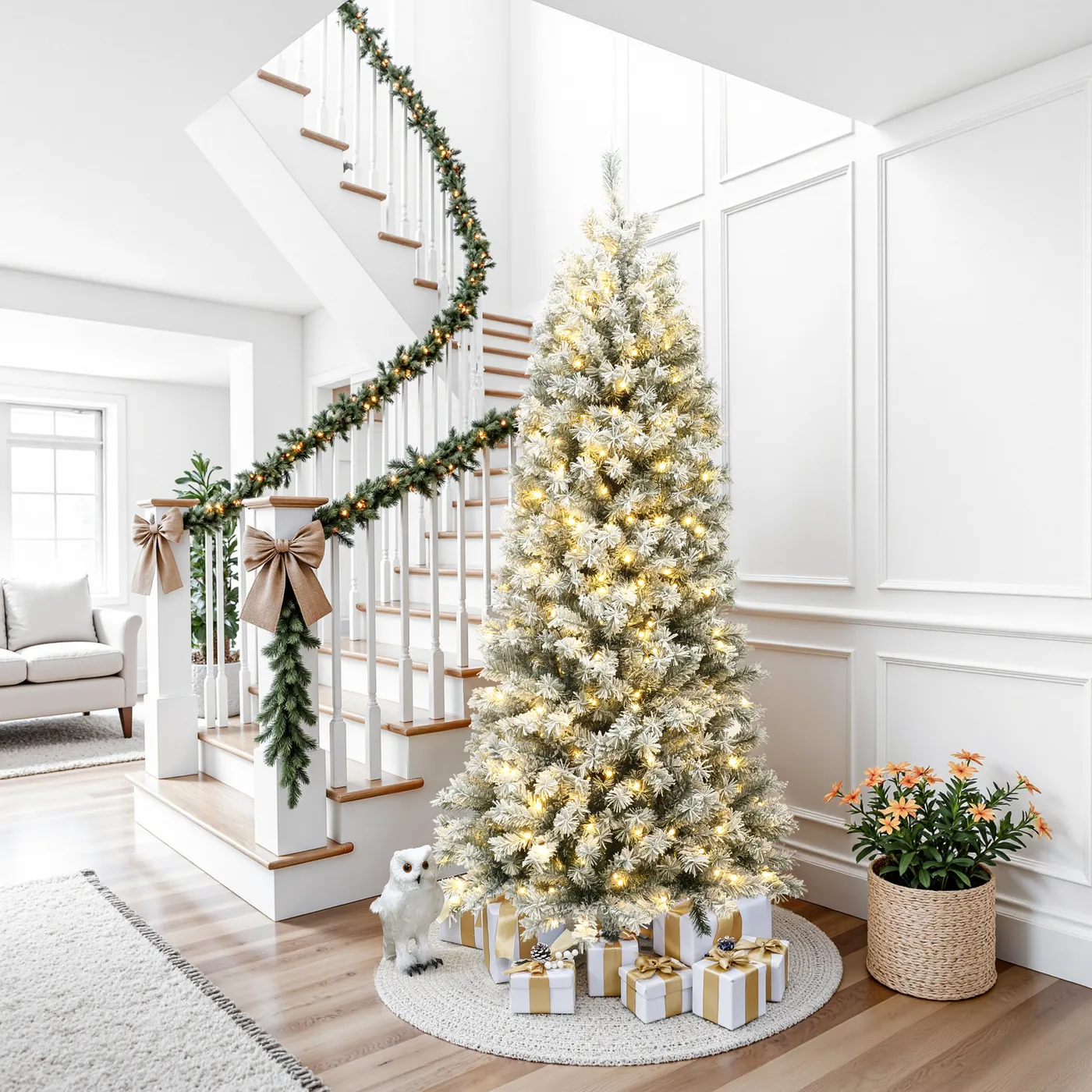
A tree in the foyer is beautiful and it is also in everyone’s way. Leave at least 36 inches of clear walking path or your guests will be shimmying past the branches all December. Flocked trees shed — expect a fine white dust on that circular rug. A flat-weave or wool rug vacuums clean; a dark shag will show every fleck until January.
Frosted trees paired with burlap and natural wood are the 2026 version of quiet-luxury Christmas — texture instead of color, warmth instead of glitter. It doesn’t fight whatever paint color you already have, which is exactly why this look has staying power beyond one season.
2. Silver Mesh Tree With Marquee JOY Signs
- 7.5 ft white tree: $150–$400
- Lighted marquee letters (JOY + XMAS): $60–$160
- Silver mesh ribbon, 3 rolls: $45–$90
- Champagne and silver ornament set: $80–$200
- Gift boxes and decorative cylinders: $40–$80
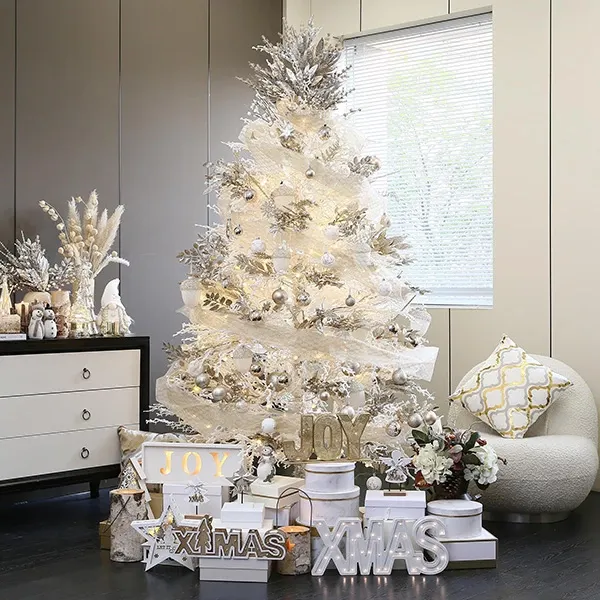
Total: roughly $375–$930
Budget alternative: buy the mesh ribbon at a craft store after Thanksgiving for half off, then layer thrifted silver baubles with a cheap set of champagne spheres. One lighted JOY sign beats four props anyway.
Two things are doing the heavy lifting here. First, repetition — mesh ribbon, botanical picks, silver ornaments, all in one finish family, so the eye relaxes. Second, contrast — that hard, bright marquee light against soft flocked branches. Set the letters on the dresser behind the tree rather than directly under it, so they read as a separate layer instead of part of the pile.
3. A Flocked Tree Beside a Glowing White Mantel
The fire. Take it away and you have a very pretty, very cold photograph of a white tree next to a white wall. Burning logs throw warm amber light onto the flocked branches, and that temperature clash — warm fire, cool white tree — is what makes the corner feel inhabited instead of staged. Real flame or a good electric insert, but you need the glow.
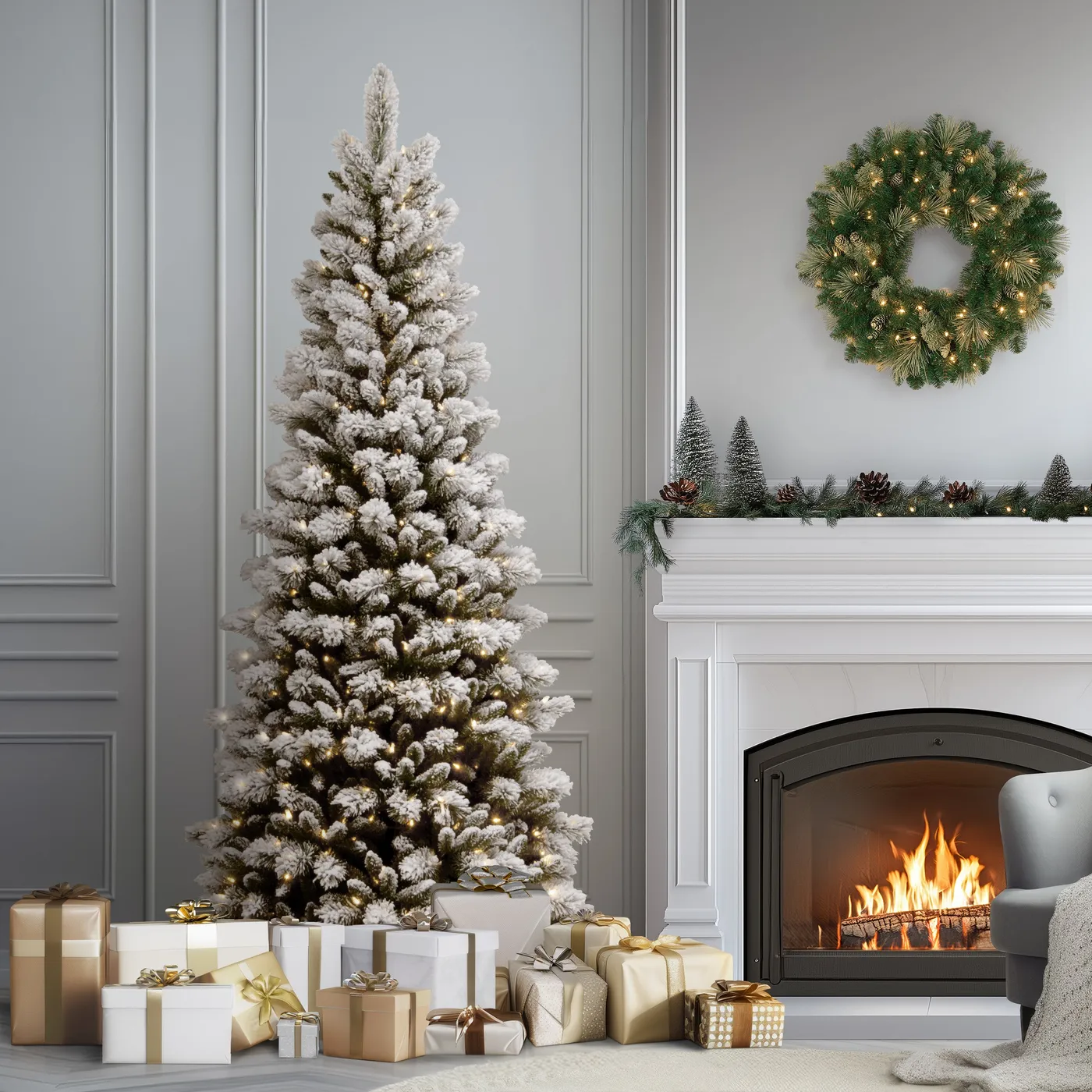
Roughly 70% white and flocked, 20% metallic gold, 10% forest green. The green only shows up in the wreath and a few picks, which is why it reads as a wink rather than a theme. Swap the gold for copper and the room turns moodier and more rustic. Swap it for silver and the whole thing goes icy and formal. Same formula, different temperature.
4. Gold Stars and Honeycomb Ornaments on a Snow-Flocked Tree
Paper honeycomb spheres need air around them or they vanish into the branches. Hang them only on the outer third, at least 5 inches from the next ornament, and rotate each one so its flat face points slightly outward. I hang mine with a single gold paper clip bent into a hook — no visible string, no sagging, and you can shift them in seconds when something looks off.
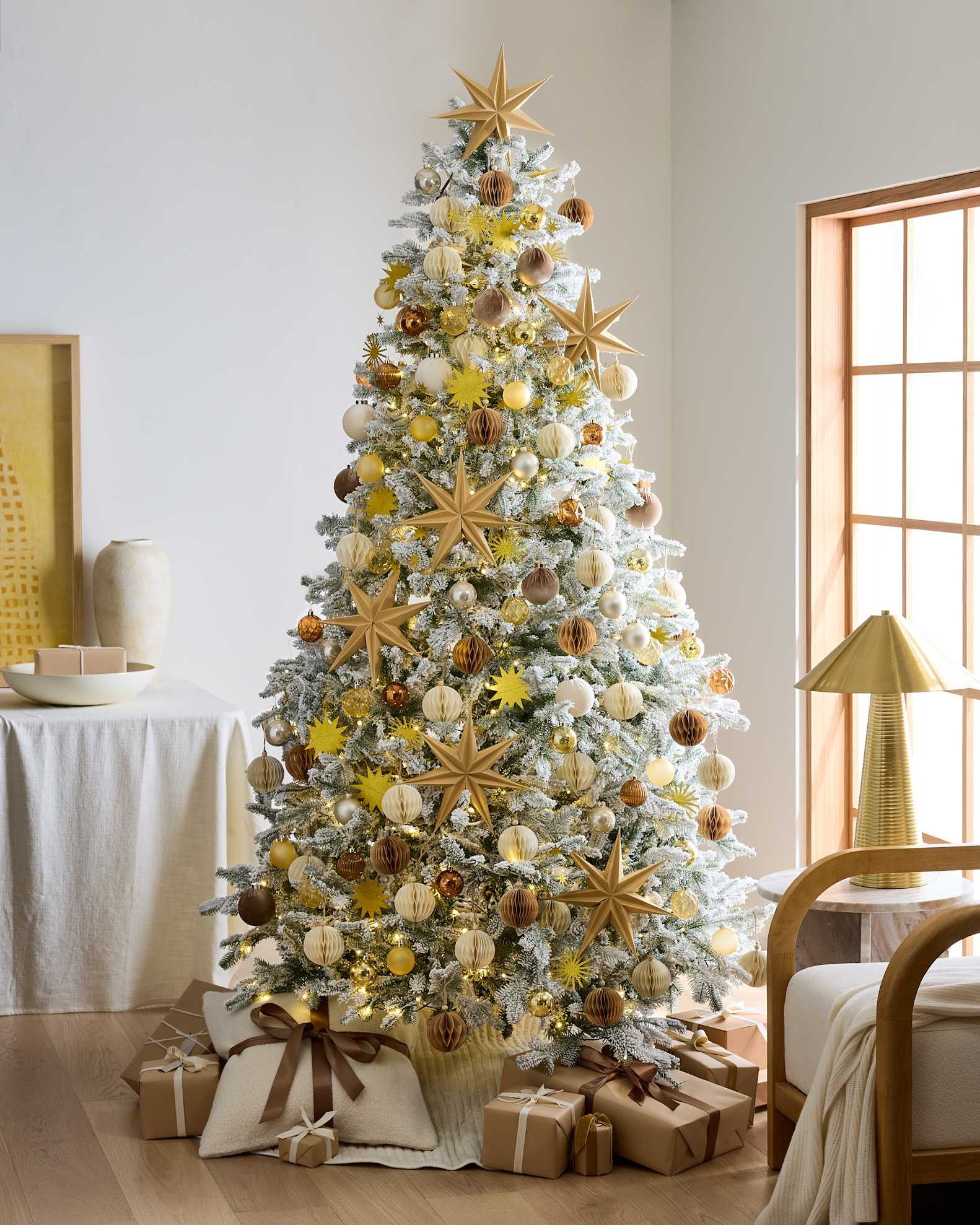
Big sculptural ornaments need a big tree. This reads best on a tree 8 feet or taller in a room with 10-foot ceilings, because stars and honeycomb balls eat vertical space. On a 7-footer, cut the star count roughly in half and keep them in the top two-thirds. Tight on square footage? The slim white tree in Idea #21 gets you the same palette in a fraction of the footprint.
5. Plaid Ribbons and Bells on a Ceiling-High Frosted Tree
Plaid ribbon and metal bells are having a moment because 2026 decorating has swung hard toward things that look handmade. Machine-perfect glitter is out; slightly rumpled, tactile, my-grandmother-had-one-of-those is in. The good news is that plaid is cheap and forgiving — cut it into 4-inch strips and loop it by hand, and nobody will know it wasn’t a designer pick.
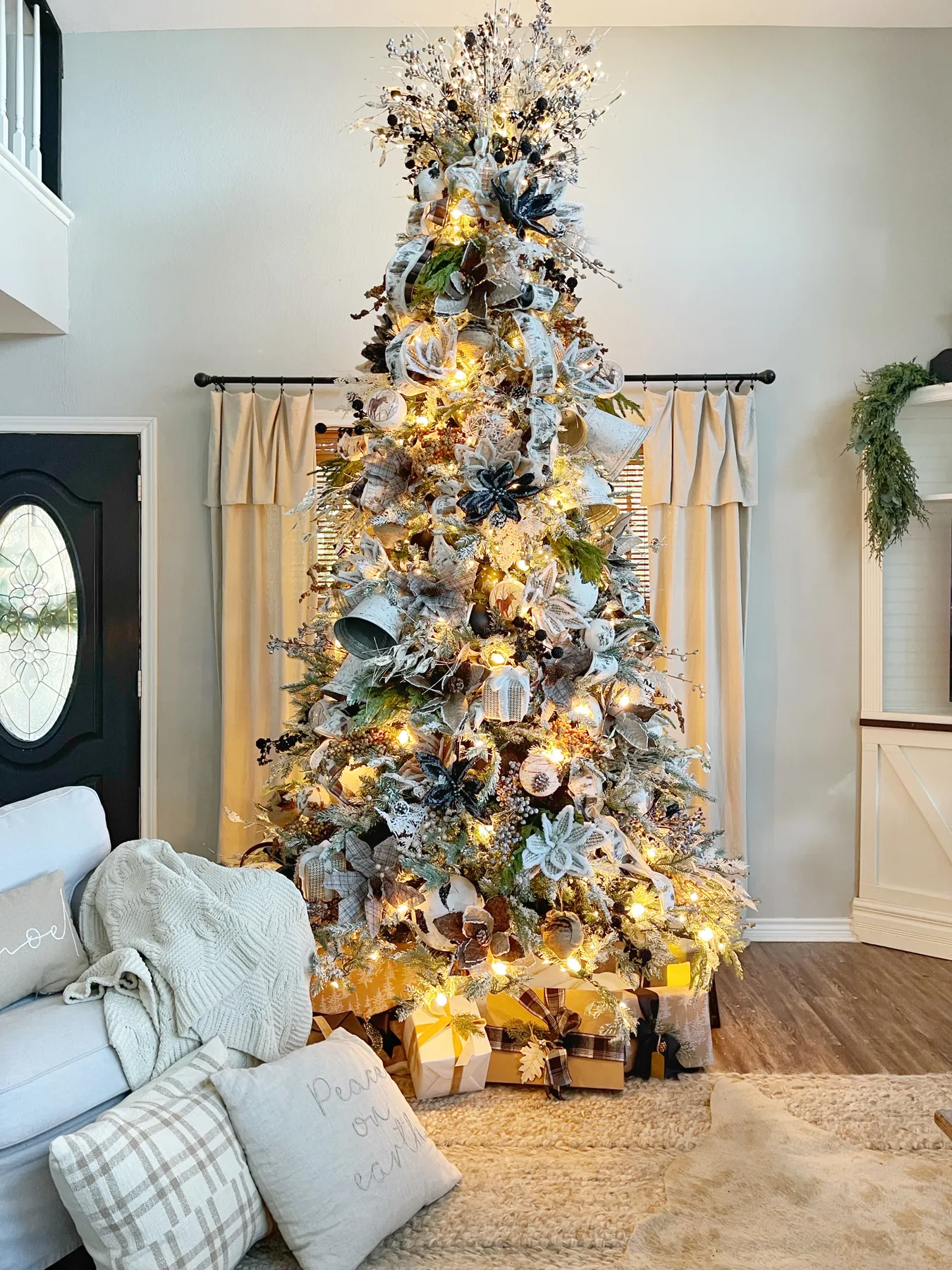
A tree this tall is a commitment. Nine feet of frosted branches means roughly 900 lights if you want that even, all-over glow — plan a full evening and a step stool. Check ceiling height before you buy: you need at least 6 inches of clearance above the tree for a topper, measured with the stand. Compare with Idea #3 if you’d rather keep the whole vignette below eye level.
6. Red, Blue, and Gold Baubles for a Family Tree
About 60% flocked white base, 25% saturated baubles, 15% warm light and ribbon. The flocking is what keeps primary colors from looking like a classroom — white gives red and cobalt somewhere to land. Keep ornament sizes mixed: 3-inch, 4-inch, and one 6-inch focal ball per branch cluster so the eye keeps moving instead of registering one solid block of color.
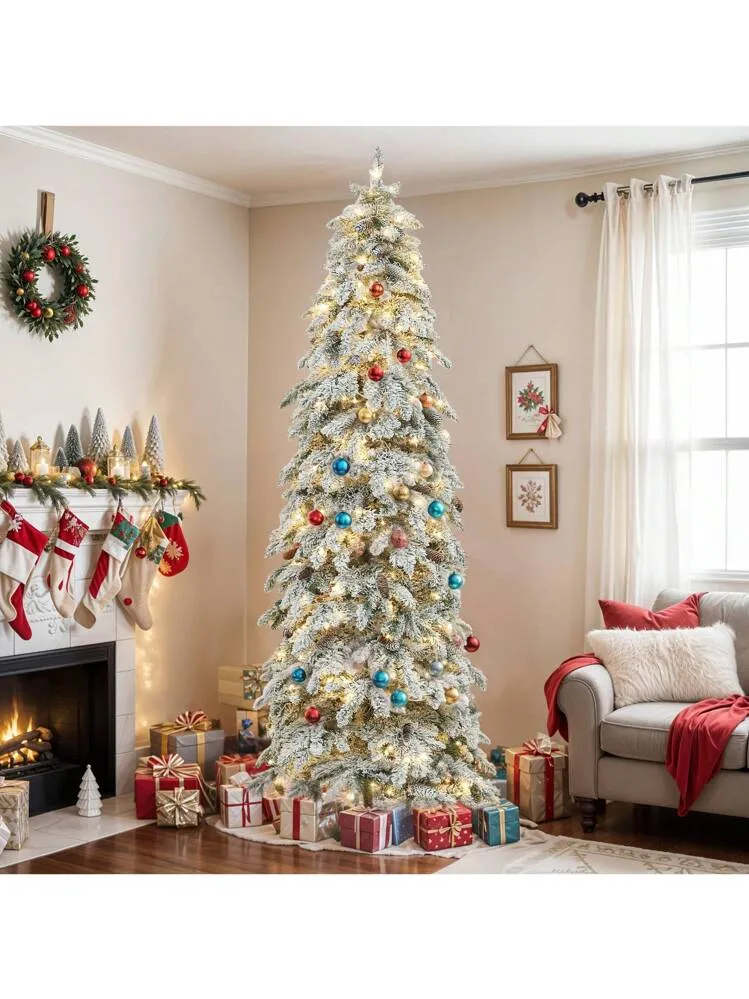
- Slim flocked tree, 7 ft: $90–$250
- Warm white string lights: $20–$45
- Red, blue, and gold ball ornaments (100 ct): $35–$80
- Tree skirt: $20–$50
- Stockings and mantel garland: $40–$90
Total: about $205–$515
A color-blocked tree is the easiest look to do on a budget — big-box ornament sets in one or two colors cost a fraction of a mixed designer set, and nobody notices once the lights are on.
7. Blue Velvet Bows and Vintage Santa Ornaments
The blue velvet. Everything else on this tree — patterned silver balls, brass bells, the Santa faces — is supporting cast. Velvet does something satin can’t: it absorbs light instead of bouncing it, so the bows read deep and soft against all that white flocking. That’s the element you’d notice missing if you stripped it back.
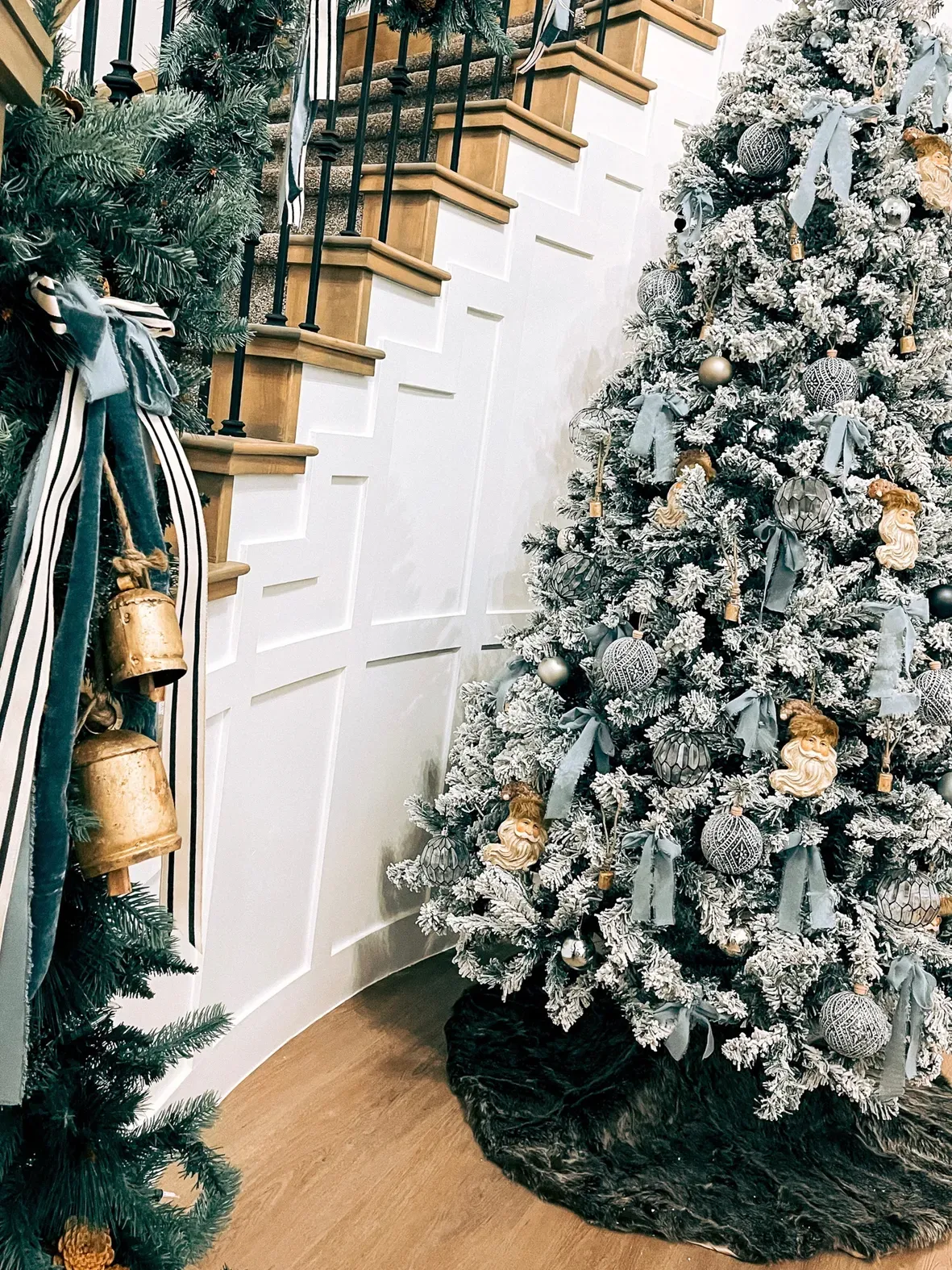
- Cut velvet ribbon into 18-inch lengths, one per bow.
- Fold into a loop shape, pinch the center, and wire it tight.
- Attach a 6-inch florist wire tail to each bow.
- Twist the wire around a sturdy branch near the trunk.
- Space bows about 10 inches apart, spiraling down.
About 45 minutes and $25–$40 in ribbon for a 7-foot tree.
Velvet is where people overspend. A 10-yard roll from a big-box fabric store runs $8–$15; the wired-edge designer version can hit $40 for the same length. You can also cut thrifted velvet scarves into strips — I’ve seen gorgeous bows made from a $6 secondhand dress.
8. Kraft Paper Gifts Under a Slender Corner Tree
Kraft paper is cheap, gorgeous, and unforgiving. It creases permanently, so wrap once and commit — no folding and refolding as you second-guess. It also fades in direct sun and is very appealing to cats, who will shred it in an afternoon. If you have pets, keep the wrapped boxes on the far side of the tree, or switch to reusable fabric wraps instead.
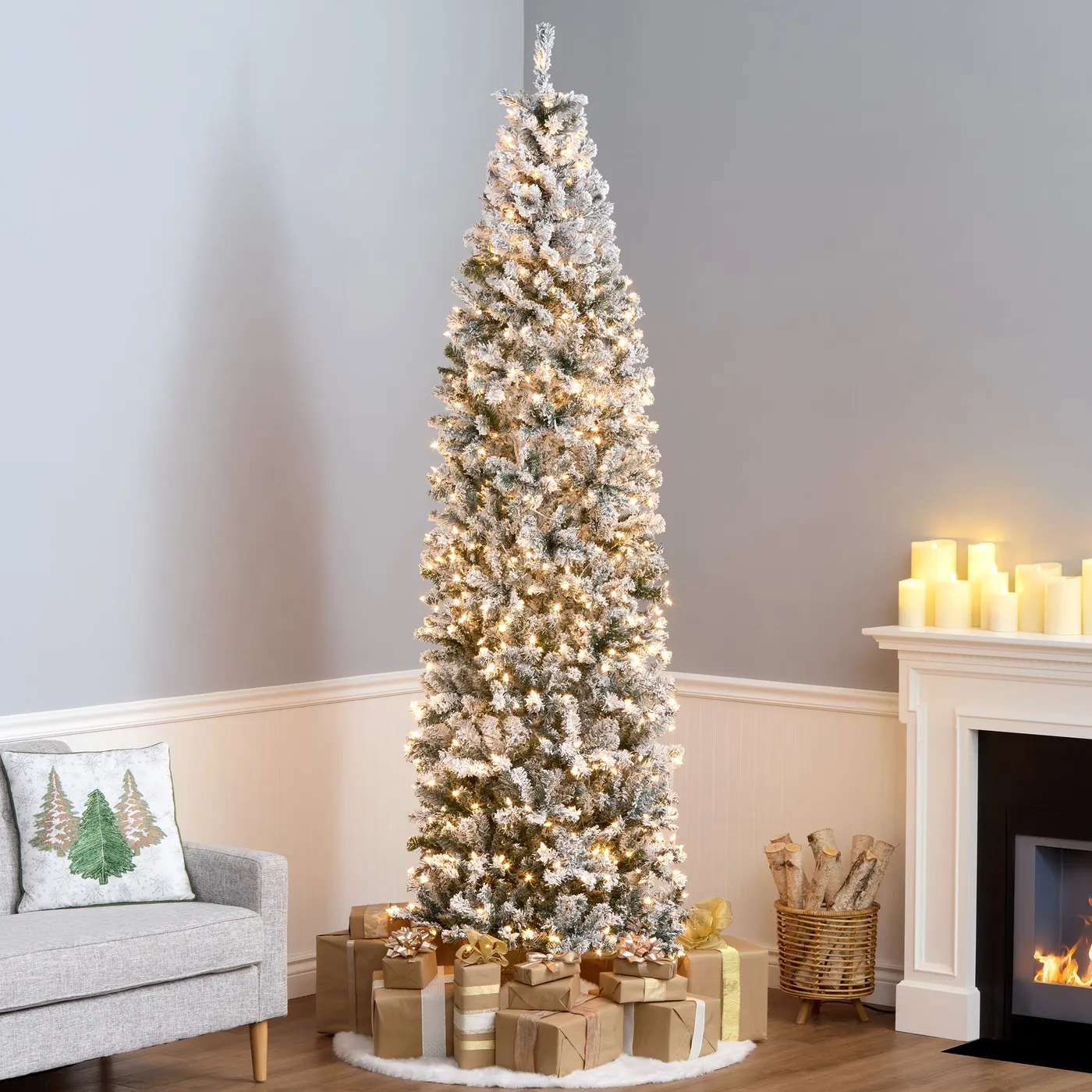
Corner trees look sparse unless you bring the wall into the composition. Here the gray armchair and the white mantel bookend the tree, which stops it from looking like it’s hiding in shame. Keep at least 12 inches between the back branches and the wall — pressed flat against drywall, even a full tree reads as a silhouette instead of a volume.
9. Glass Baubles, Pinecones, and a Leaning Ladder
- Check your mantel depth — garland plus a cloche needs at least 8 inches.
- Confirm the ladder is stable; lean it against the wall, never the mantel.
- Decide where the stocking hangs so you’re not moving everything twice.
- Test every strand of lights before you weave anything.
- Measure the mantel length so your garland isn’t short at both ends.
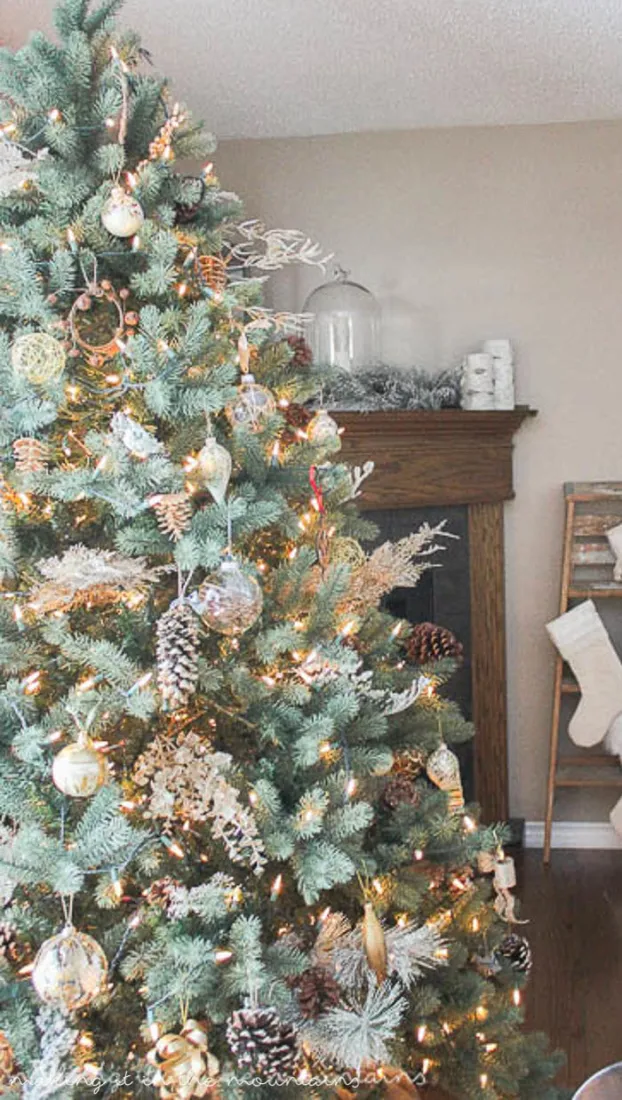
This corner works because it repeats one material — glass — at three scales: tiny baubles on the tree, a large glass cloche on the mantel, and clear bulbs overhead. Repetition in different sizes reads as intentional rather than matchy. The wooden ladder adds a vertical line that neither the frosted branches nor the dark mantel provides, which is why the vignette doesn’t feel flat.
10. Glossy Red Baubles on Pure White Branches
This is the friendliest look in the whole article to do cheaply. A 6-foot white tree from IKEA or Walmart runs $40–$80, and a 60-count set of glossy red shatterproof balls is about $15 at Target once the season turns. That’s under $120 before lights. Facebook Marketplace in early January is a gold mine — people sell white trees they’ve decided they hate for $25.
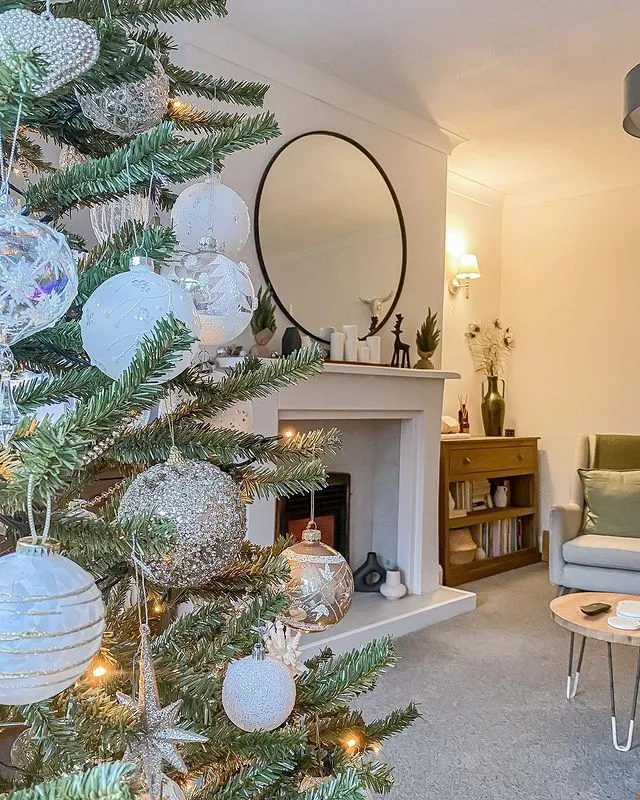
Pure color blocking needs breathing room. It works from about 8 by 10 feet upward, and it’s one of the few looks that improves in a small room because there’s so little visual clutter. Standard 8-foot ceilings? Go with a 6 to 7-foot tree and stop the ornaments 4 inches below the top.
90% white, 10% red, zero metallics. That’s it — the discipline is the design. Add gold and the red turns orange by comparison, and the whole thing gets muddy. If you want depth, mix matte and glossy red in the same size so light catches some balls and not others, but keep every single ornament red.
11. Two-Tone Bead Garlands Against an Arched Wood Cabinet
Bead garlands are beautiful and they are heavy. A full strand of wooden beads can weigh 2 to 3 pounds; drape one over a flimsy branch and it bows the whole section. Loop bead garlands close to the trunk where the branch structure is strongest, and save light ribbon for the outer tips. Also count on restringing if you have toddlers — beads are irresistible.
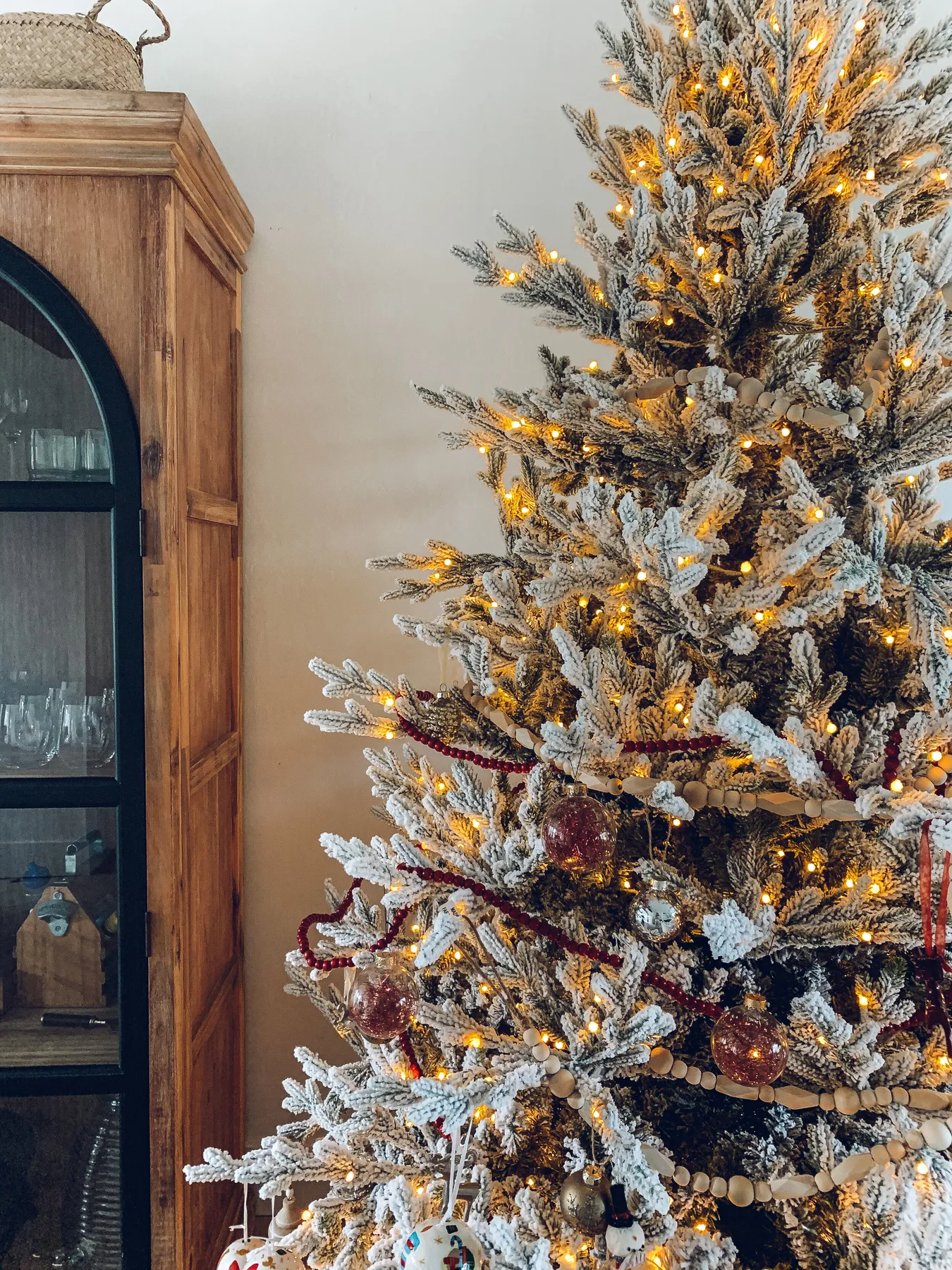
Two garlands in two materials: warm wood beads and deep red beads, both running through the same tree. One alone would be fine. Together they create a rhythm that the ornaments then punctuate, and your eye follows the strand all the way around. That contrast of matte wood against glassy red is what separates this from a generic flocked tree.
12. Pastel Pink and Cream for a Soft-Focus Tree
Pastel Christmas has quietly outgrown the nursery. In 2026 the pink-and-cream tree shows up in grown-up living rooms because it plays nicely with the warm-neutral interiors people already own — boucle, oatmeal linen, white oak. It’s also the most forgiving palette for phone cameras, which is not a small thing when half of us are decorating for the grid.
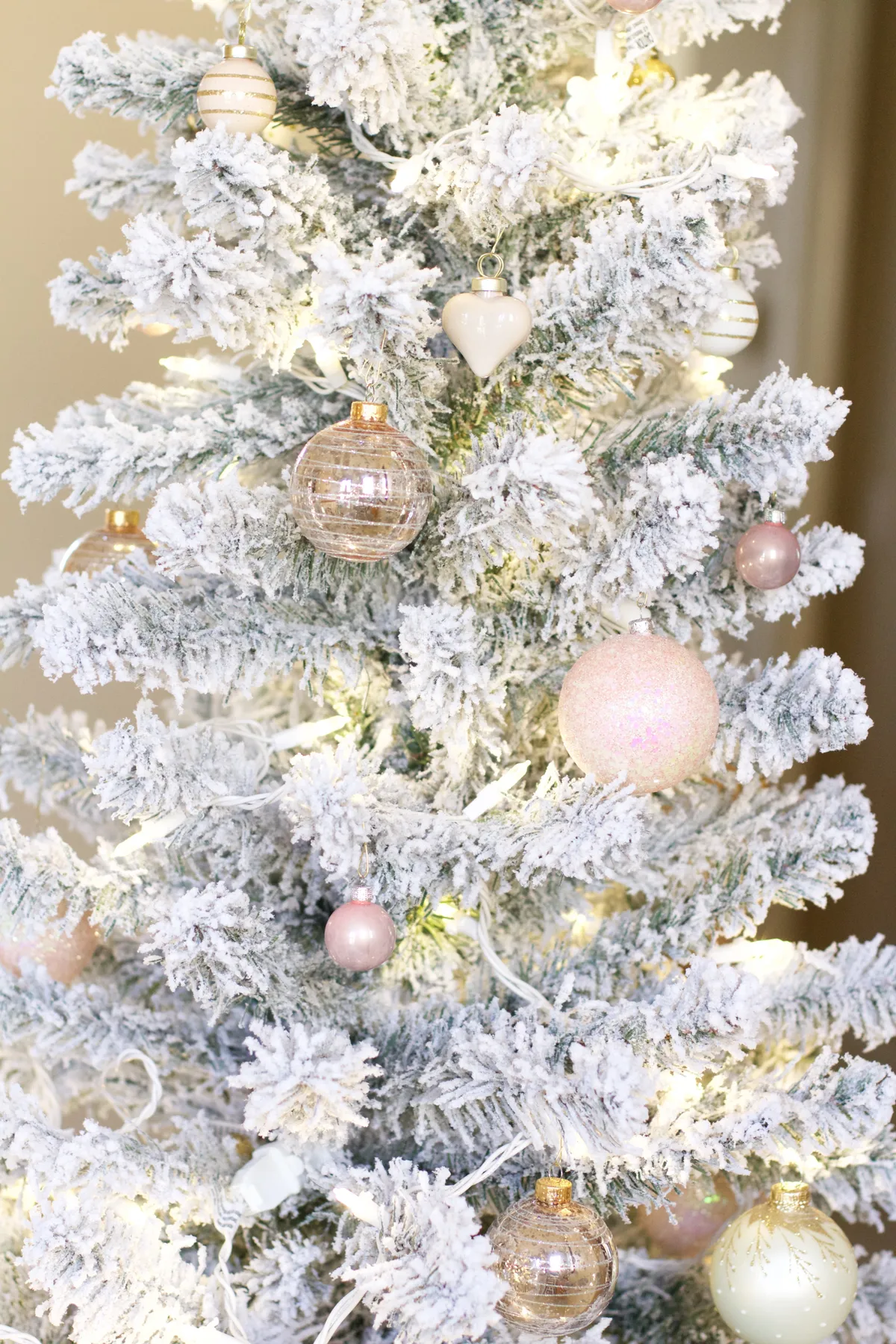
Pastels die against a stark white tree unless you vary the finish. Mix three textures in the same three colors: glossy glass balls, matte ceramic, and one sparkly piece per branch cluster. Keep every pink inside a narrow band — a soft blush and a dusty rose, never bubblegum next to hot pink. One heart-shaped ceramic ornament can carry an entire section on its own.
13. A Quiet Minimalist White Tree in a Woven Basket
95% white, 5% silver. Ornaments are small, matte, and spaced 8 to 10 inches apart so the branches actually show. The formula only works if the tree itself is dense — a sparse white tree with sparse ornaments just looks unfinished. Swap the silver for warm brass and the room turns cozy; swap it for chrome and it turns clinical. The ratio stays the same.
- Slim white tree, 6–7 ft: $60–$180
- Warm white LED string lights: $18–$40
- Woven basket or tree collar: $25–$70
- White and silver ornament set (40 ct): $25–$60
Total: $128–$350
The restraint is the savings — minimal trees need roughly a third of the ornaments of a maximalist one, and baskets cost less than a fabric skirt that actually fits.
14. A Pink Picket Fence Collar and a Silver Star Topper
- Measure the widest branch spread at the base — usually 30 to 36 inches.
- Buy or build a picket ring about 6 inches wider than that.
- Paint it, let it cure 24 hours, then slide it over the trunk.
- Fill the gap between fence and trunk with gifts or a fabric skirt.
- Weight the fence with a brick if you have a climber or a cat.
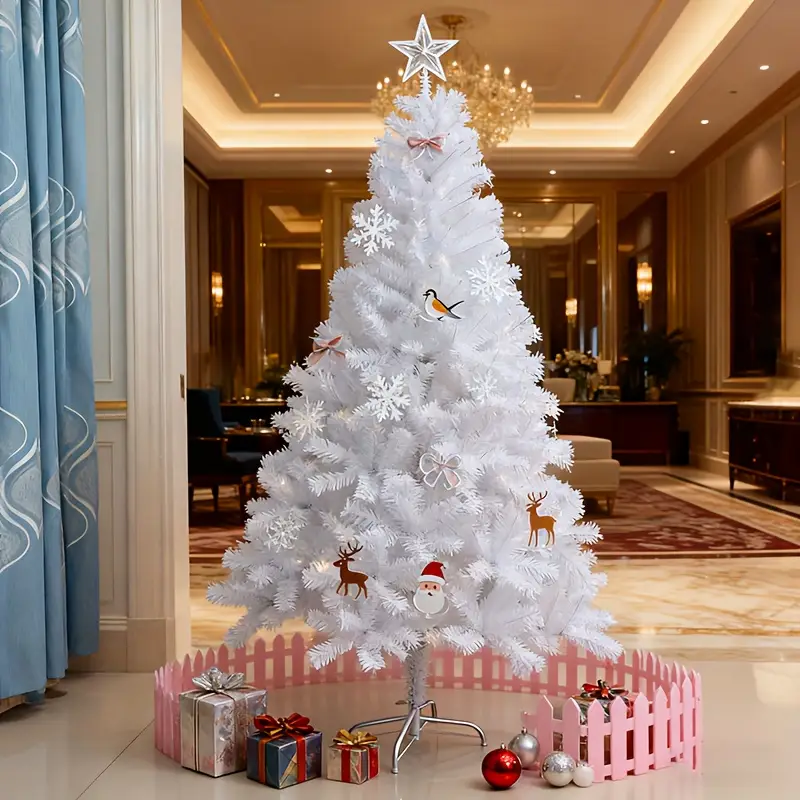
Weekend project, roughly $30–$60 in materials.
Pre-made picket tree collars sell for $80–$200. The DIY route: a wooden fence section from a home center runs about $25, and you can cut and hinge it into a ring in an afternoon. Rather not build? A painted cardboard ring or a washable fabric collar gives you 80% of the charm for under $20. Compare with Idea #19 for a bedroom version of the same trick.
15. Champagne Gold Ornaments Against Green Needles
Champagne gold reads as expensive because it’s slightly desaturated — it reflects light without shouting. Paired with frosted pinecones it creates two textures at once: smooth and faceted versus rough and organic. And the warm fairy lights underneath mean the gold picks up a little yellow, which is exactly why this feels cozy instead of formal.
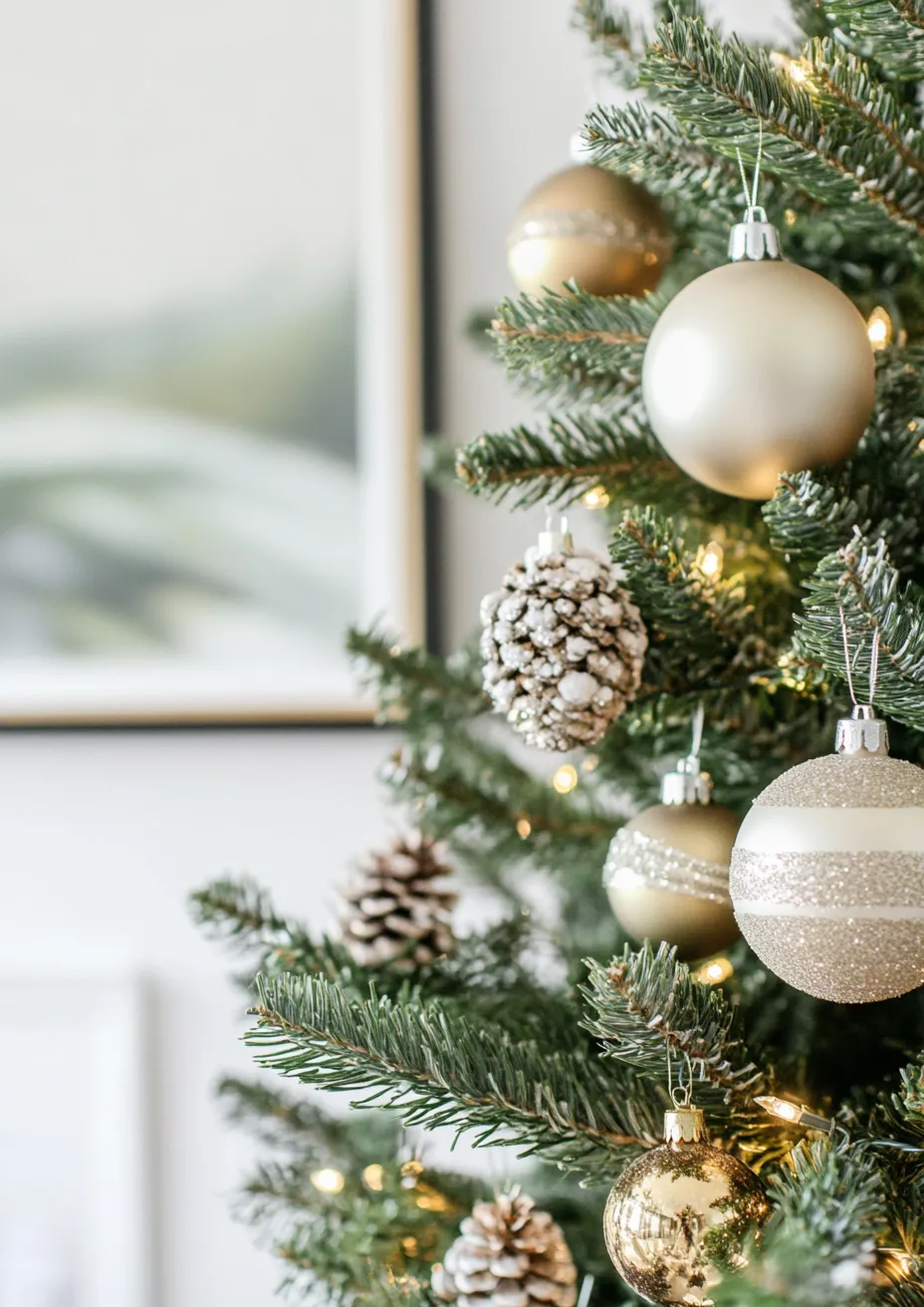
The pinecones. Not the ornaments, not the lights — the frosted pinecones tucked between gold balls. They give the glittery stuff something to sit against, and they introduce a shape the tree doesn’t already have. Without them, a champagne close-up reads generic. With them, it looks like someone with opinions decorated it.
16. Oversized Ornaments That Photograph Beautifully
Oversized ornaments look incredible in a photo and slightly odd in person if you overdo them. Two rules: never place a giant ball lower than knee height, where it reads as fallen, and cap yourself at one oversized piece per 12 inches of tree circumference. In a small room, oversized balls can also make a tree feel top-heavy — the crop of a photo hides what your eye catches.
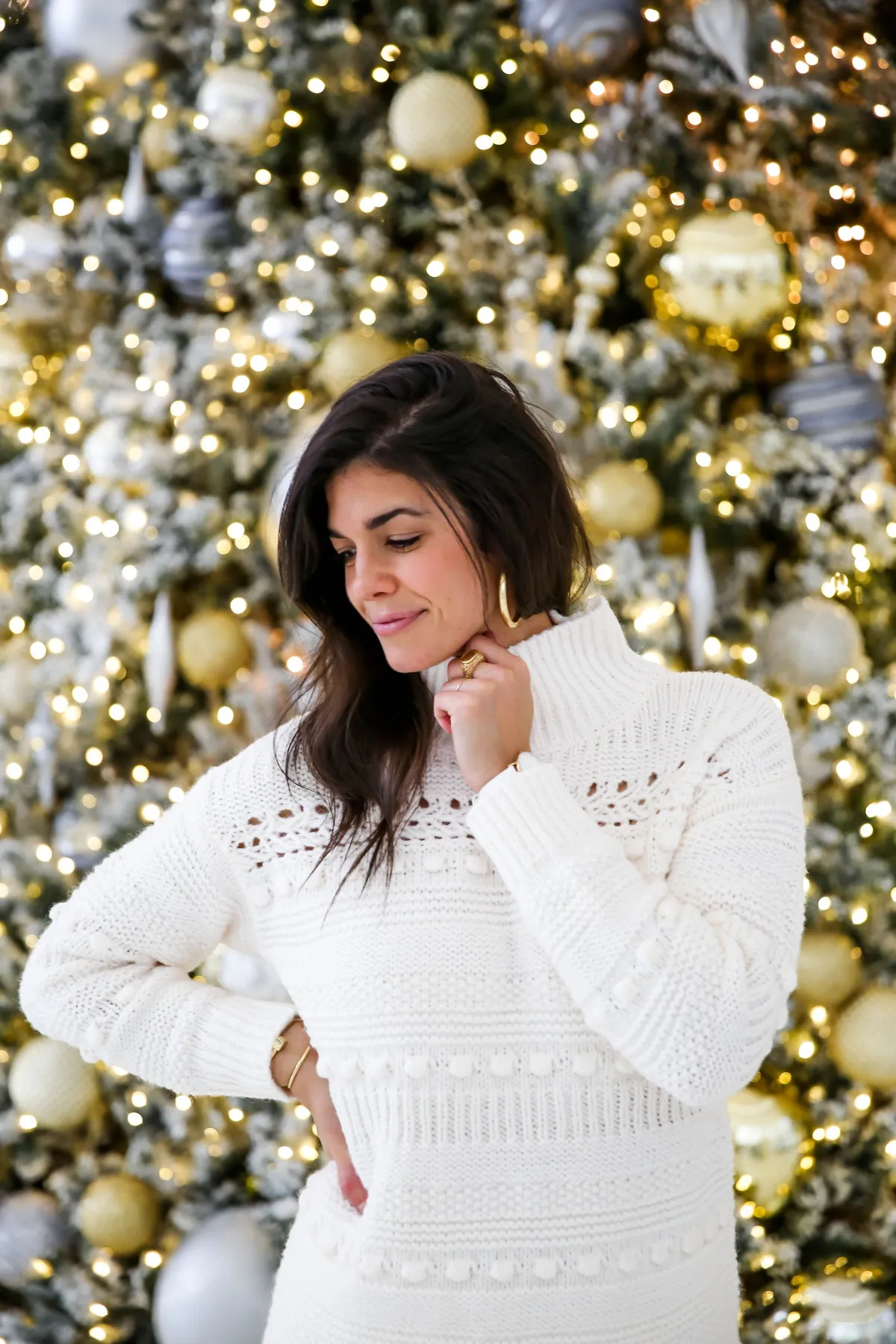
Dress the tree for the camera: cluster the biggest and shiniest ornaments between 4 and 6 feet off the floor, which is roughly lens height when someone’s holding a phone. Fill the top and bottom with smaller, quieter pieces. Your tree will look fuller in pictures and still balanced in real life — the standard trick every holiday photo shoot uses.
17. Silver Spheres, Red Gifts, and a Fireside Wreath
- Slim flocked tree, 7.5 ft: $120–$320
- Warm LED string lights: $20–$45
- Silver ornament set (80 ct): $40–$95
- Red wrapping paper, ribbon, boxes: $30–$60
- Wreath, ribbon, and pillar candles: $35–$85
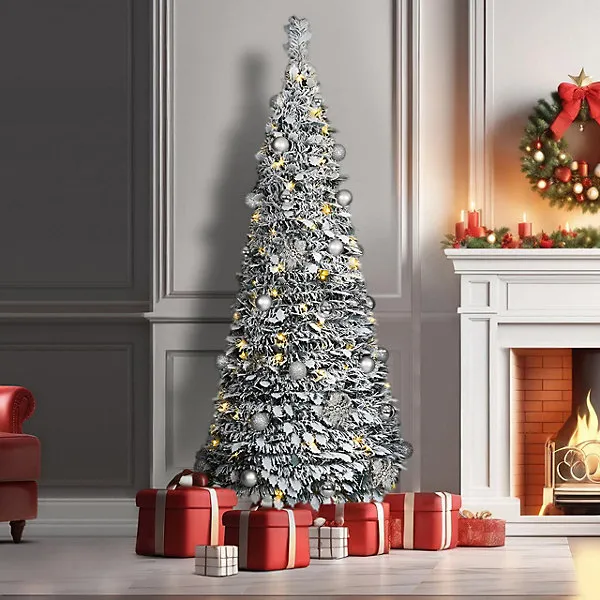
Total: $245–$605
Red wrapping paper is the cheapest way to add color to a silver tree — you’re paying $8 a roll for an accent that would cost $80 in ornaments.
Fireplace compositions need about 8 feet of wall to breathe. A slim tree helps a lot: usually 24 to 30 inches wide at the base instead of 45, which buys real walking space. On a fireplace wall under 6 feet wide, skip the tree and put the budget into the mantel instead. See Idea #3 for the wider-wall version of this corner.
Silver ornaments alone on a flocked tree can drift icy and impersonal. What fixes it here is the red — not on the tree, on the floor. Gift boxes in red with white ribbons drag the eye down and warm up the whole corner. Color doesn’t have to live in the branches to count.
18. Navy Velvet Ribbons on a Wintery White Tree
- Lay your ribbon strands out first and eyeball the pattern before hanging.
- Measure the tree stand base, not the trunk, before buying a basket.
- Check that the twig topper won’t hit the ceiling.
- Test lights on the floor before you string anything.
- Set a hard color cap: navy, white, silver — nothing else sneaks in.
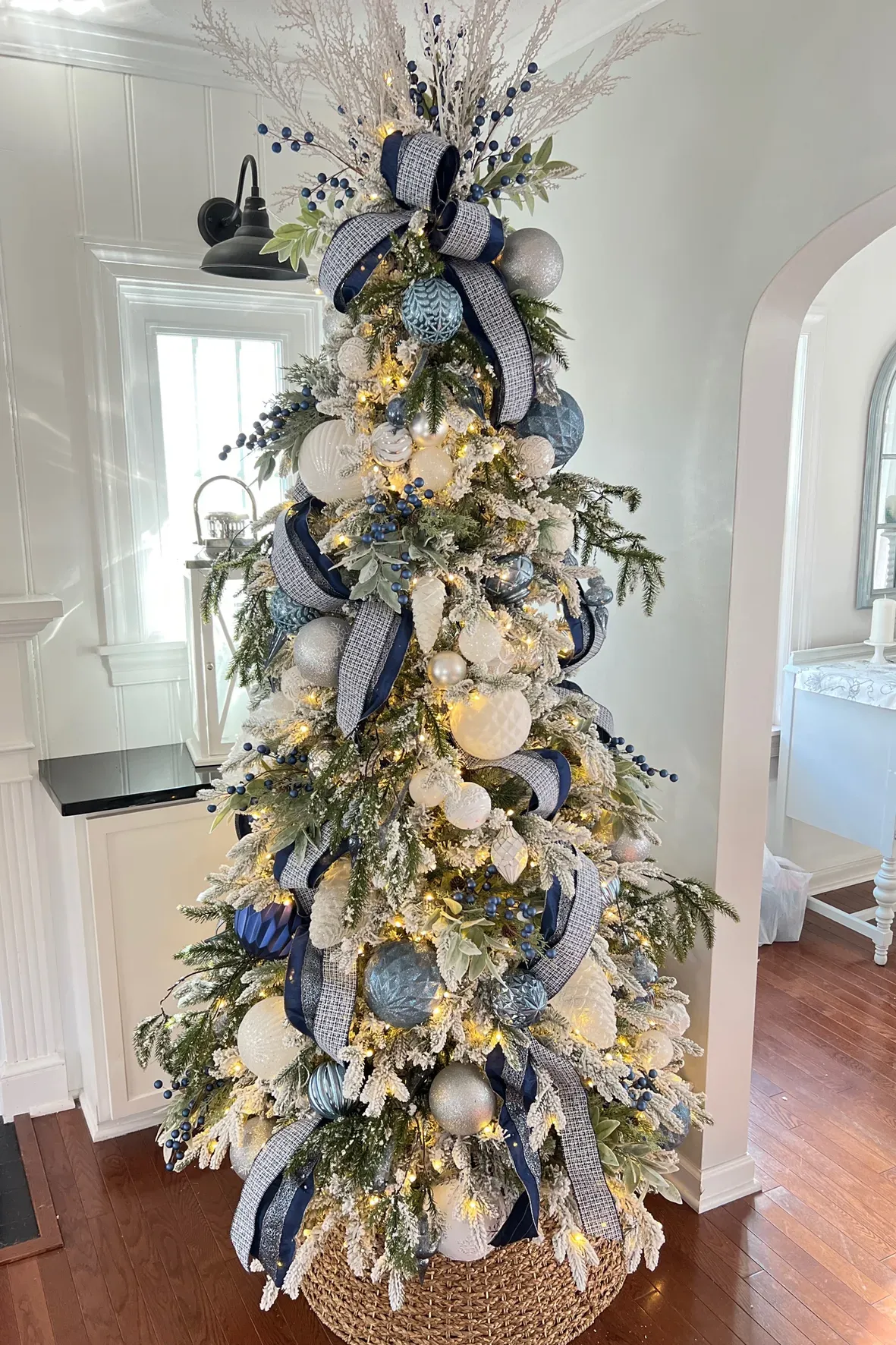
Flocked trees shed for the first two or three seasons, and navy velvet shows every white fleck, so keep a lint roller in the same drawer as your spare bulbs. Basket bases need a liner or the flocking sifts straight through the weave onto your floor. Vacuum the tree itself with a brush attachment on low once a week — four minutes, and it makes a real difference.
19. A Pink Bedroom Tree With Its Own Picket Fence
The enclosure. A pink picket fence around the base turns wrapped presents into a little scene instead of a pile, and it visually separates the tree from the bed, the rug, and the curtains. In a bedroom, where the tree is basically furniture, that boundary matters more than the ornaments do. Same fence idea as Idea #14, entirely different room.
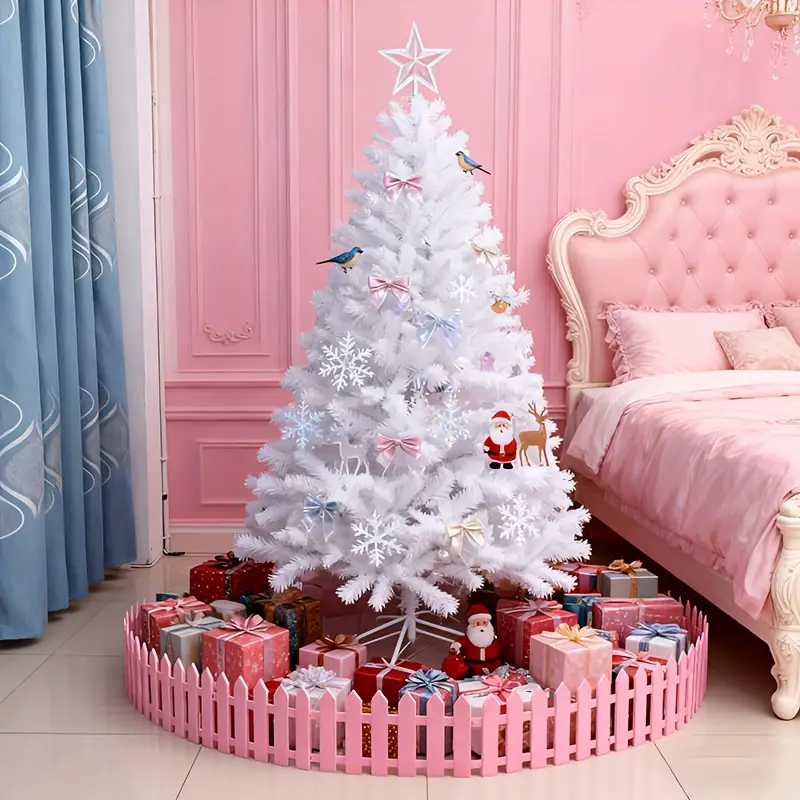
Bedroom trees used to be a kids-only thing. In 2026 more adults are putting a slim tree in the primary bedroom, because it’s the one space nobody else decorates for you. The pink-on-pink wall treatment here follows the same logic as the monochrome kitchens everyone’s pinning: commit to one color and let the room be a mood.
20. Silver Mesh Ribbon, Wrapped Round and Round
About 65% green tree, 25% silver, 10% warm white light. The ratio is unusual because most trees invert it. Keeping green as the majority is what stops silver from looking like a hotel lobby — same trick as leaving one wall unpainted. Swap the silver mesh for gold mesh and you get a warmer, more traditional room with zero other changes.
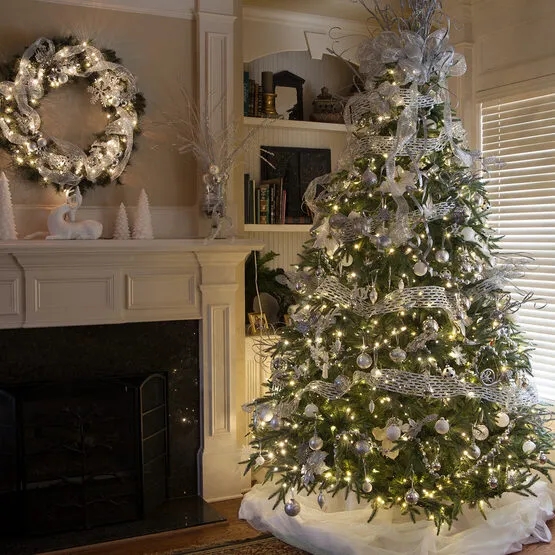
- Unspool 6 to 8 yards of mesh ribbon — it compresses as you work.
- Start at the bottom and tuck the end into a branch near the trunk.
- Wrap upward in a loose spiral, one full turn per 10 inches of height.
- Pinch and tuck every 8 to 10 inches so it doesn’t slip.
- Finish with a loose bow rather than a knot.
About 40 minutes for a 7-foot tree.
Mesh snags. On a real tree, sap eventually stiffens it, and by the second season it frays along the twist lines. Store it loosely coiled in a pillowcase rather than folded, or you’ll spend December ironing creases. Most mesh lasts about three seasons before it’s more tangle than ribbon.
21. Wooden Bead Garland for a Nordic-Leaning White Tree
Wooden bead garlands look best draped, not wrapped. Drape a strand between two branch tips so it hangs in a shallow U about 8 to 10 inches across, then move down and repeat. Zone it: two or three draped sections per side of the tree, never a full spiral. The second you wrap it tight, the Nordic look turns craft-fair.
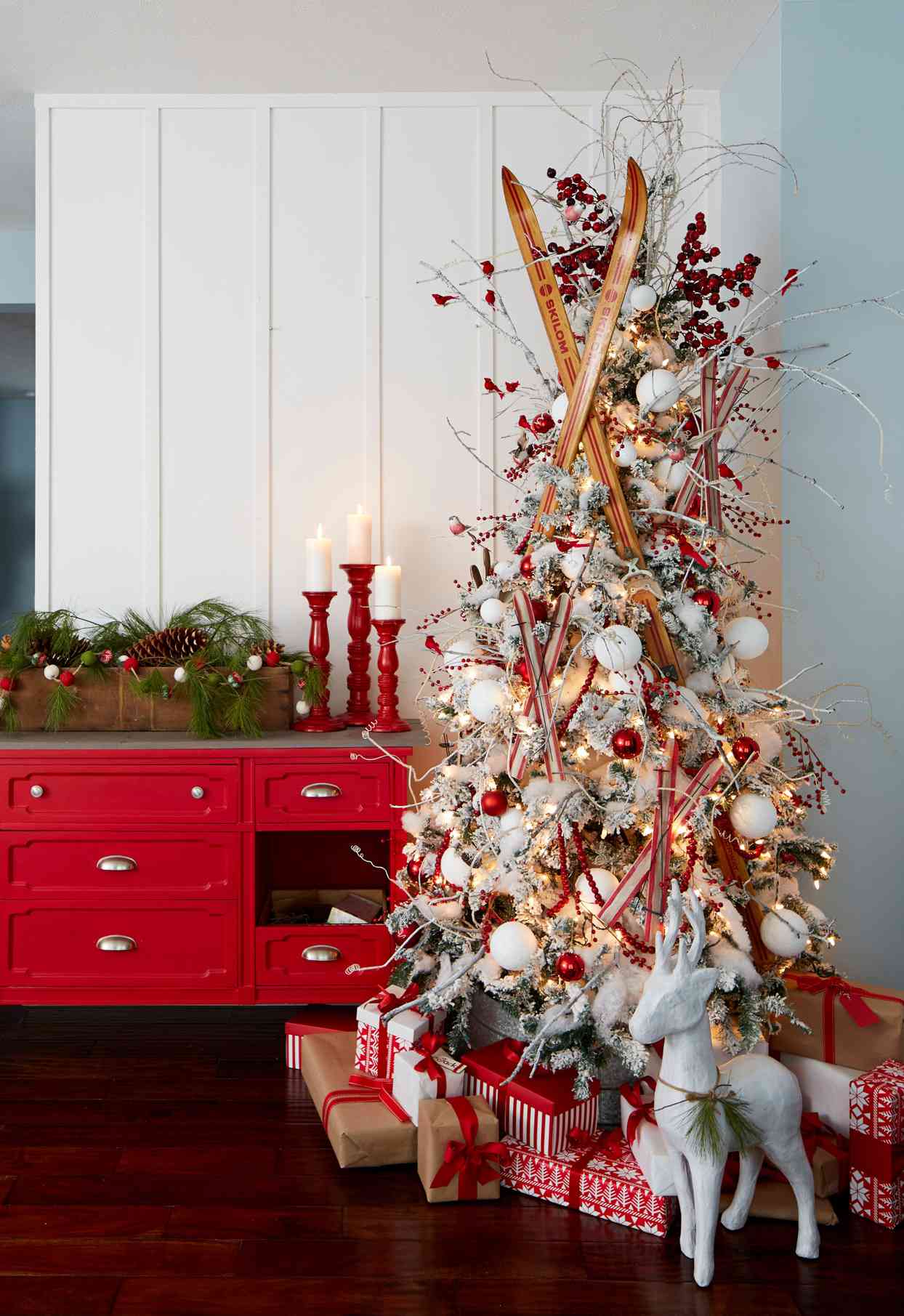
A 9-foot natural wood bead garland runs $12 to $20 at most home stores, and both Target and Walmart carry versions under $15 in season. Want a longer run? Buy two and knot them together — the join disappears in the branches. IKEA’s bead strands are some of the cheapest around, and thrift stores regularly have wooden garlands for a few dollars.
22. A Cluster of Lit Trees Around an Arched Mirror
Multiple small trees solve a problem one big tree can’t: they spread the glow across the whole wall instead of concentrating it in one hot spot. The arched mirror then doubles that light and bounces it back into the room, which is why this corner feels bigger than it actually is. The mauve ribbons tie the wreath to the trees without introducing a fourth color.
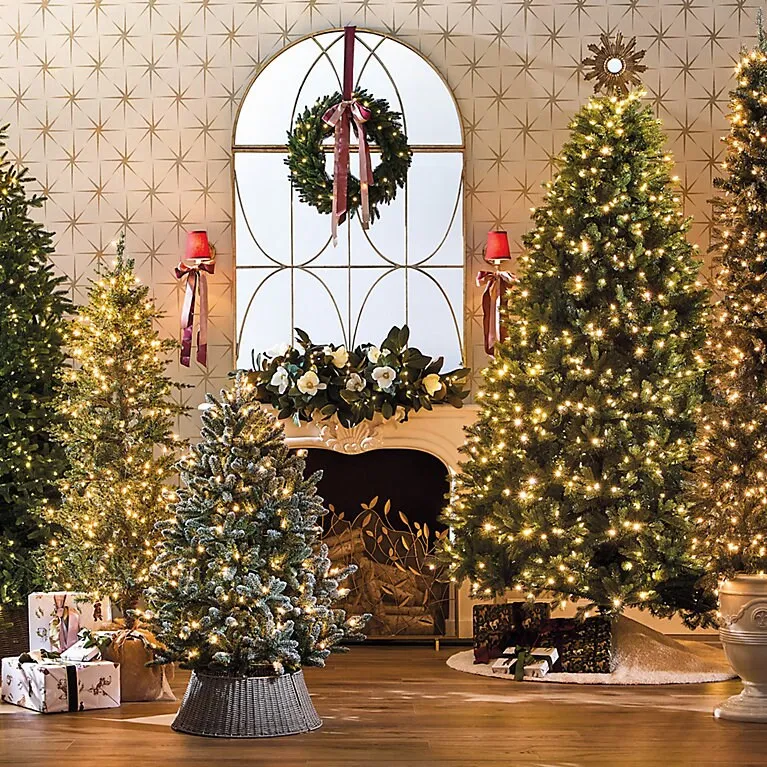
Cluster arrangements need width, not height — three to five slim trees want at least 10 feet of wall and about 4 feet of depth so you can walk behind them. They’re a great answer for low ceilings with long walls, like a finished basement. If your wall is short, one tree against a mirror does most of the same work. See Idea #8 for the single-tree version.
23. A Spiral Wire Cone Tree for the Entry
Cone trees are outdoor fixtures, which means weather. The wire frame holds up fine, but integrated lights don’t love freezing rain — look for an IP44 rating at minimum. You’ll also want an outdoor-rated extension cord and a covered outlet. On a covered porch this lasts years; fully exposed to wind and snow, expect to replace it in three.
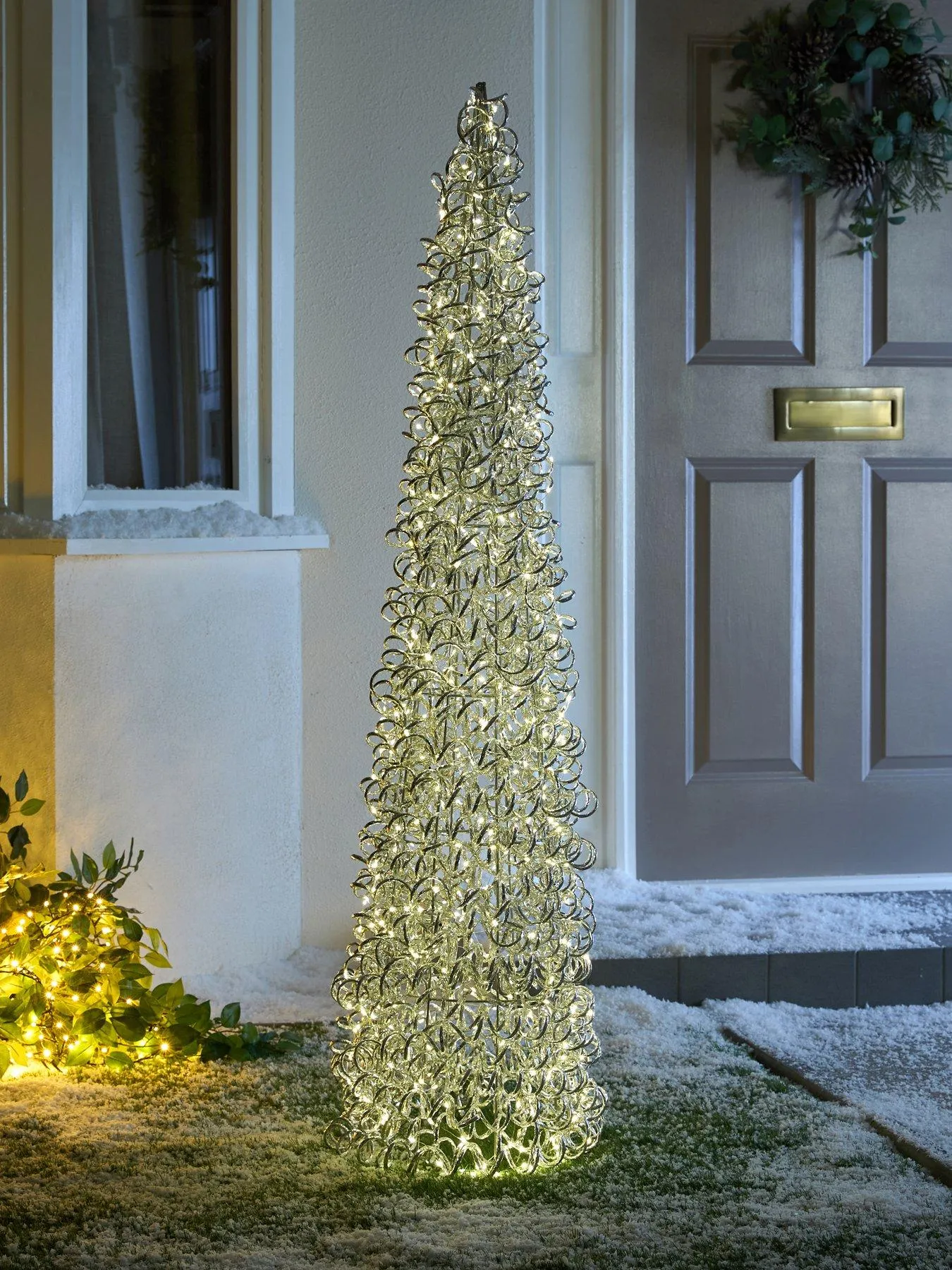
The faux snow on the ground. Without it, a wire cone tree on bare boards looks like a display piece waiting to be packed away. Snow-dusted ground and windowsills turn the whole entry into a scene, and it costs almost nothing — a bag of artificial snow is under $15. If you remove one element from this porch, don’t remove that one.
Retail cone trees with lights run $90–$250 depending on height. A DIY version: a tomato cage flipped upside down and wrapped in warm white string lights costs about $20 total and looks nearly identical after dark. Add a $10 bag of artificial snow and a thrifted wreath and you’re at a third of the price.
24. Heavily Flocked, Barely Anything Else
Heavy flocking is a commitment. It sheds year after year — not forever, but noticeably for the first three seasons — and it traps dust in a way bare branches don’t. Vacuum with a brush attachment on the lowest setting, and never clean it with water; flocking is basically glue and paper fiber, and moisture ruins it. Storing the tree in a hot attic shortens its life fast.
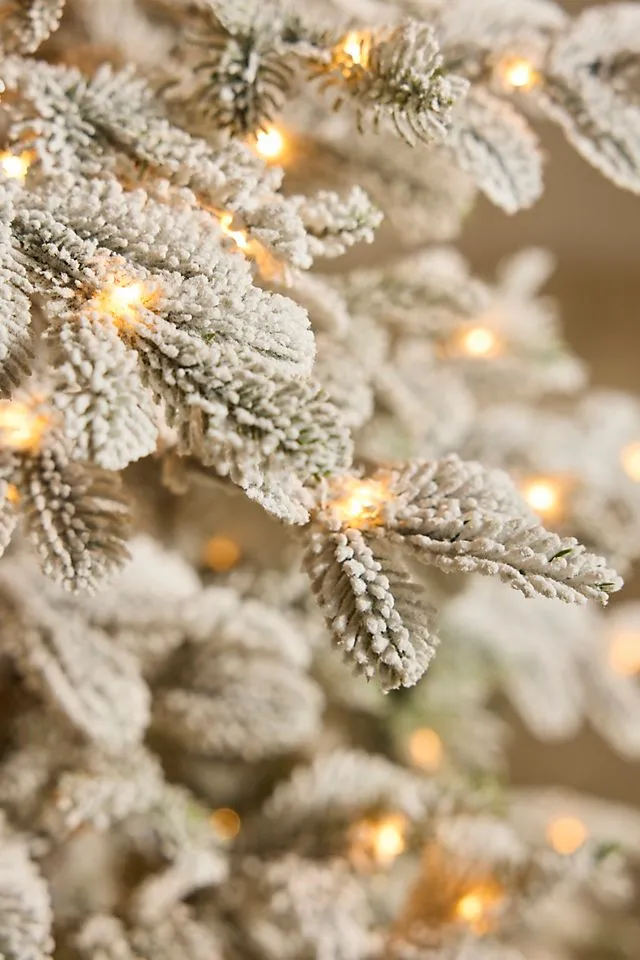
When the flocking is this heavy, your only job is light. Aim for 100 lights per foot of tree for that dense, glowing bokeh — a 6-foot tree wants about 600 warm white bulbs. Skip ornaments entirely in the top third, because white-on-white disappears up there. Put your money into a dimmer instead so you can dial the glow from bright to candlelow.
25. The Iridescent Geometric Tree for a Modern Space
70% dark green backdrop, 20% iridescent multi-color, 10% silver. Dark walls are what make iridescent finishes pop — the same sculpture on a white wall would look washed out and slightly cheap. Swap the dark green for charcoal and it reads moodier; swap for deep plum and it turns glam. Keep the metallic accents silver, because gold fights the rainbow shift.
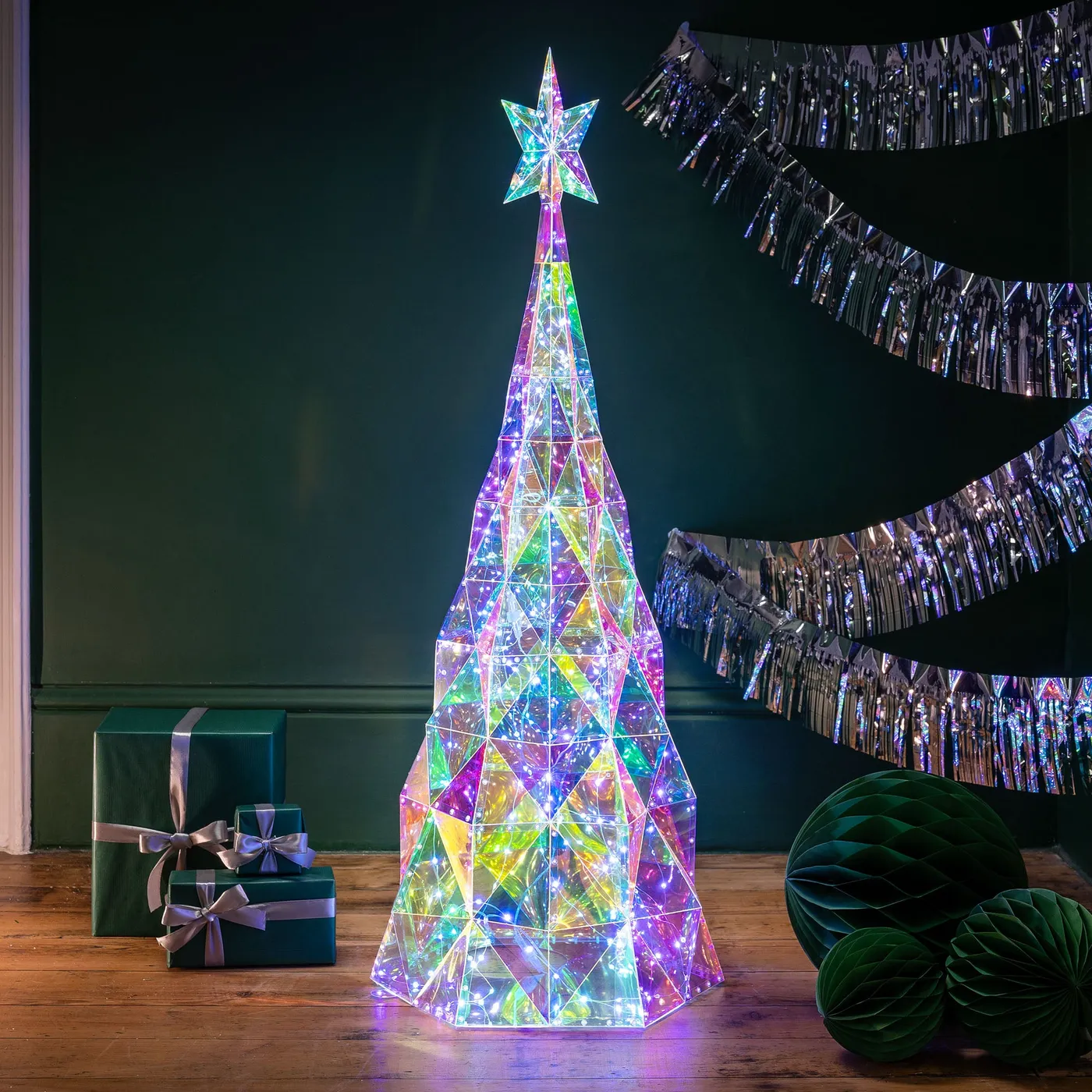
This one breaks the rules on purpose. No greenery, no flocking, no traditional ornaments — just facets and light. What saves it from feeling like a mall display is scale: the tree is roughly person-height, so it reads as sculpture rather than signage. The honeycomb spheres and dark green wrapped gifts echo the same shape language, which is why it still says Christmas.
26. Candy Cane Stripes and Oversized Poinsettias
- Cut red-and-white striped ribbon into 24-inch lengths.
- Loop each into a soft bow and wire the center tight.
- Attach an oversized faux poinsettia bloom to every third bow.
- Place them in a downward spiral, 10 to 12 inches apart.
- Reserve the candy cane picks for the top third only.
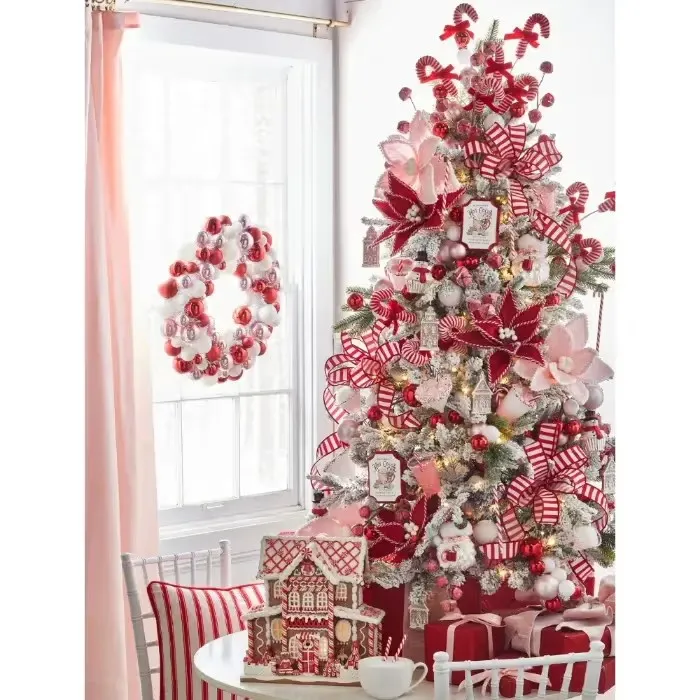
Roughly an hour and $35–$60 in ribbon and blooms.
- Flocked tree, 7 ft: $110–$280
- Striped ribbon, 2 rolls: $20–$40
- Faux poinsettia stems: $30–$70
- Candy cane picks and glossy ornaments: $30–$65
- Gingerbread house (baked or ceramic): $15–$45
Total: $205–$500
Faux poinsettias are the shortcut — a $40 bunch of stems replaces about $150 worth of themed ornaments.
27. Woven White-and-Gold Ribbon Through Green Branches
Ribbon is the cheapest way to fake an expensive tree. A 10-yard roll of patterned white-and-gold runs $8–$18, and it does the visual work of a $120 ornament set. Buy it in early December after the first markdowns, or hit craft store clearance in January for next year. This is the closest you’ll get to Idea #20 without wrestling with mesh.

Close-up decorating like this suits any tree size, but the ribbon count scales fast. A 7-foot tree needs about 20 yards woven through; a 9-footer wants closer to 35. Buy one roll more than you think you need — running out two-thirds of the way up is the most common ribbon regret there is, and dye lots rarely match on a second trip.
28. One Glossy Cream Bauble, Hung on Tan Ribbon
- Pick one ornament finish and repeat it — don’t mix gloss and matte at this scale.
- Match your ribbon to the room’s wood tones, not to the ornament.
- Test your lights on a dimmer, not just on and off.
- Count branches before you buy: one ornament per 10 inches of visible branch.
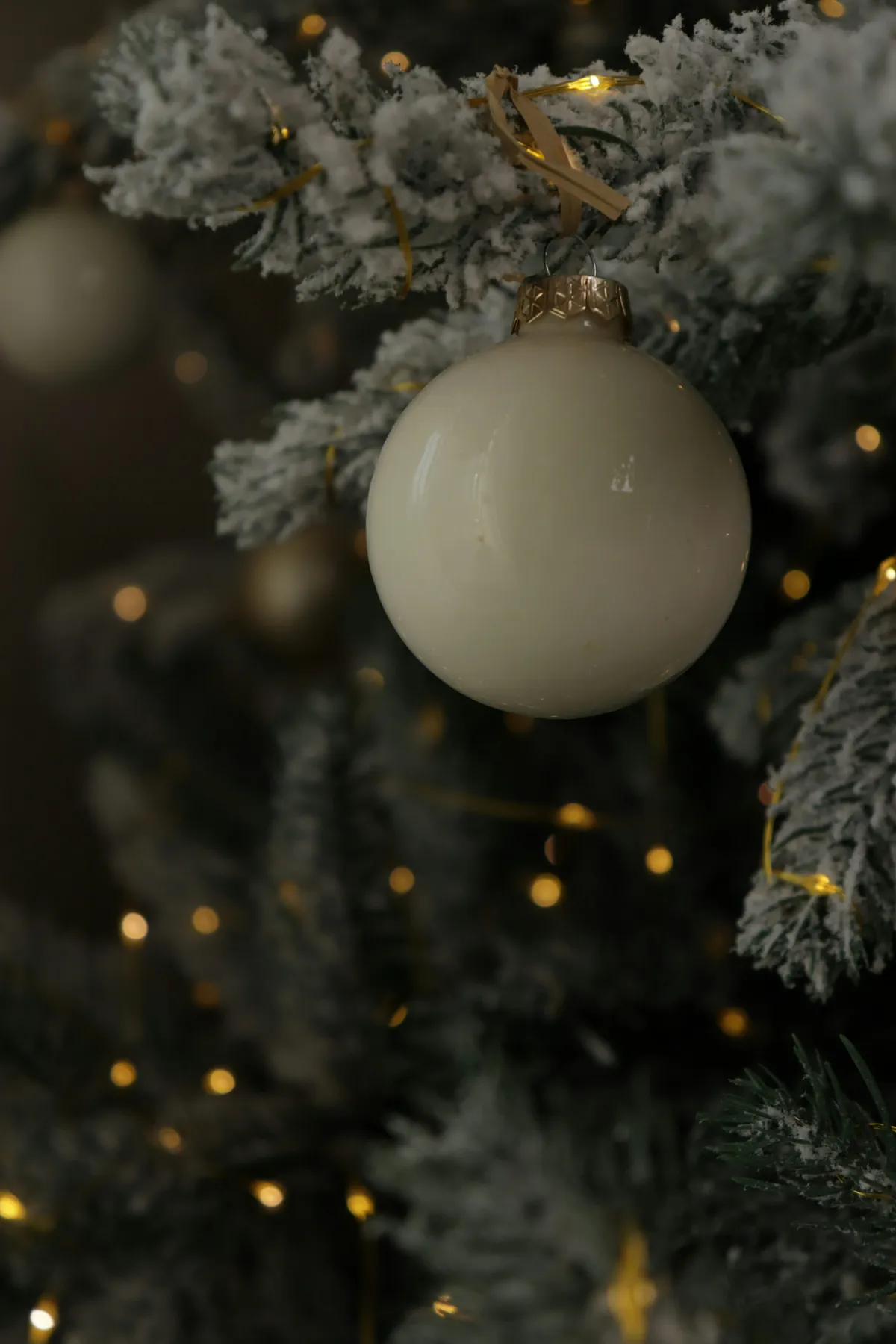
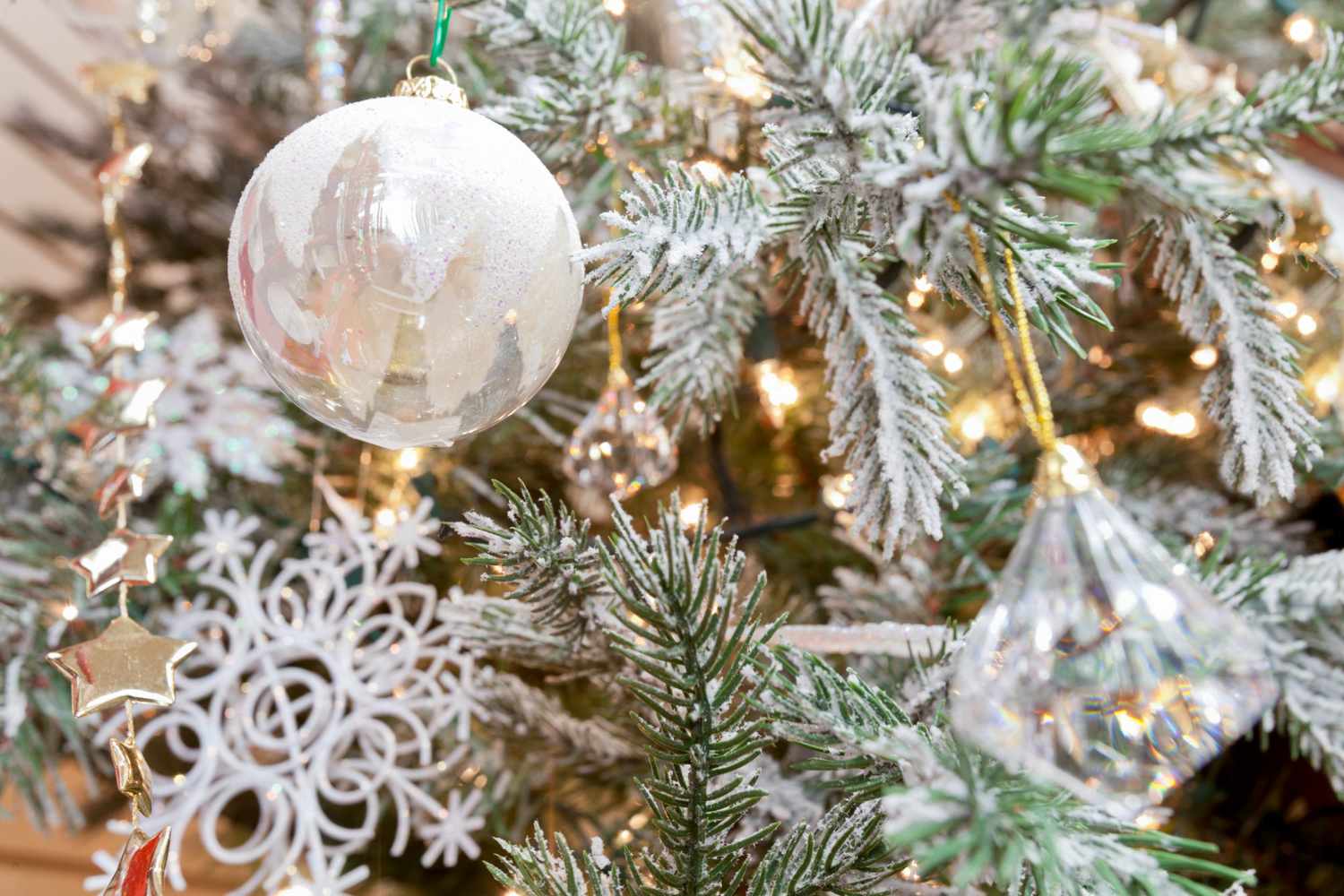
The less you hang, the more each piece has to earn its spot. A single glossy cream ornament on a tan ribbon works because the branch is frosted and the light is warm — three textures in a space the size of your hand. Get any one of them wrong and it looks accidental instead of edited. Start sparse, live with it for a day, then add.
Frost It, Light It, Then Live With It a Day
Start with one idea from this list — not five — and let your room tell you what it needs. The white trees that look effortless are almost always the ones where somebody stopped adding two ornaments before they thought they were done.
📌 Pin your favorite version now so it’s waiting for you next December — and tag us when yours goes up, because we genuinely want to see it.
