Sage Green Kitchen 2026: Timeless Color Ideas Shaping the Future of American Homes
Sage green kitchens are quietly taking over Pinterest boards as Americans rethink calm, livable homes for the years ahead. In 2026, this muted green feels less trendy and more like a new neutral, pairing easily with modern life and timeless materials. People are saving these kitchens not just for looks, but for how they feel—soft, grounding, and personal. Below are ten ideas showing how sage green can shape kitchens that feel current yet deeply lived-in.
1 Modern Sage Green Cabinet with White Balance
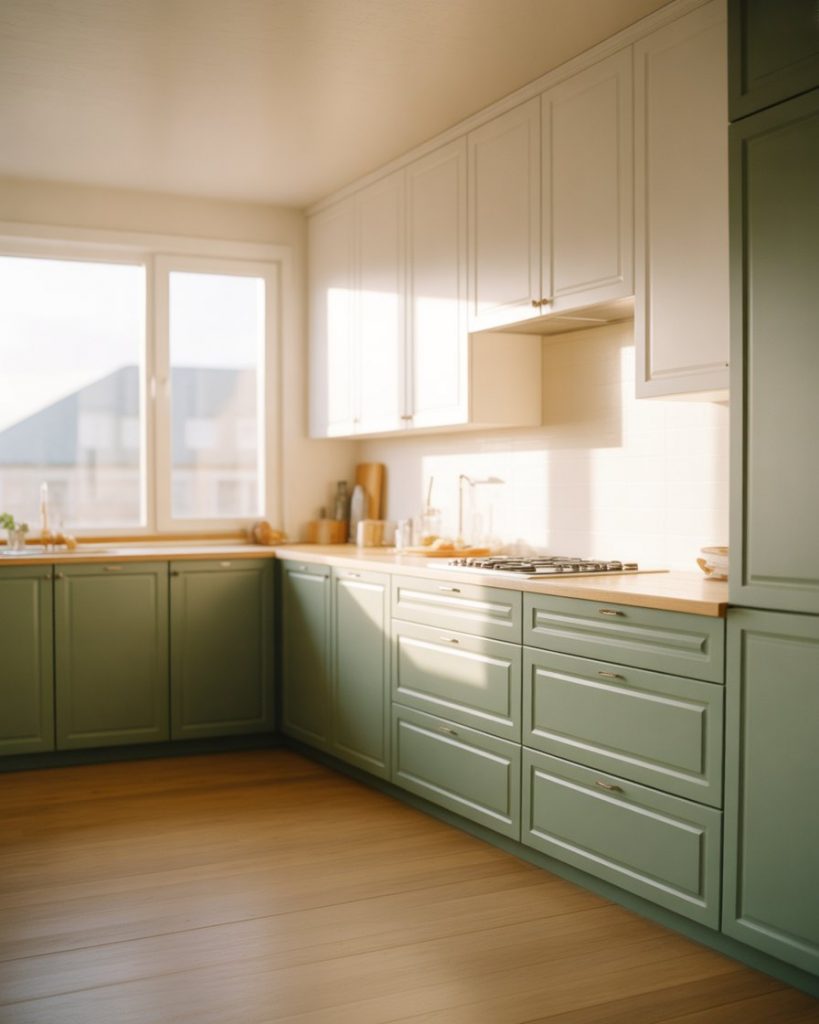 In 2026, the sage green kitchen 2026 trend leans heavily on balance, especially when white walls and cabinets meet muted green tones. This approach keeps kitchens bright while letting sage take the lead without overpowering the room. Crisp whites reflect light, while green adds depth, creating a calm, modern space that still feels warm and welcoming. This setup offers a practical insight: keeping upper cabinetry white visually lifts ceilings, especially in average-sized American homes. Designers often recommend this for homeowners wanting color without committing every surface. It’s an easy way to test sage green while preserving long-term flexibility if tastes change down the road.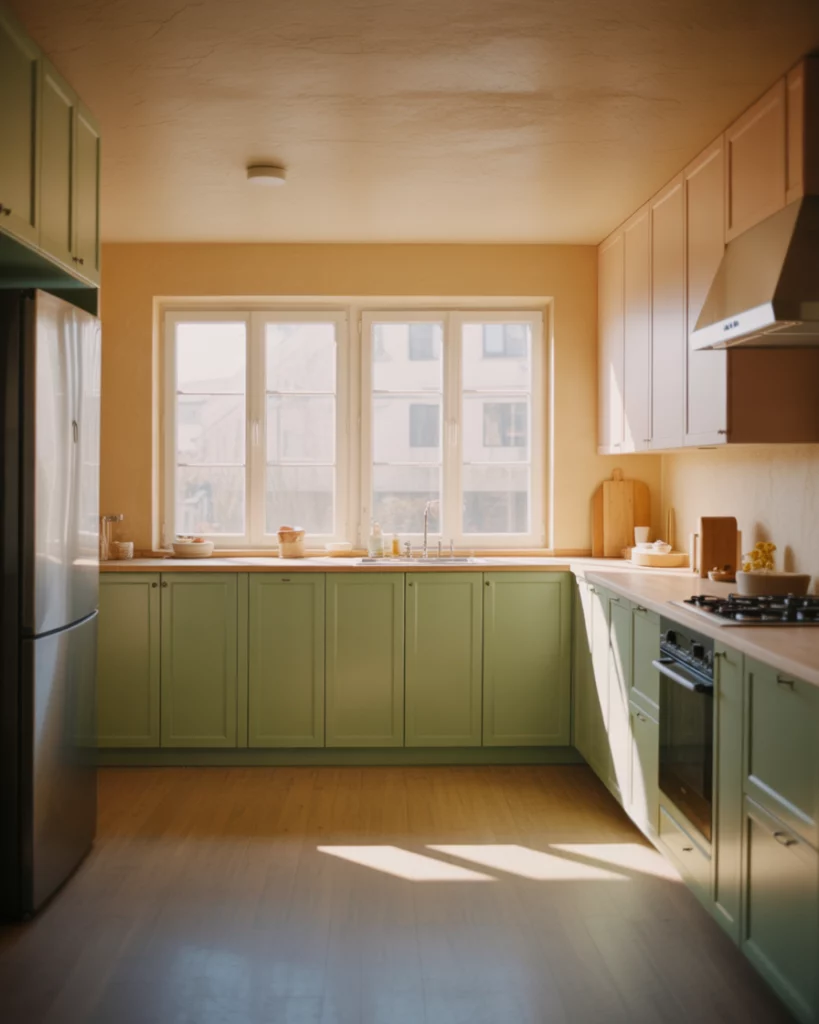
2 Farmhouse Sage Green with Butcher Block Warmth
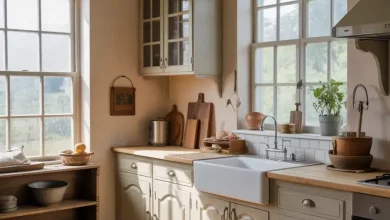
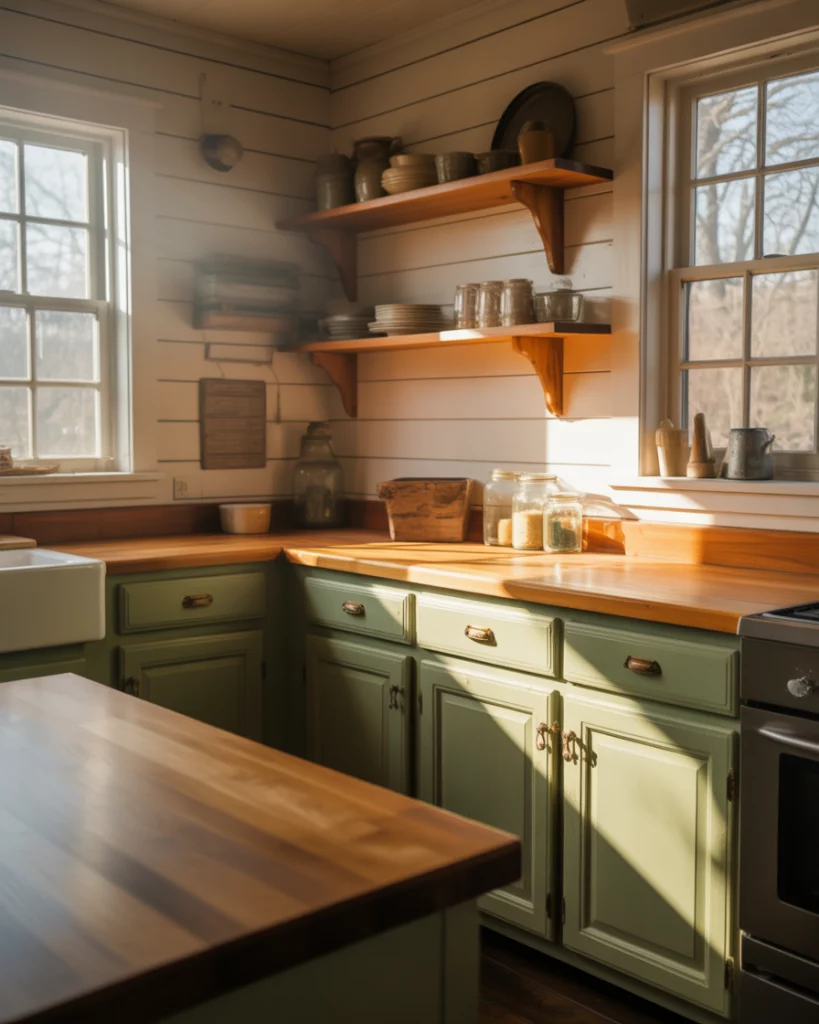 There’s nothing that feels more grounded than sage green farmhouse-style cabinetry blended with butcher block countertop cabinets. This farmhouse cabinetry style with the soft green tone is a perfect fit for modern farmhouse kitchens. Wood surface materials tie together the approachable nature of the style. This cabinetry style is a perfect seam between old and new farmhouse cabinetry styles for homeowners that appreciate the character but desire a fresher, more modern soft color palette. This style is a perfect fit for the American lifestyle, especially in the suburbs, where the kitchen is the main gathering zone of the family. This style works with families that like to cook and appreciate surfaces that get better with age. The worn, softer surface of the wood makes it feel like the kitchen is well used as opposed to a staged kitchen.
3 Sage Green and Black Countertop Contrast
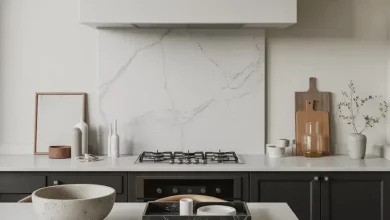
 For a bolder direction, sage green pairs effortlessly with cabinets with black countertops or a sleek black countertop. The contrast sharpens the softness of green, giving kitchens a confident, modern edge. This combination feels grown-up and intentional, ideal for homeowners craving drama without harsh color. A quick micro anecdote: one homeowner shared that switching to black counters finally made their sage cabinets feel “finished.” The darker surface grounded the room instantly. Sometimes one strong contrast element is all it takes to elevate an otherwise gentle color scheme.
4 Soft Sage Green with Matching Tiles
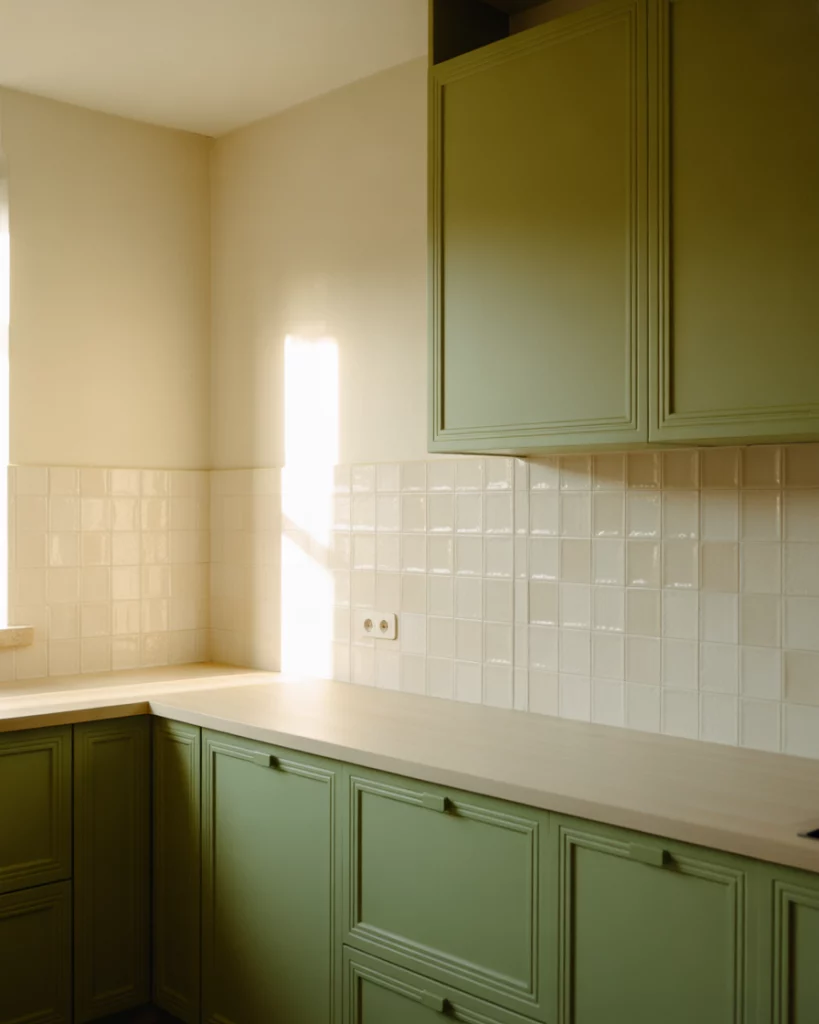 When planning tiles to match sage cabinetry, subtlety is key. Think handmade-look ceramics or muted stone backsplashes that echo green’s undertones. These kitchens feel layered and thoughtful, especially when paired with a calm color scheme that avoids stark contrasts. This approach shows where it works best: kitchens with limited natural light. Matching tiles reduce visual breaks, helping smaller or darker spaces feel cohesive. It’s especially effective in city apartments or townhomes where continuity matters more than contrast.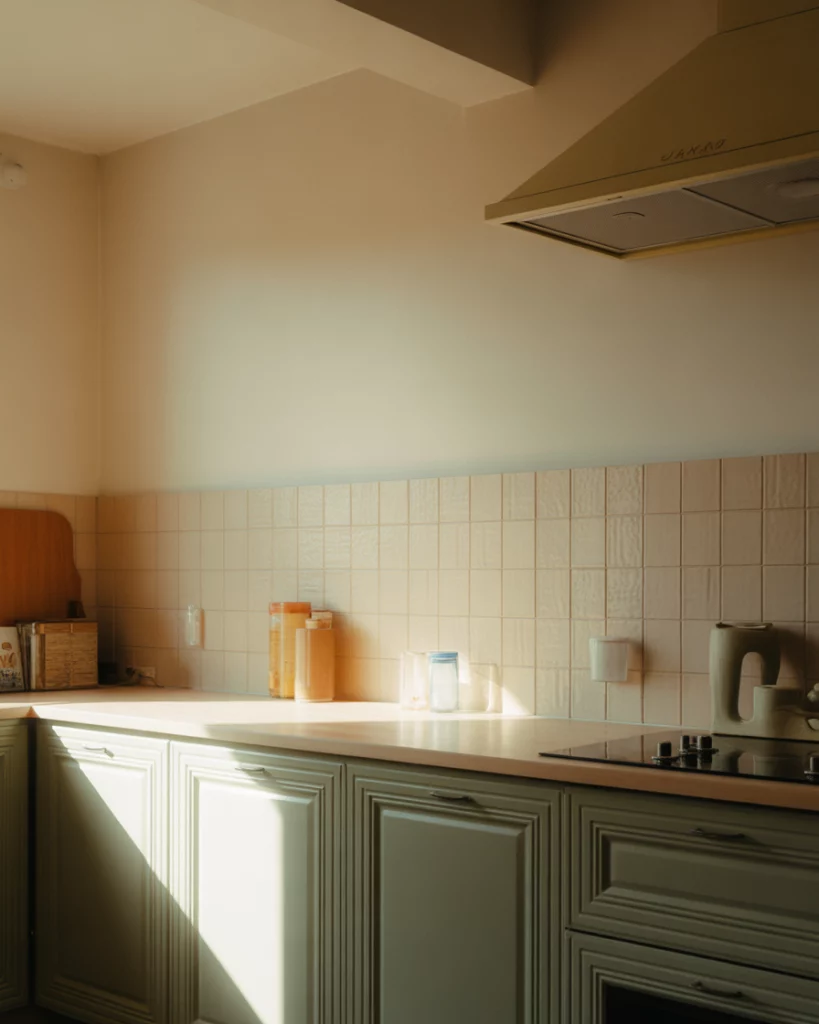
5 Modern Sage Green with Integrated Appliances
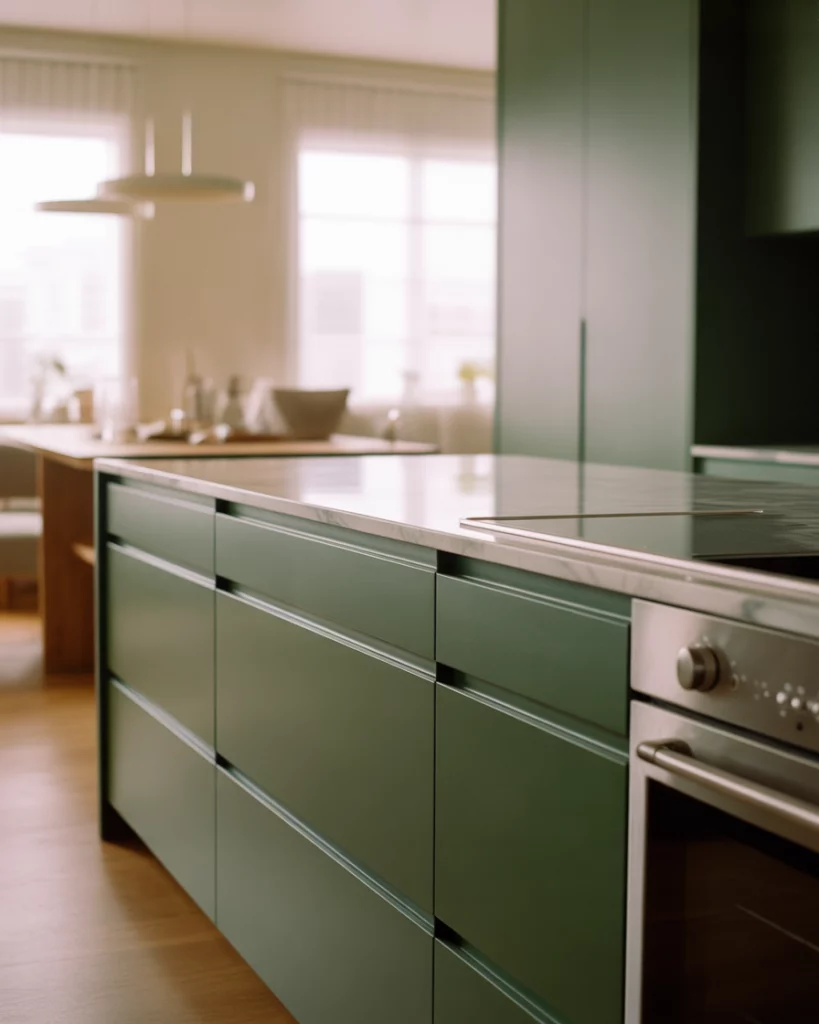 In sleek modern kitchens, sage green becomes a sophisticated backdrop for streamlined appliances. Panel-ready refrigerators and concealed dishwashers keep the color uninterrupted, letting cabinetry read as furniture rather than utility. The result feels calm, intentional, and very 2026. From an expert-style commentary perspective, designers note that sage works better than trendier greens because it doesn’t compete with stainless steel or integrated panels. It supports the architecture instead of dominating it, which is why it’s becoming a long-term favorite.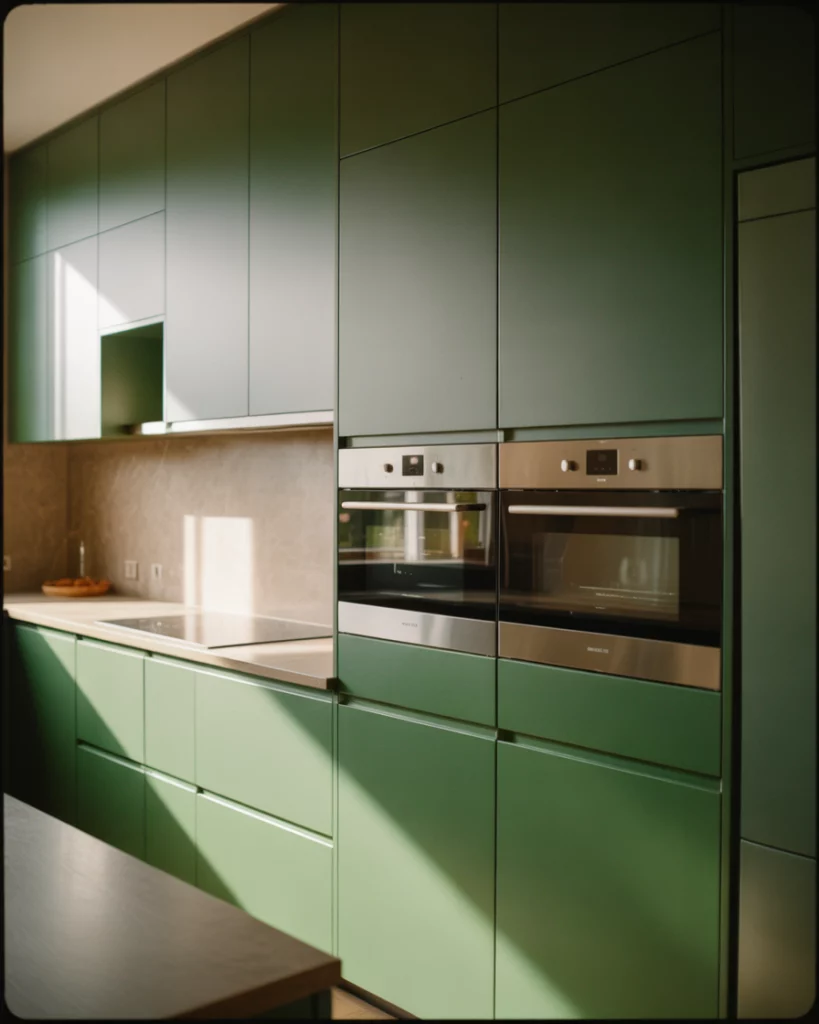
6 Sage Green Cabinets with Wooden Worktops
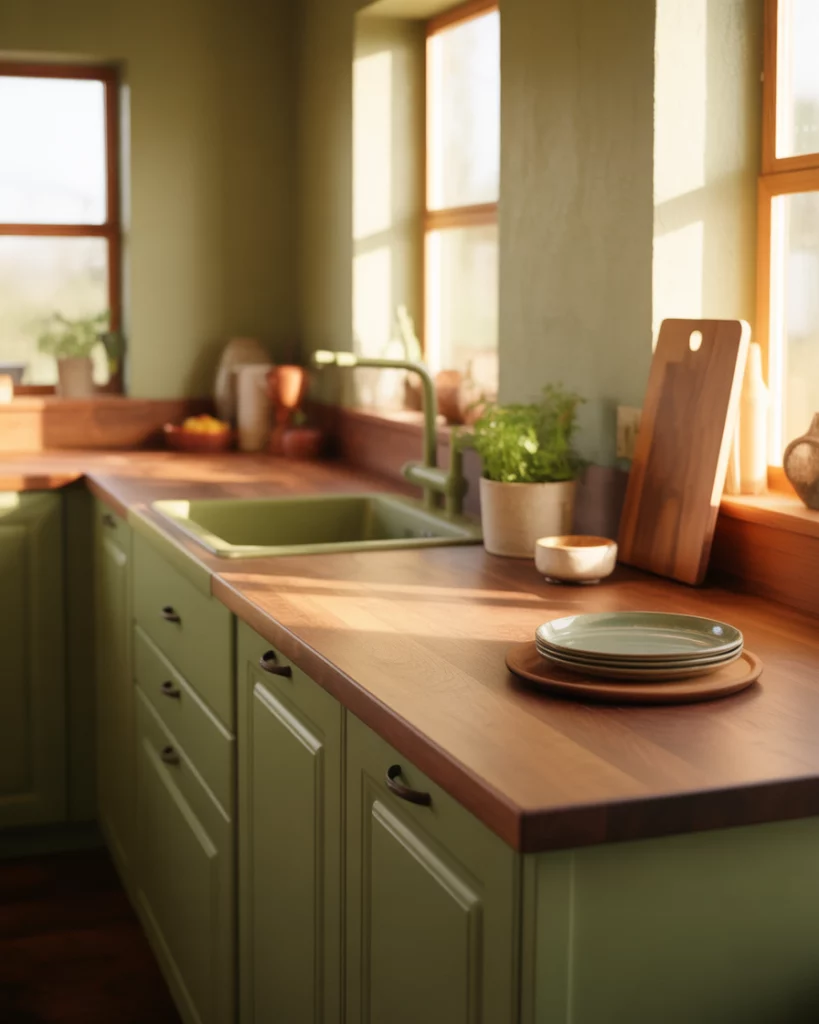 Pairing sage cabinets with wooden worktop surfaces creates an instantly welcoming feel. The natural grain adds warmth, while green keeps things current. This wood and color pairing suits homeowners who want organic textures without leaning rustic. From a budget angle, this combination can be surprisingly accessible. Many homeowners choose solid wood on islands only, mixing with affordable surfaces elsewhere. It delivers warmth and style without committing to a full high-end renovation.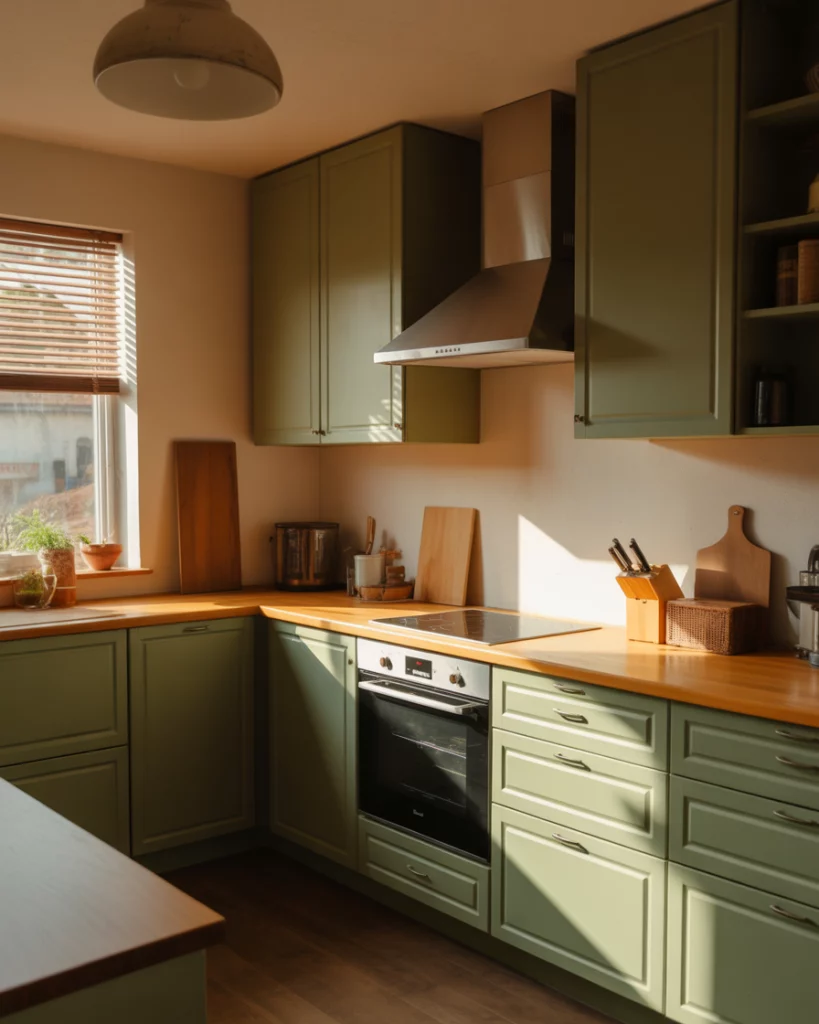
7 Dark Sage Green for Moody Kitchens
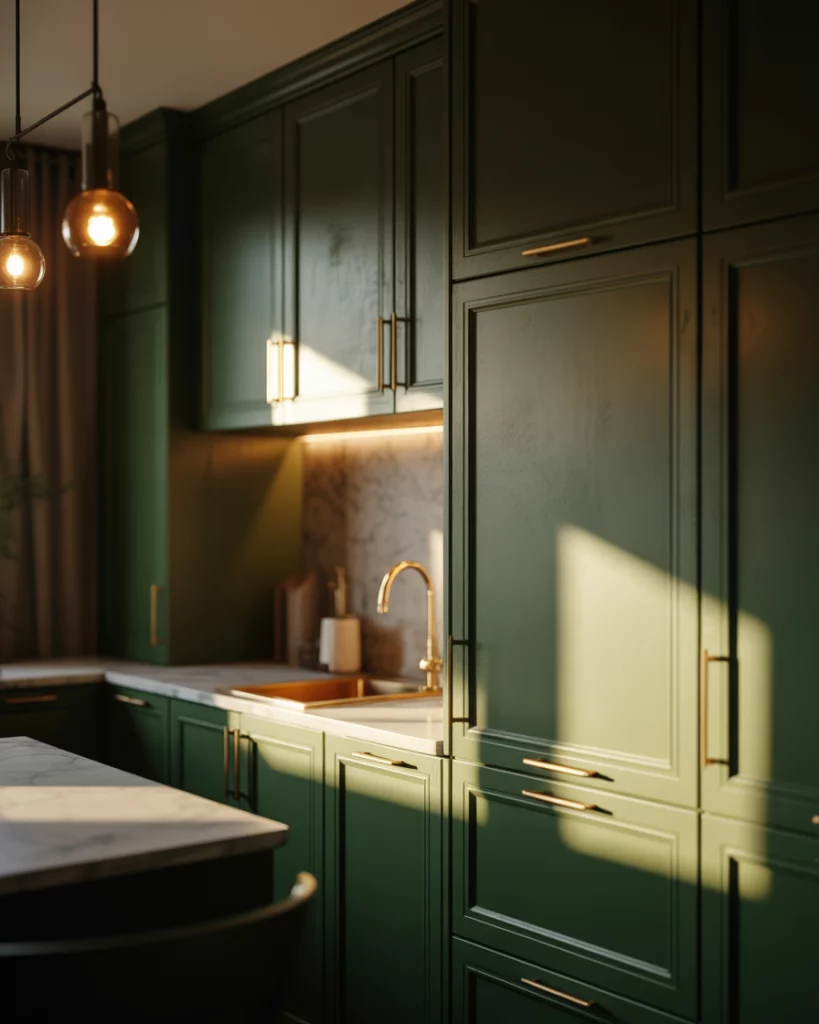 Leaning into dark sage tones creates a richer, moodier kitchen that still feels livable. Deeper greens paired with thoughtful light sources feel cozy rather than heavy. This direction suits homeowners ready to move beyond all-white spaces. This reflects real homeowner behavior: many people start with a darker island before committing fully. Living with the color builds confidence. By the time they repaint perimeter cabinets, the space already feels familiar and loved.
8 Sage Green Island as the Focal Point
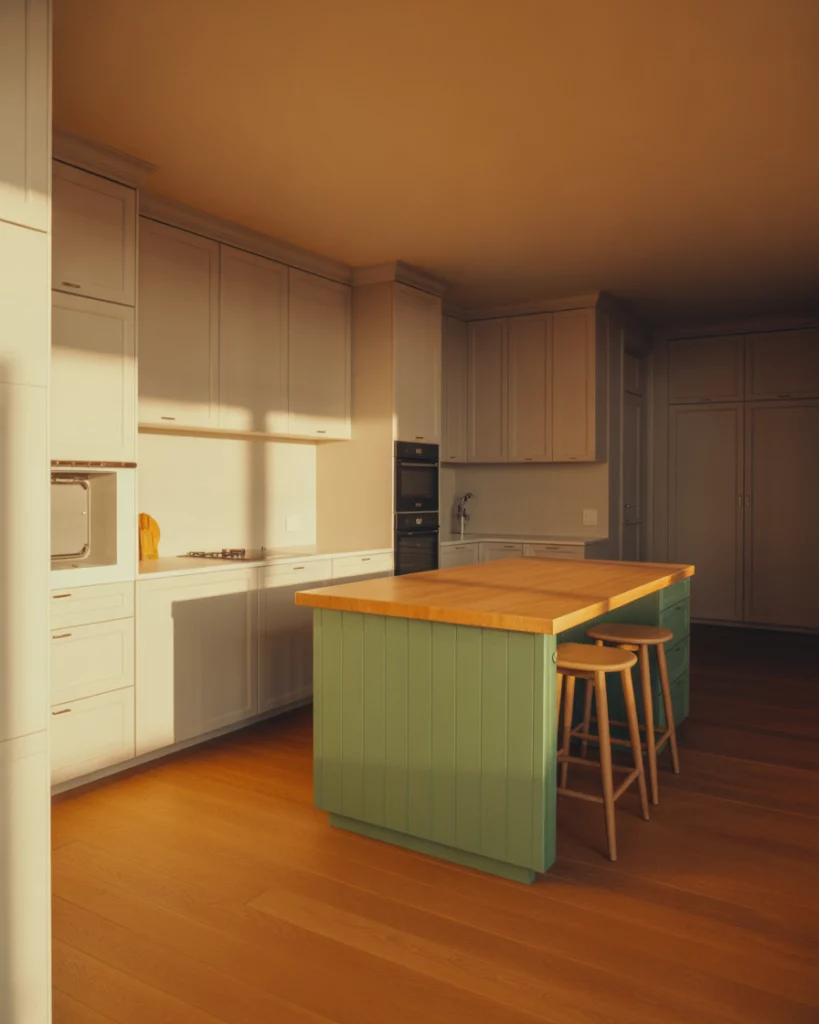 A sage green island offers color without overwhelming the room. Surrounded by neutral cabinetry, it becomes a visual anchor and social hub. This approach fits homeowners who want a touch of personality while keeping resale-friendly choices elsewhere. A common mistake is choosing a sage that’s too cool. Testing samples in different lighting avoids disappointment. Islands sit under mixed light sources, so a balanced green prevents the color from reading gray or dull at night.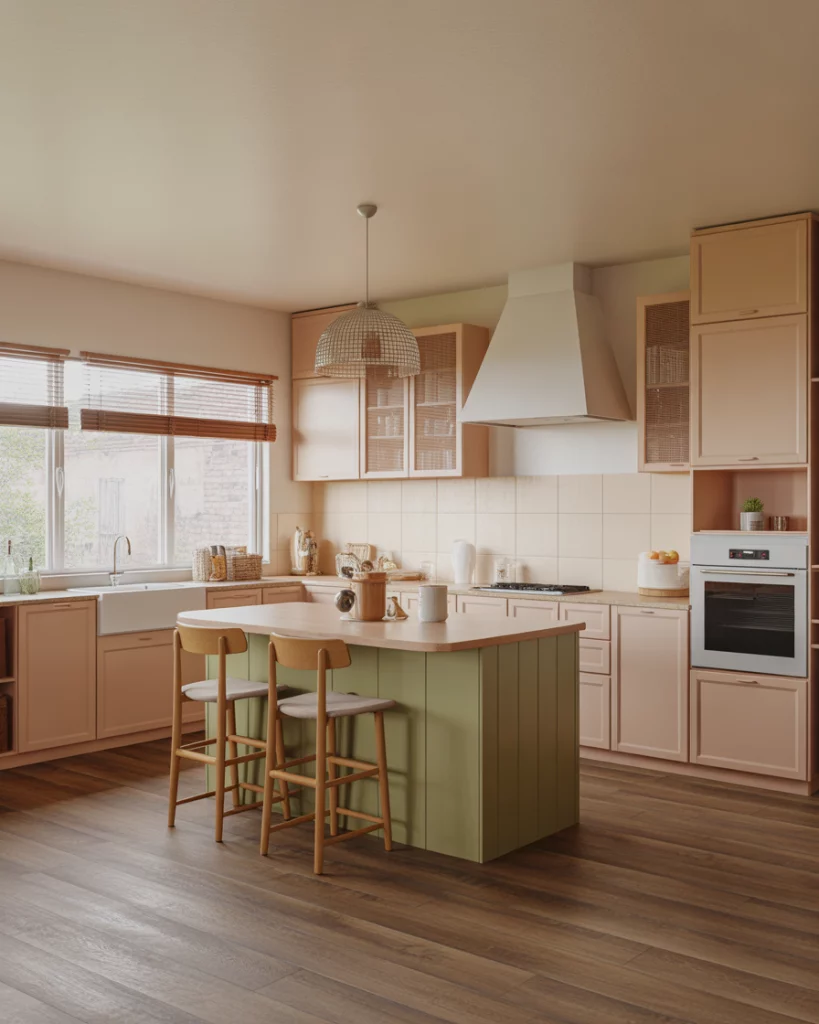
9 Sage Green with Soft Pink Accents
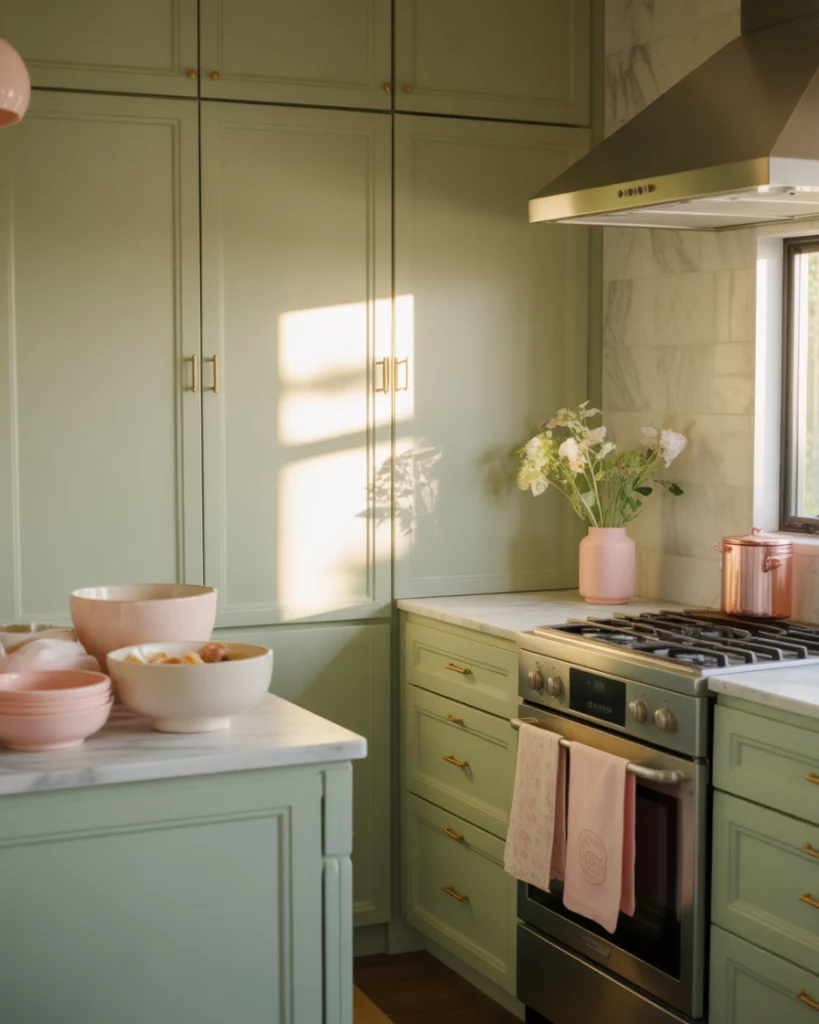 Unusual blends such as pink and sage craft kitchens that seem fresh as well as gentle. Blush-toned decor or little accessories soften green’s earthiness, and layered color palettes can be artfully structured to sustain finishing. Practically, the small doses. The pink textiles or ceramics are the most effective, whereas permanent finishes are the least effective. Without fastening to an overly bold long-term fitted look, seasonally refreshing the space is possible.
10 Complete Sage Green Aesthetic Kitchens
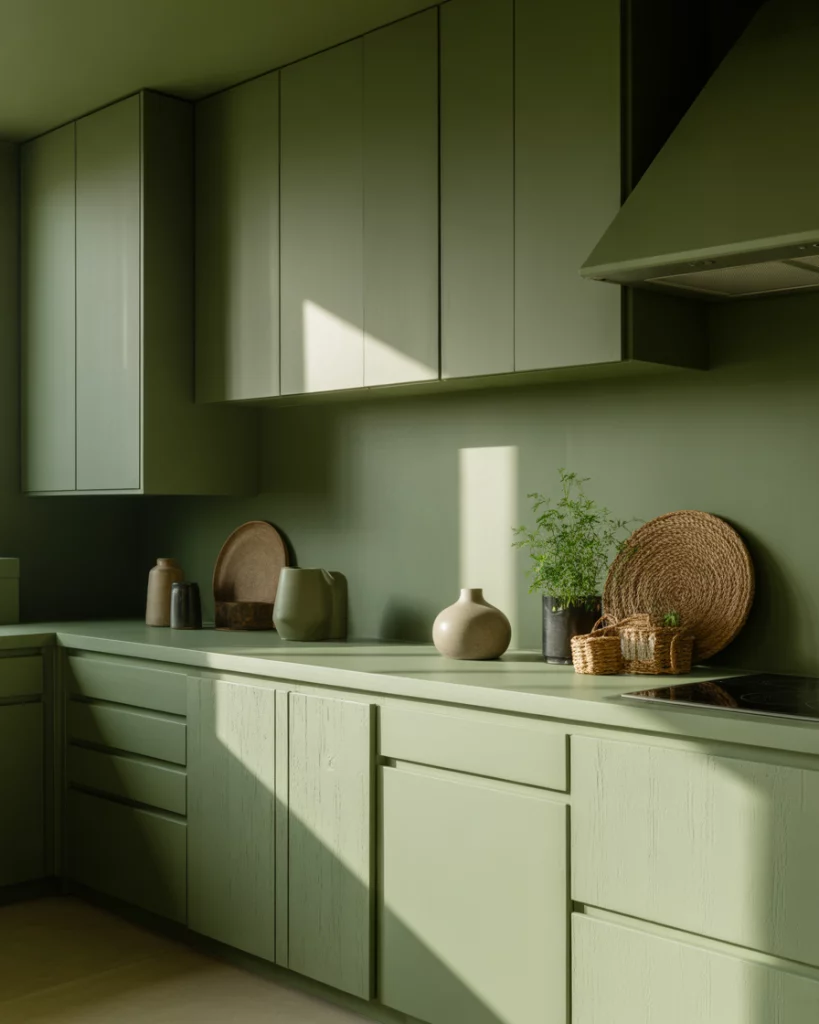 Some people fully commit to the design, extending sage to the walls, cabinets, and decor. When done well, the effect is immersive, and the look is not flat, especially when it is layered in texture and tonal variation. This aligns with the American trend in design towards slower, more calm homes. There is a desire for kitchens to be restorative after a long day. A full-stage approach offers a cocoon effect that is stylish without losing the immersive feel, especially in open-plan homes.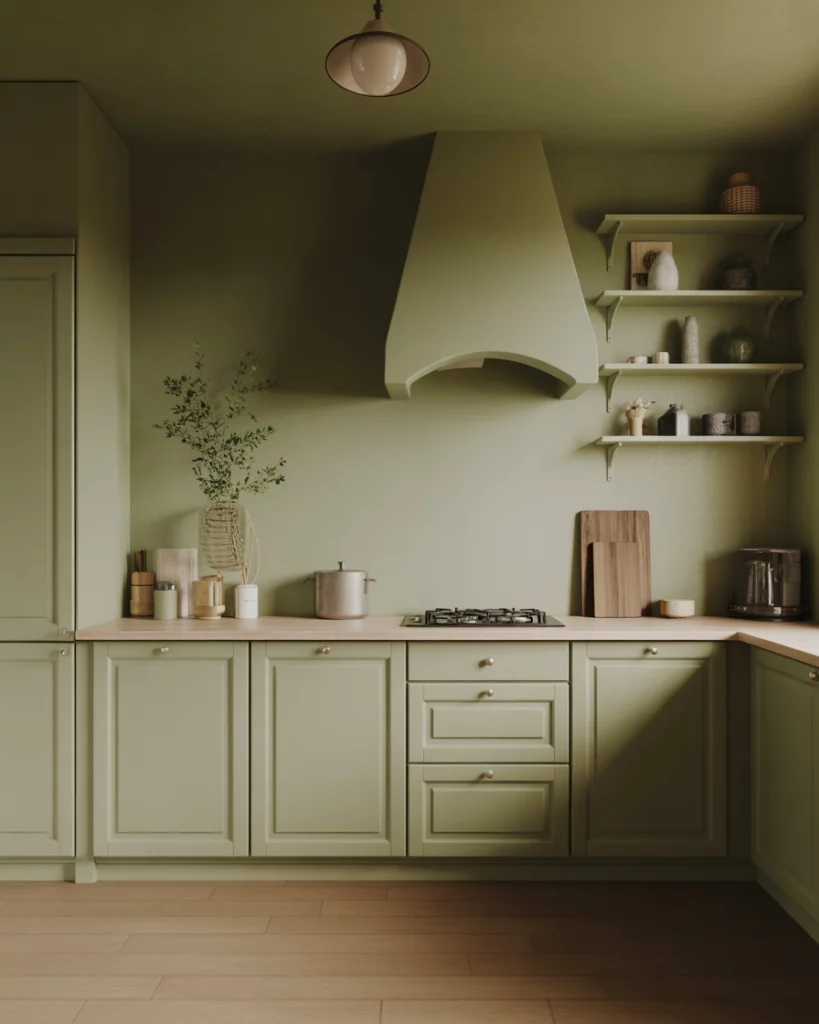
11 Sage Green Cabinets with Black Granite Drama
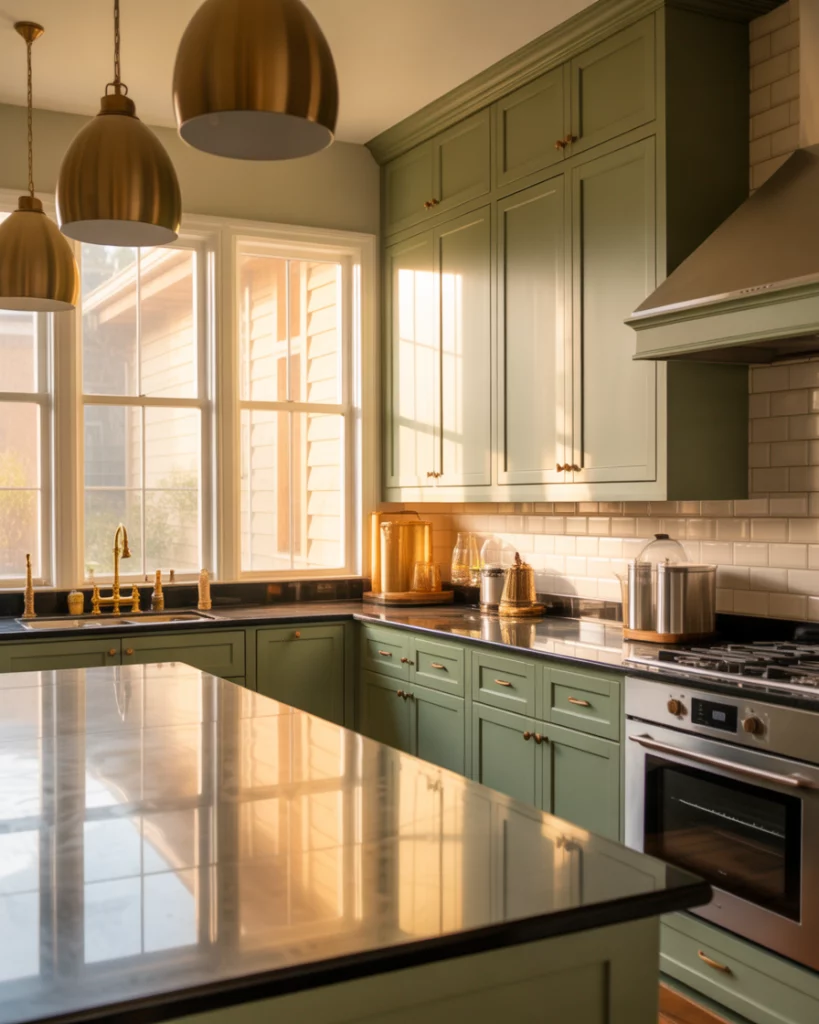 Pairing sage cabinetry with cabinets with black granite countertops creates a confident, upscale look that still feels approachable. The softness of green offsets the stone’s polish, keeping the kitchen from feeling too formal. This contrast works especially well in larger American kitchens that can handle visual weight. From an expert-style viewpoint, designers often recommend balancing dark stone with warm metals or wood flooring. Without that warmth, granite can feel cold. Sage green acts as the bridge, softening the stone while keeping the kitchen visually grounded.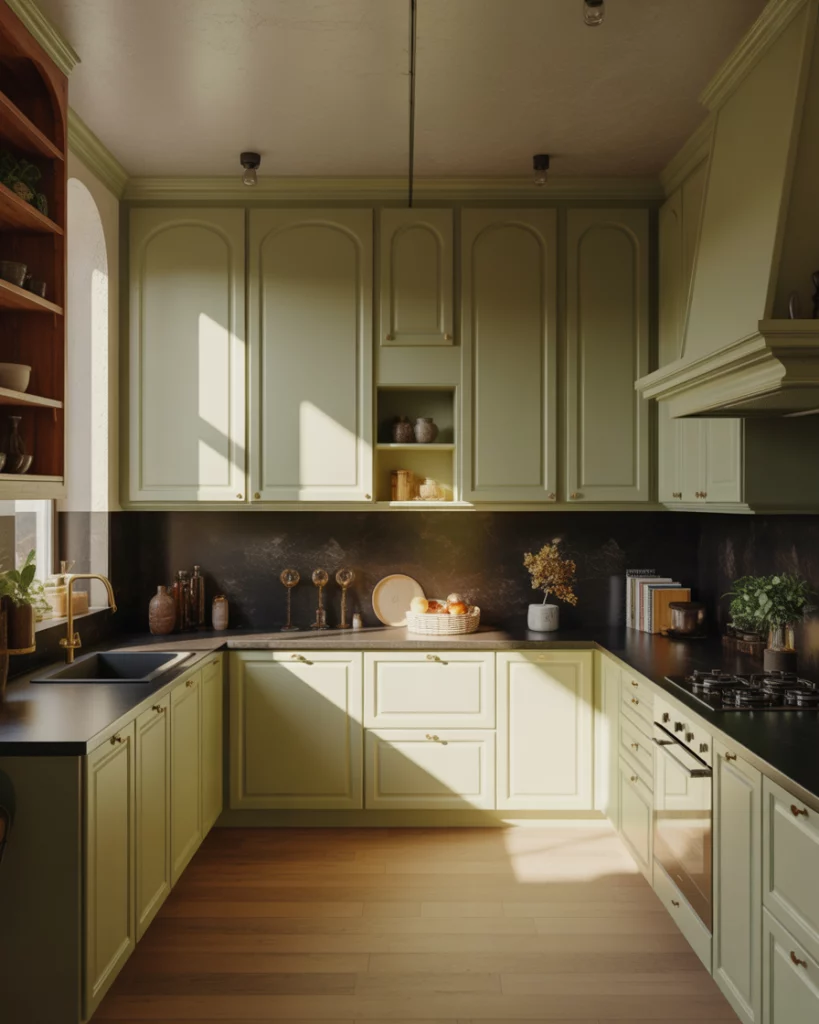
12 Light Sage Green for Airy Open Kitchens
 A lighter take on sage fits beautifully into kitchens designed around light and openness. When paired with a gentle color palette of creams and pale woods, the space feels breezy and calm. This approach is ideal for open-plan homes where the kitchen flows into living areas. Where it works best is in homes with large windows or sliding doors. Natural light keeps lighter sage from reading flat, helping it shift subtly throughout the day, which adds quiet visual interest without clutter.
13 Sage Green with Statement Backsplash
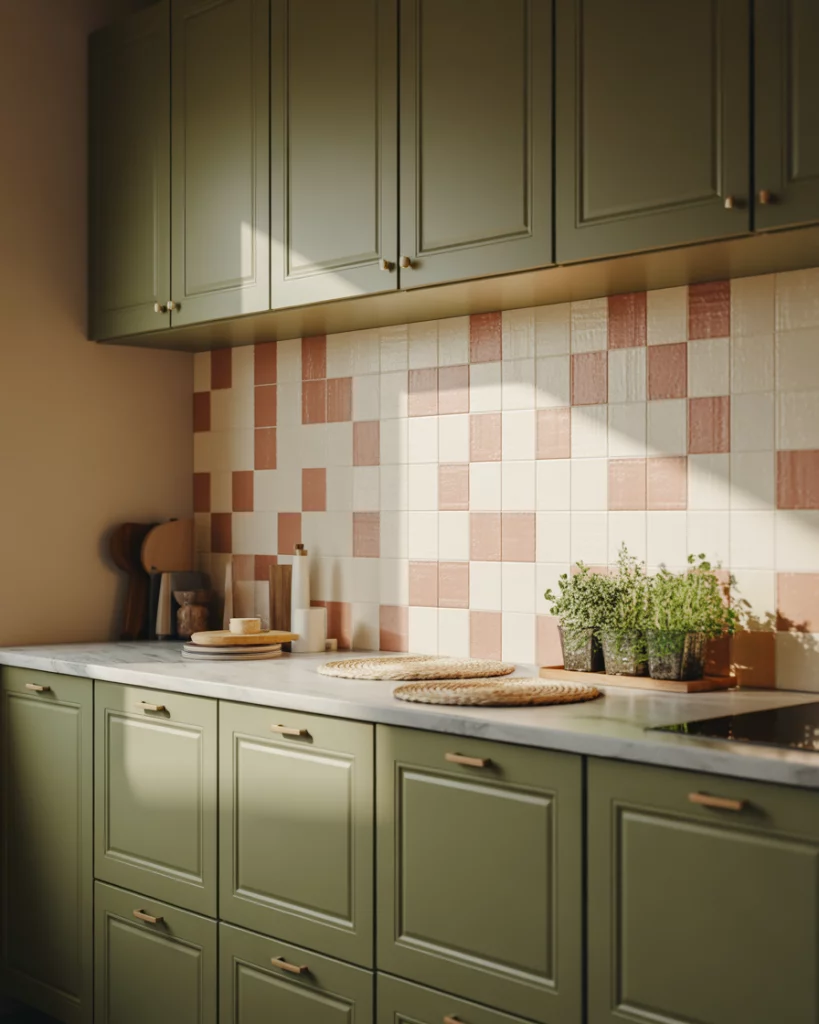 Using bold backsplash ideas alongside sage cabinets brings personality without overwhelming the room. Patterned tiles or textured stone add movement, while green grounds the look. This pairing suits homeowners who want a focal point but still crave a timeless base. A practical insight here is restraint. Let the backsplash shine while keeping hardware and counters simple. Too many competing details can make even a beautiful kitchen feel visually noisy.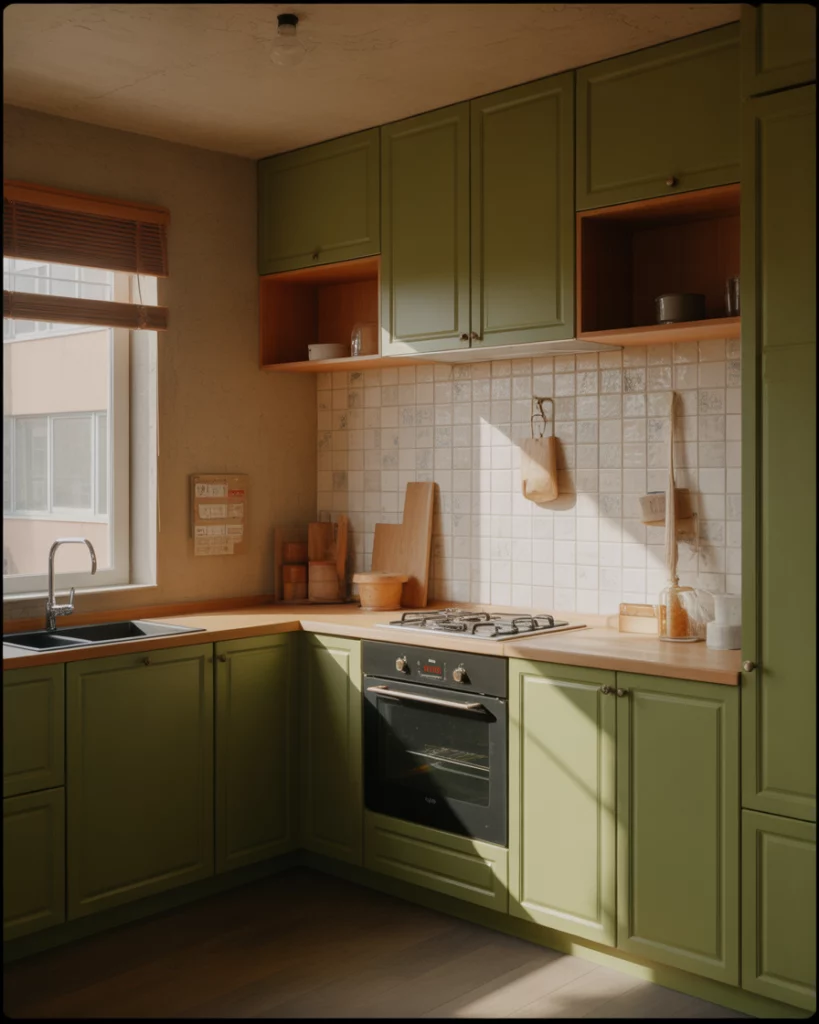
14 Farmhouse Sage Green with Vintage Accessories
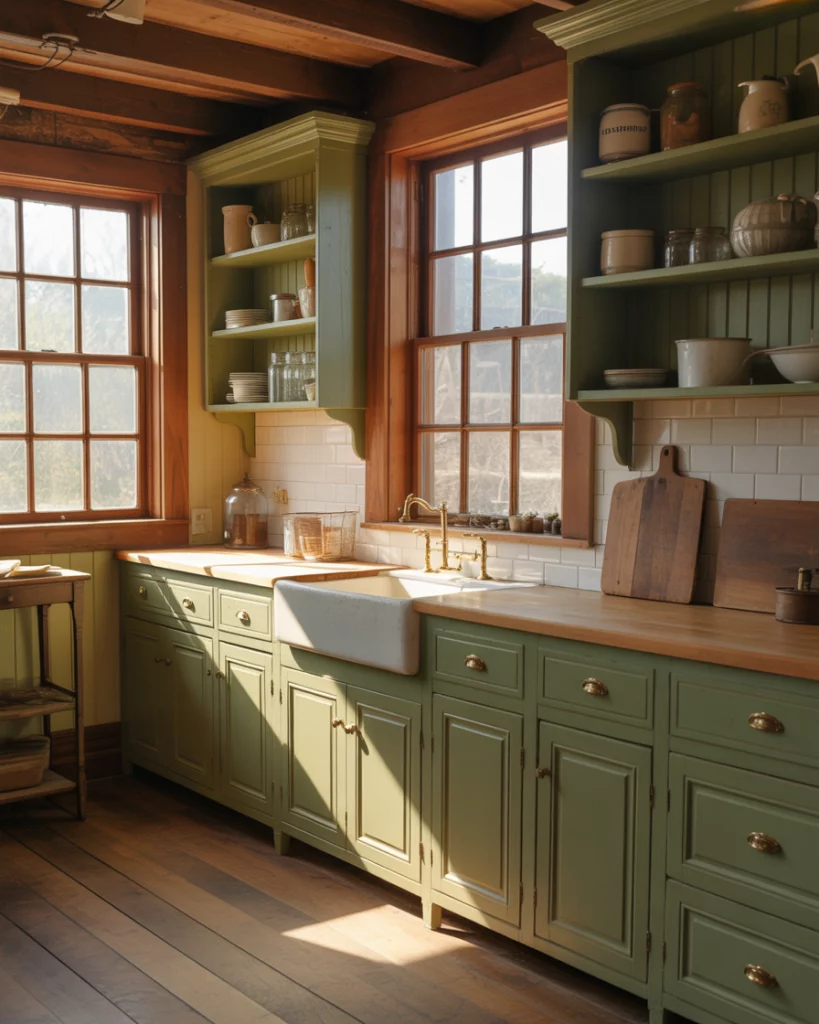 Classic farmhouse kitchens feel refreshed with sage cabinetry and thoughtfully chosen accessories. Think ceramic crocks, aged brass, and open shelves that add character. The green keeps vintage elements from tipping into overly rustic territory. A short micro-anecdote: one homeowner said swapping their white cabinets for sage made inherited family dishes finally feel at home. The color gave meaning to objects that once felt purely decorative.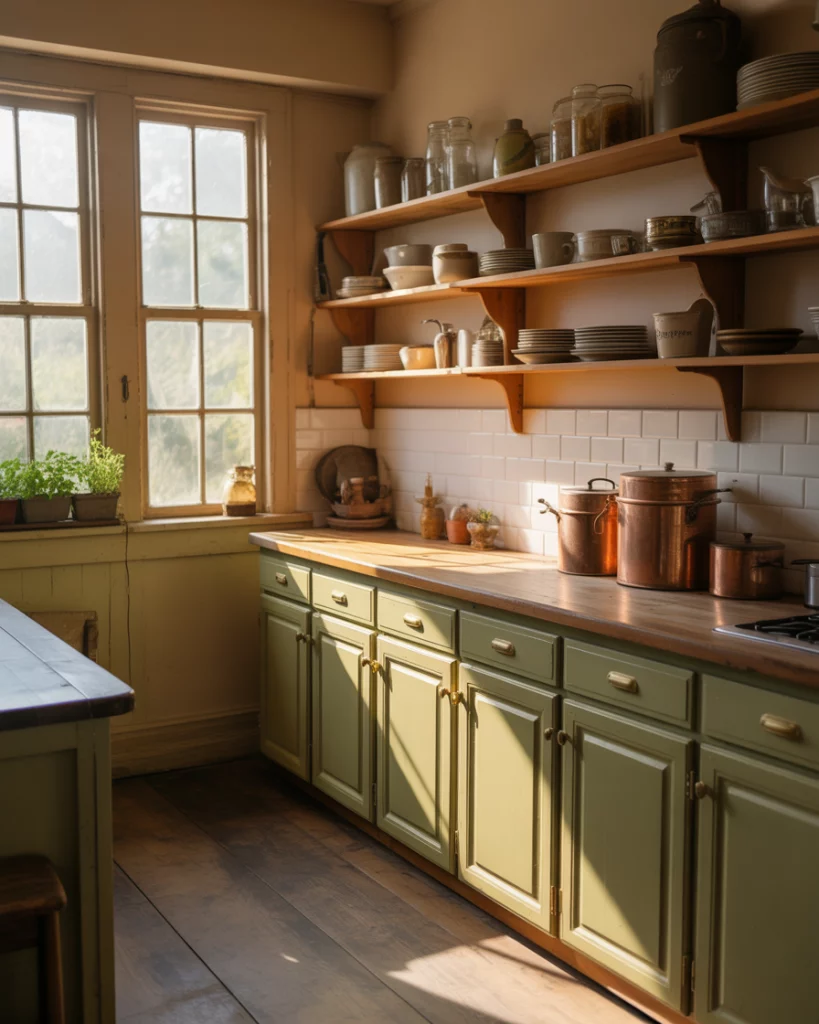
15 Sage Green Cupboards in Compact Kitchens
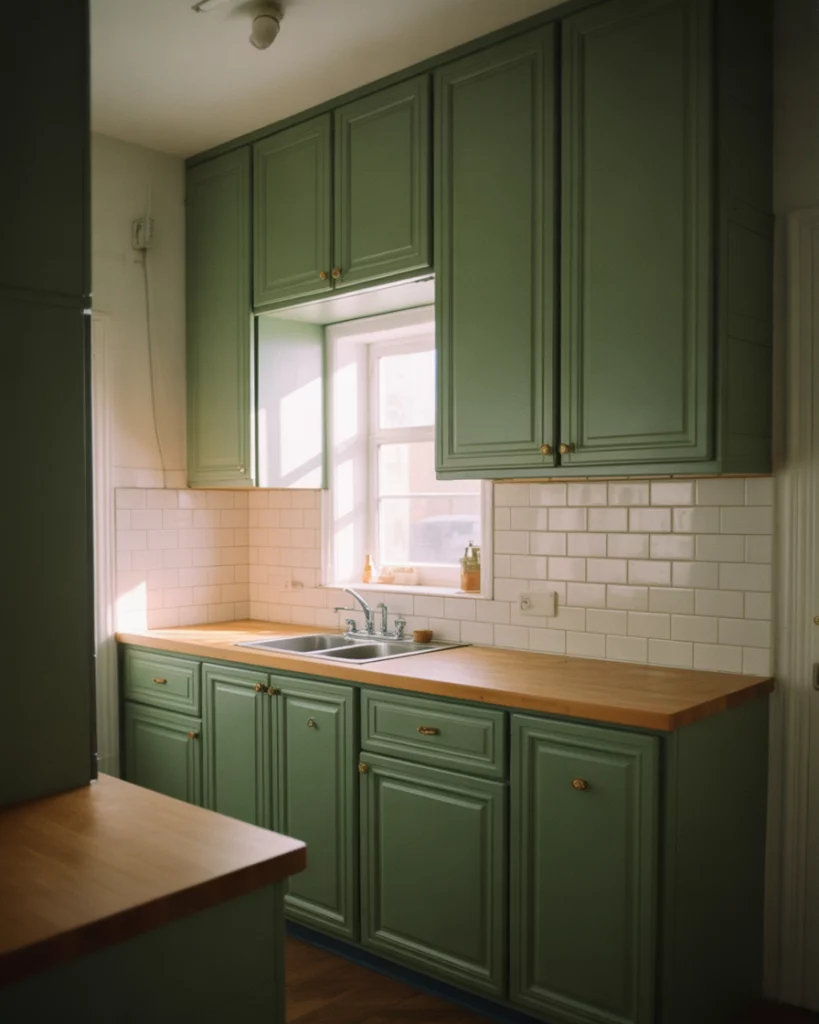 Even small kitchens benefit from sage cupboards. The color adds personality without shrinking the space, especially when paired with reflective surfaces. In apartments or older homes, sage brings softness where white might feel stark. Common mistakes include choosing finishes that are too matte in tight spaces. A slight sheen on cupboard paint helps bounce light around, keeping the kitchen from feeling boxed in.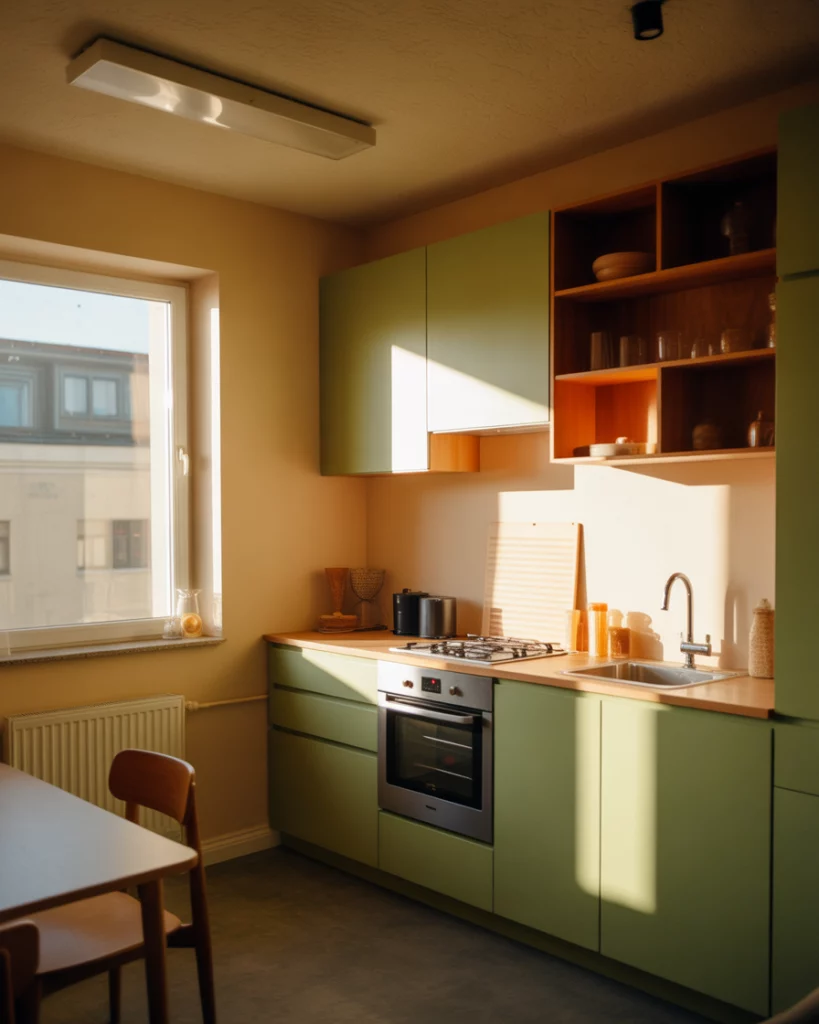
16 Sage Green with White and Natural Wood
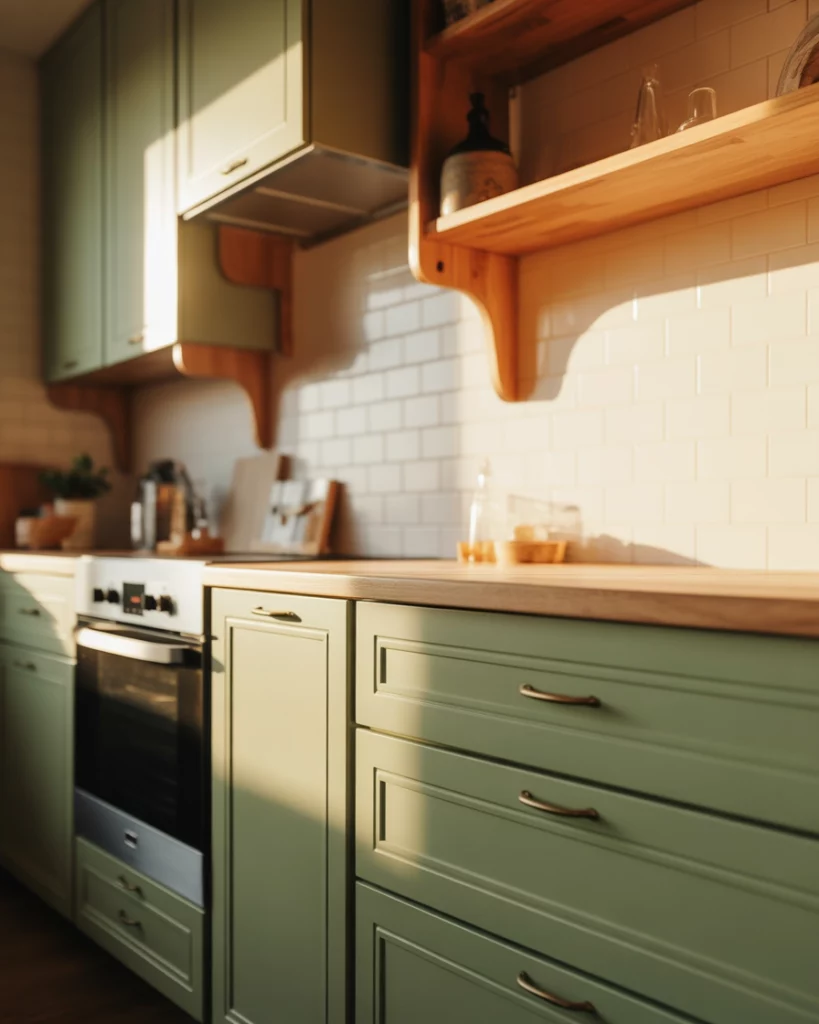 Combining white and sage with warm timber elements creates kitchens that feel timeless. This trio works across styles, from transitional to modern farmhouse, and offers flexibility as decor tastes evolve. From an American lifestyle perspective, this mix supports busy households. It hides wear better than all-white kitchens while still feeling clean and calm, making it a practical long-term choice.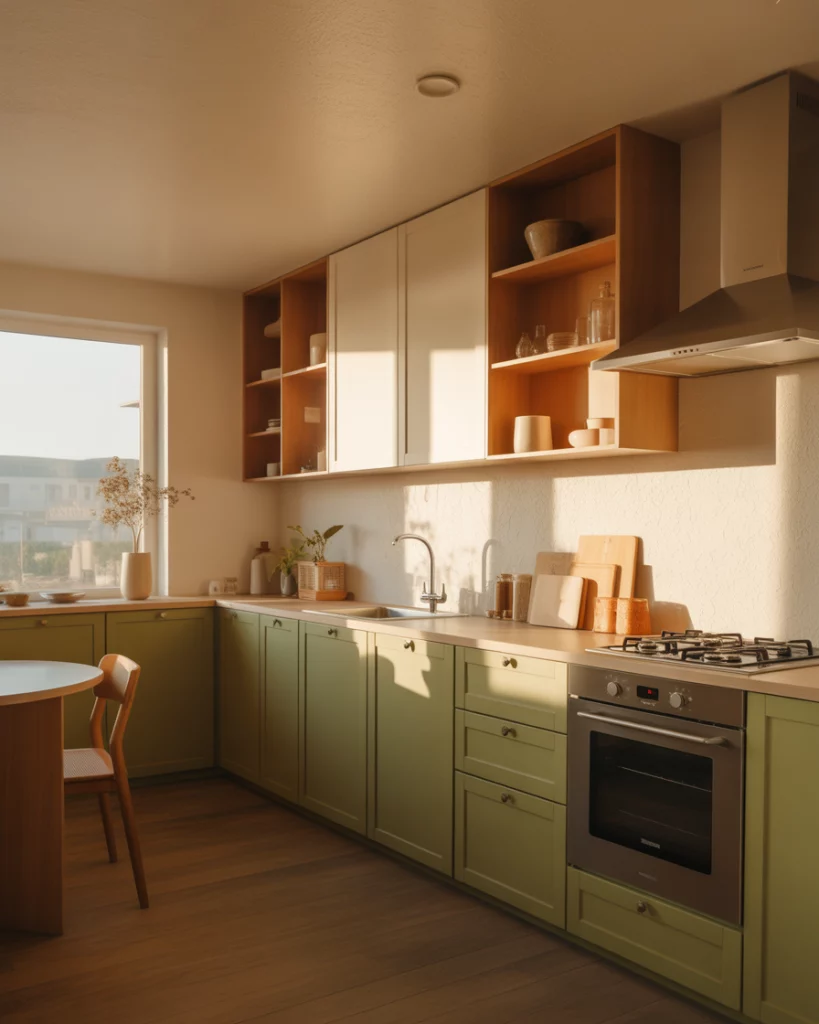
17 Modern Sage Green with Minimal Decor
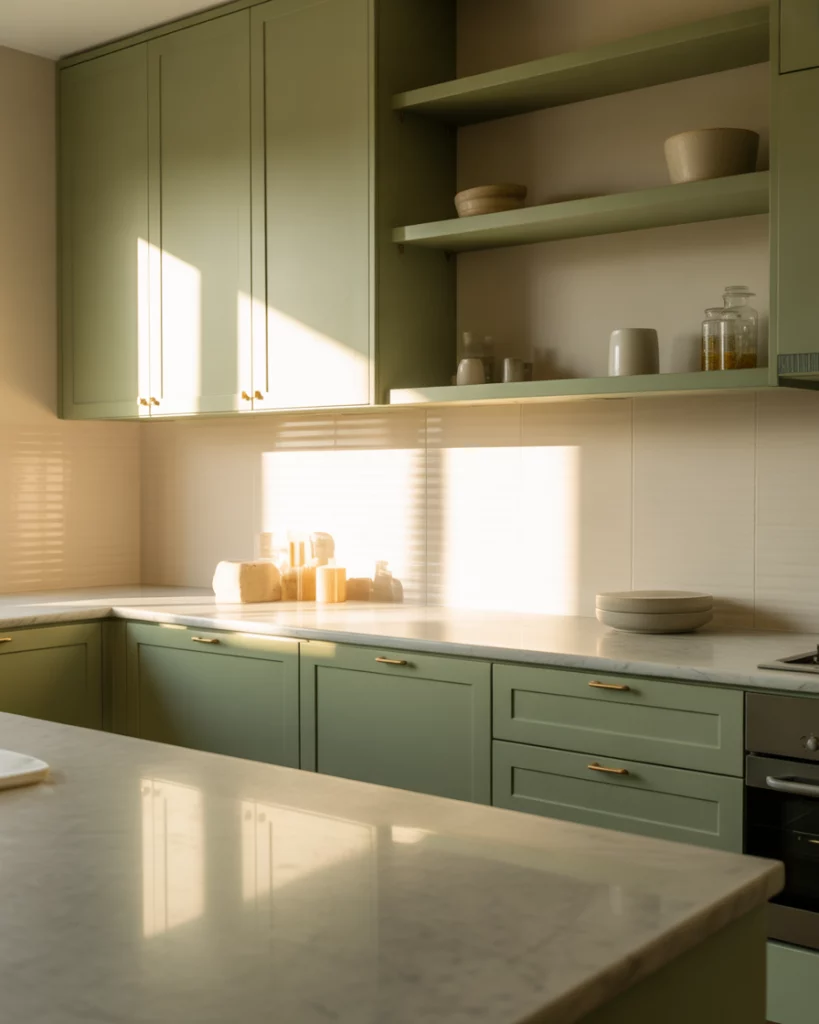 In pared-back designs, sage green becomes the star. Minimal decor allows the color and materials to speak for themselves. Clean lines and uncluttered surfaces keep the kitchen feeling intentional and serene. Expert commentary often notes that minimal kitchens succeed or fail on color choice. Sage works because it adds warmth without relying on excess styling, making restraint feel inviting rather than cold.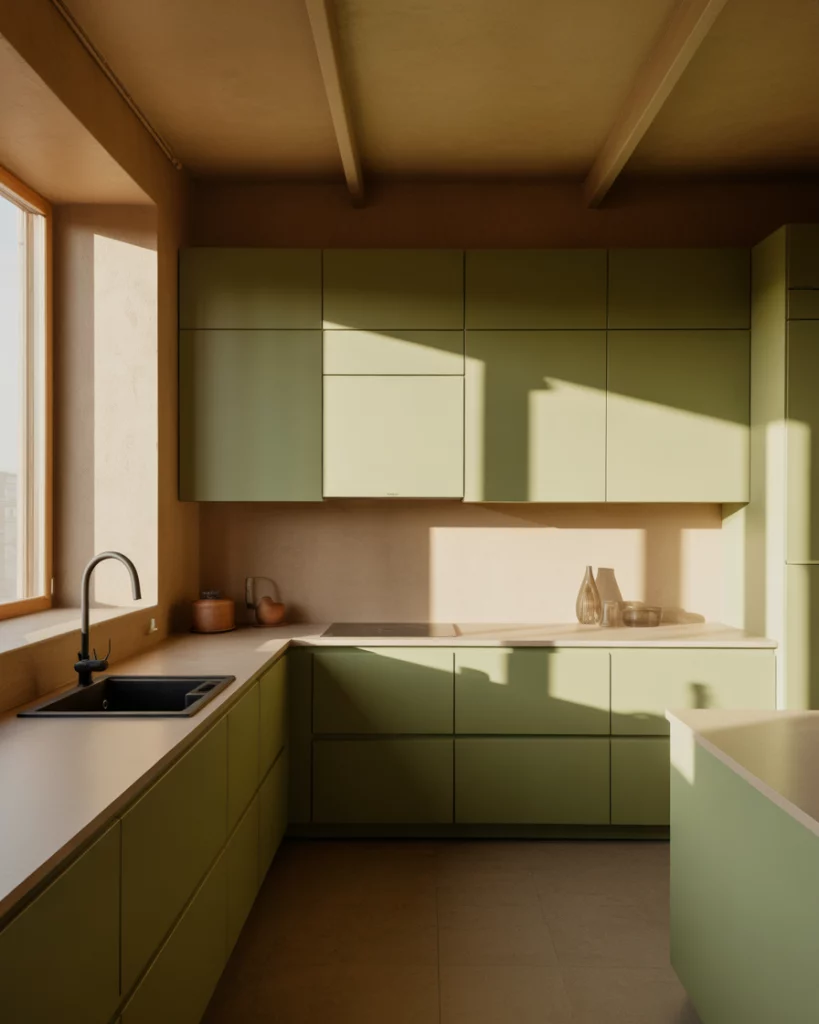
18 Sage Green Cabinets Color Scheme Play
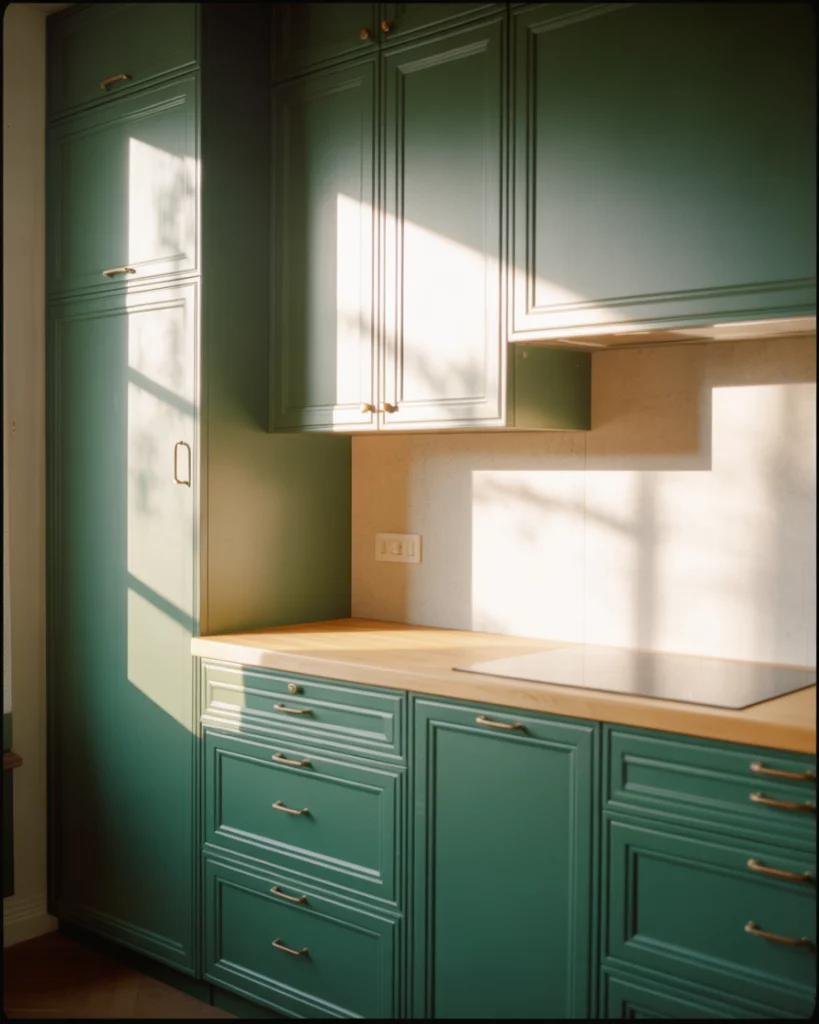 Using sage with soft, colorful, layered cabinet elevations allows for some slightly more understated and subtle expressive variation. Many people do this gradually to test the waters. Starting with a colorful island or pantry allows the homeowner to live with the variation for a bit. It also builds confidence for a full repaint.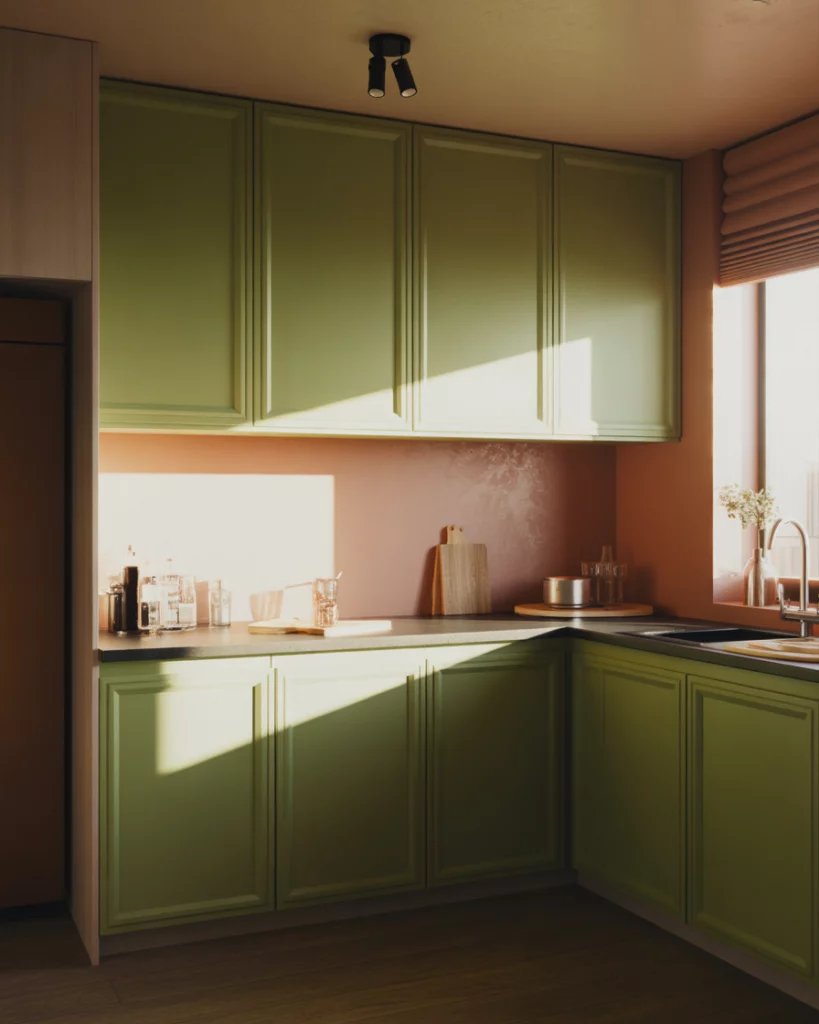
19 Sage Green with Bold Black Countertops
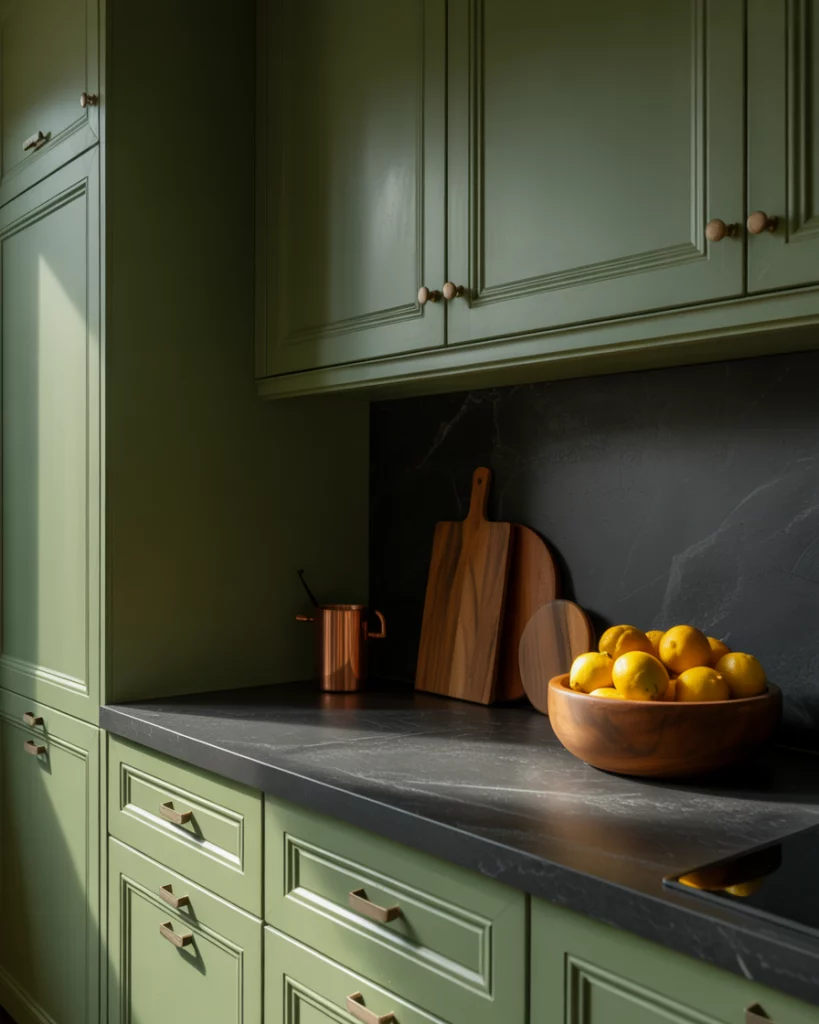 Sage kitchens paired with cabinets with black countertops lean into contrast while staying approachable. The green softens black’s intensity, creating a kitchen that feels bold yet livable. A budget note: opting for black laminate or composite surfaces can achieve this look without the cost of natural stone. The color contrast does most of the visual work.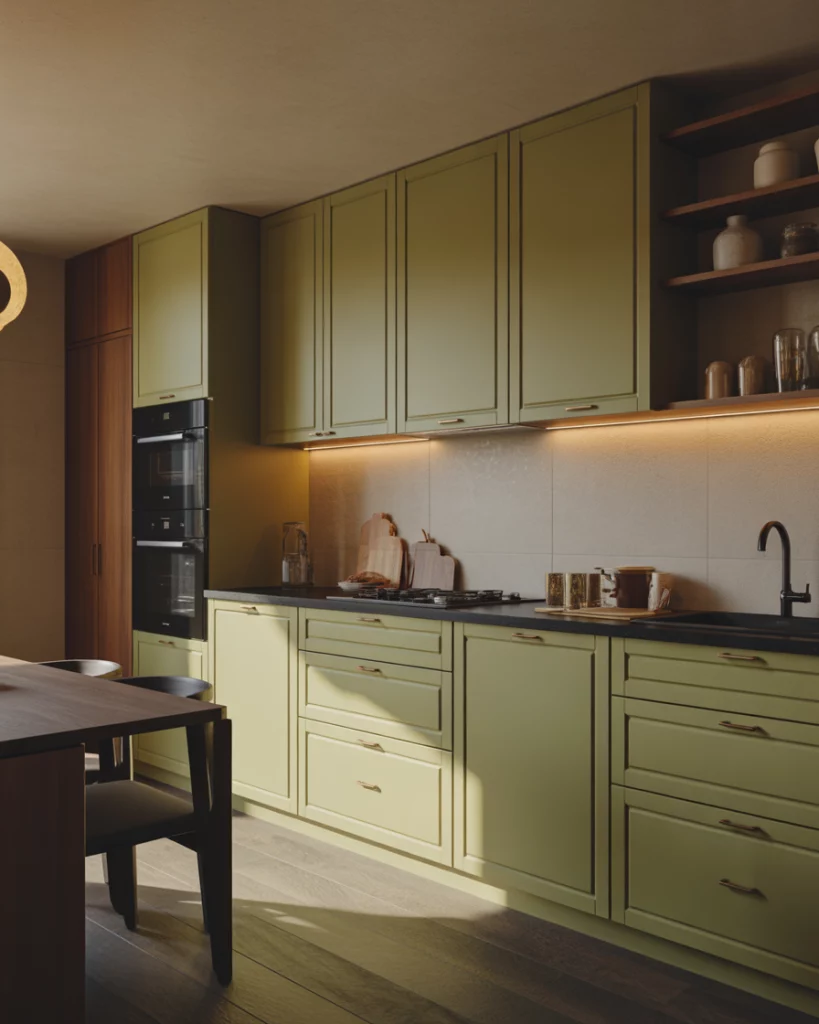
20 Sage Green Kitchens as Daily Inspiration
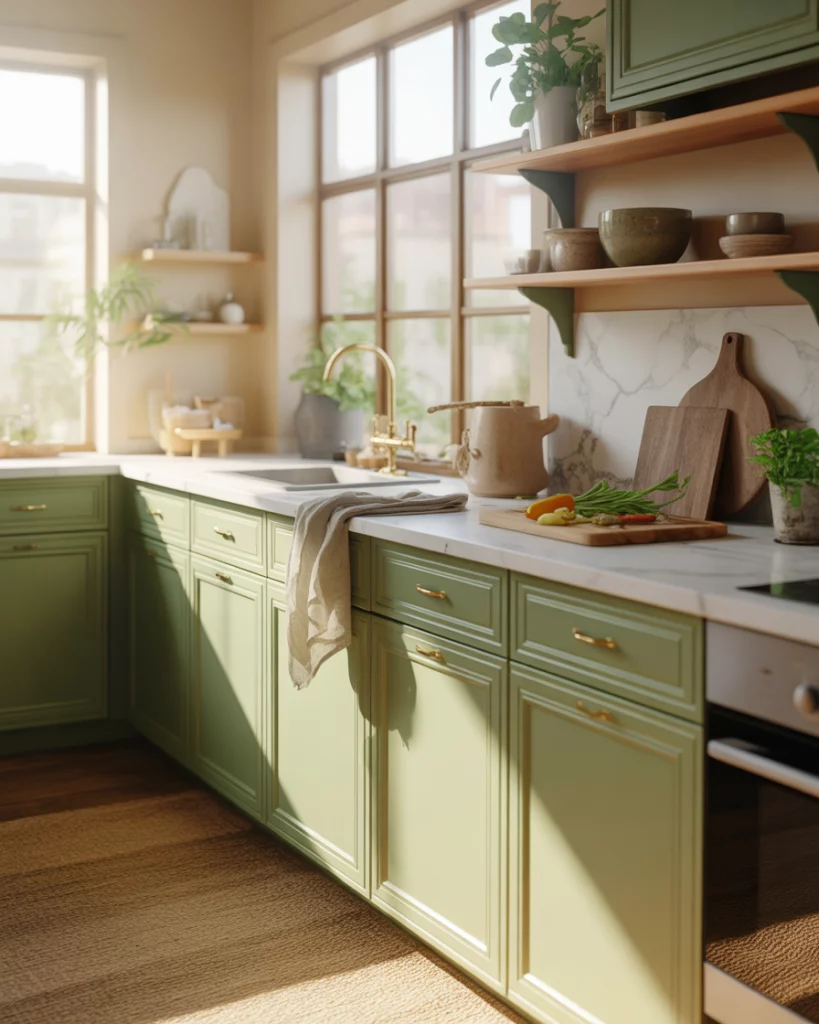 For many, sage green kitchens become daily inspiration. The color feels steady and calming, turning everyday routines into moments of pause. It supports a thoughtful aesthetic that values comfort as much as style. Sage green continues to prove it’s more than a passing Pinterest favorite. These ideas show just how adaptable and personal the color can be. If one of these kitchens sparked an idea—or reminded you of your own plans—share your thoughts and experiences in the comments.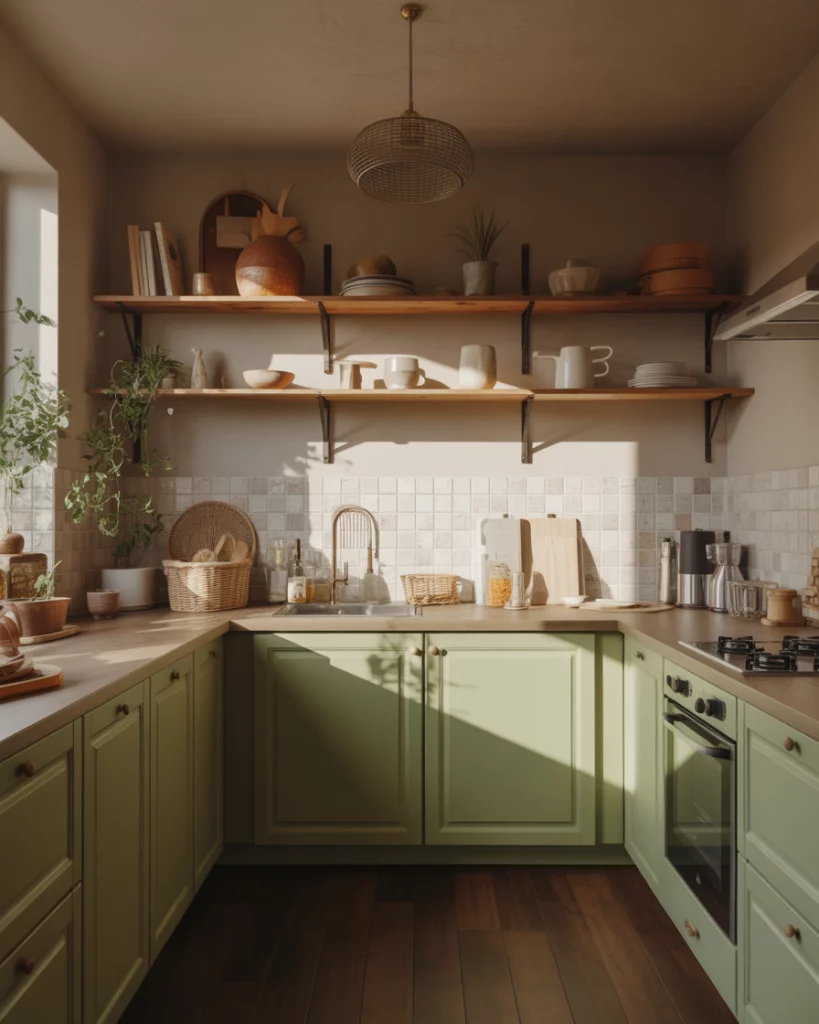
21 Sage Green Kitchen with Textured Walls and Artful Decor
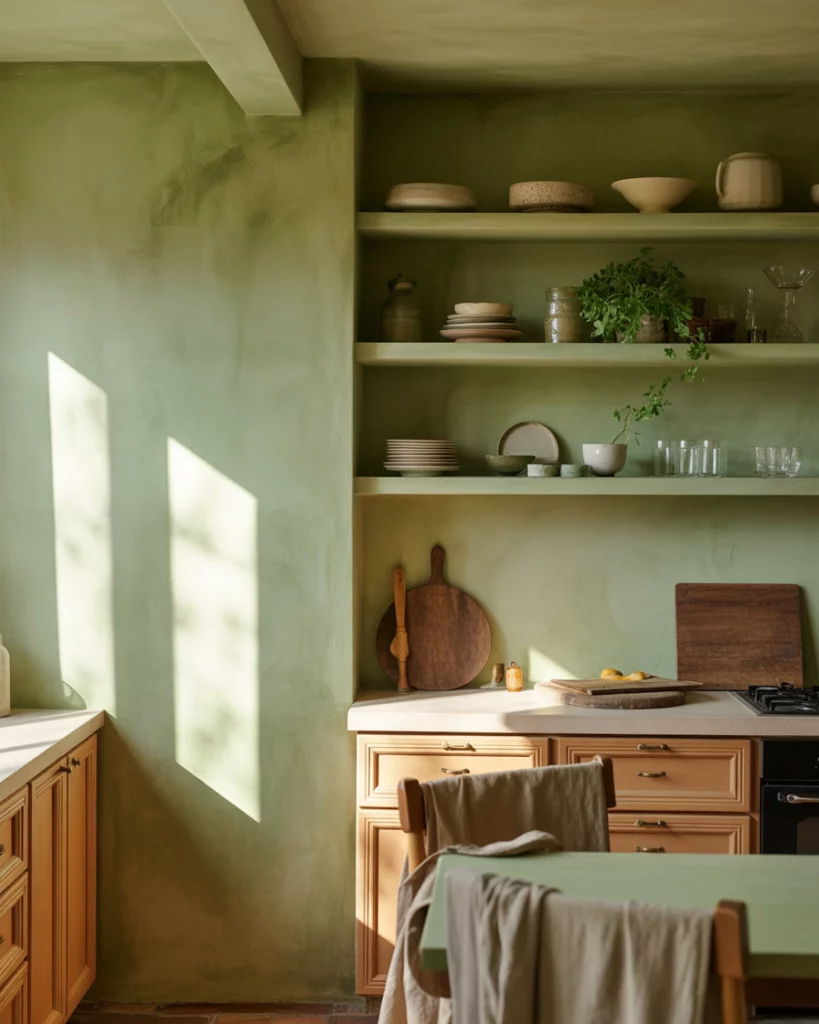 In a sage green kitchen in 2026, texture is becoming just as important as color. Pairing sage cabinetry with subtly finished walls—limewash, plaster, or soft matte paint—adds depth without visual noise. Thoughtfully chosen decor ideas like ceramic vases or framed prints give the kitchen a layered, editorial feel. A common mistake is overdecorating once textured walls are in place. The surface itself is already doing visual work. Keeping accessories minimal allows the sage color and wall finish to breathe, resulting in a kitchen that feels intentional rather than busy.
Sage green kitchens in 2026 aren’t about following a trend—they’re about creating spaces that feel good to live in. Whether you lean modern, farmhouse, or somewhere in between, there’s room to make this color your own. Share which idea speaks to you most, or how you’d style sage green in your own kitchen, in the comments below.