Interior Design Living Room 2026: 48 Stylish Ideas for Modern, Cozy, and Timeless Spaces
Living rooms are evolving faster than any other space in the home, and that’s exactly why “interior design living room 2026” is trending so hard on Pinterest right now. Americans are looking for spaces that feel personal, comforting, and visually inspiring—without sacrificing function. This guide breaks down the most influential living room ideas shaping homes across the U.S. You’ll find practical inspiration, style clarity, and design direction you can actually use.
1. Warm Minimalism Takes Center Stage
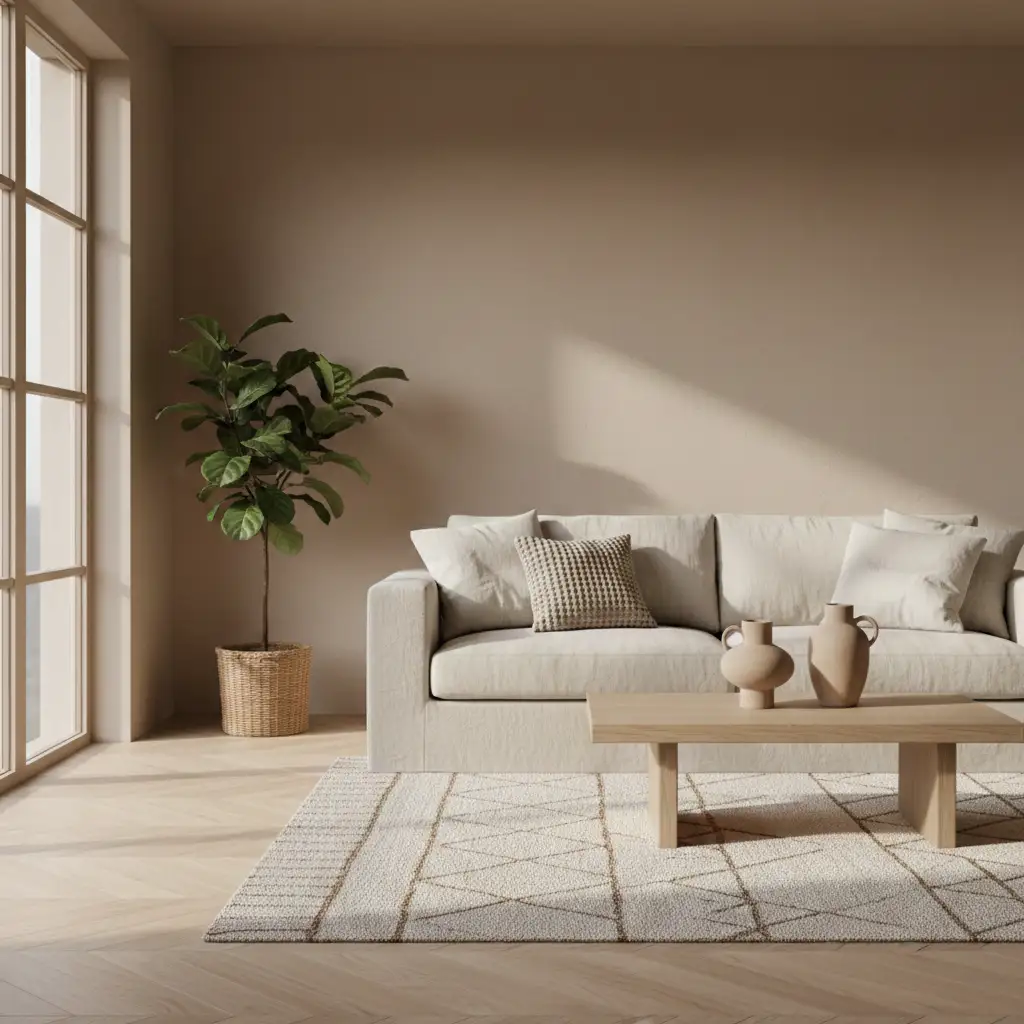
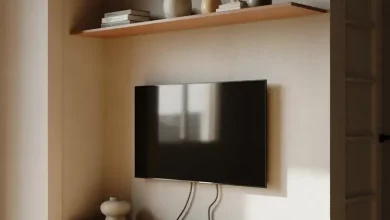
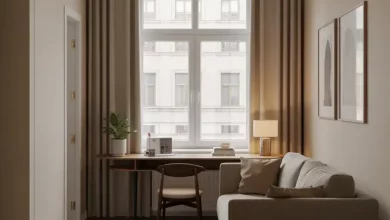
Minimal interiors are softening in 2026, especially in living rooms where comfort now rivals aesthetics. This approach blends minimalist sensibility with cozy layers, natural textures, and muted colors. Think calm spaces that feel intentional but never cold, perfect for modern American apartments seeking balance rather than austerity.
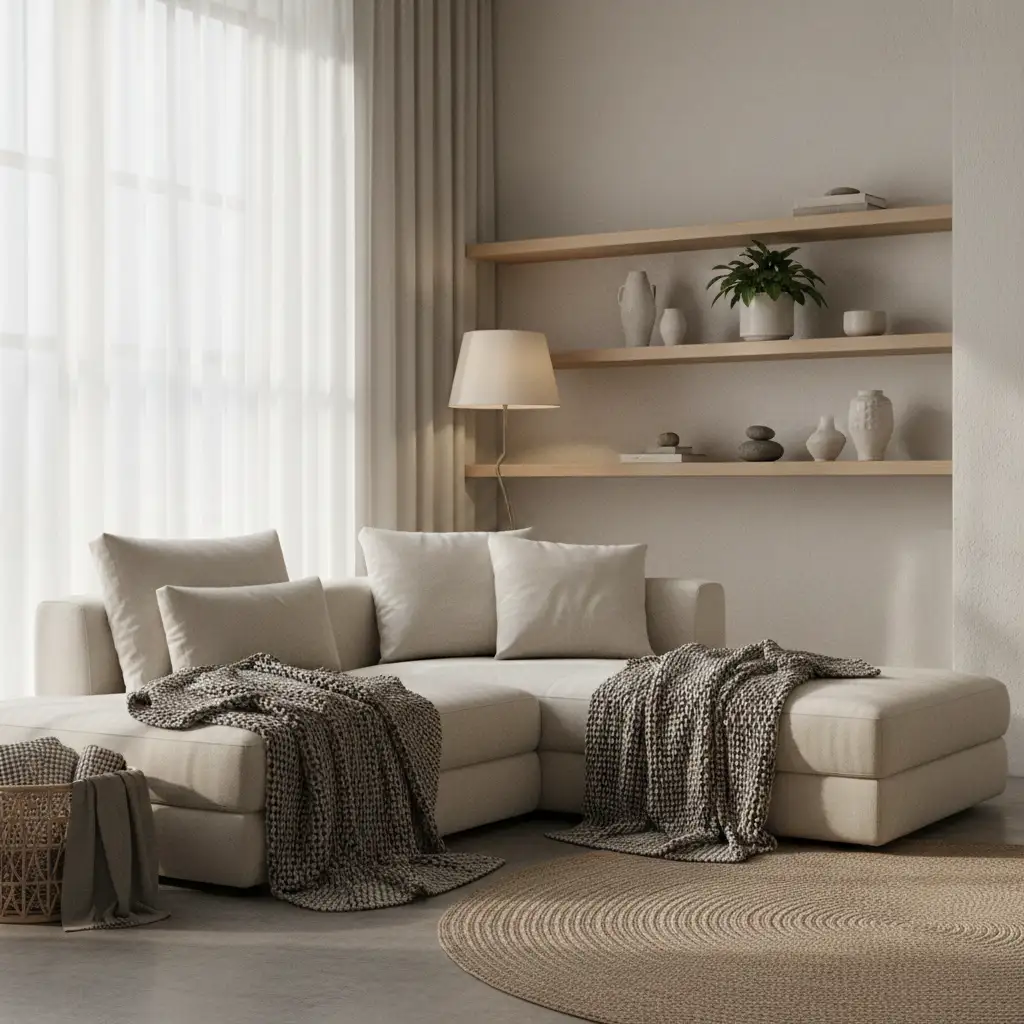
The key practical insight here is restraint. Designers recommend editing ruthlessly—fewer objects, but better materials. In American homes where living rooms double as work and rest zones, this style reduces visual noise and helps the space feel larger and calmer without major renovations.
2. Modern Classic with Architectural Details
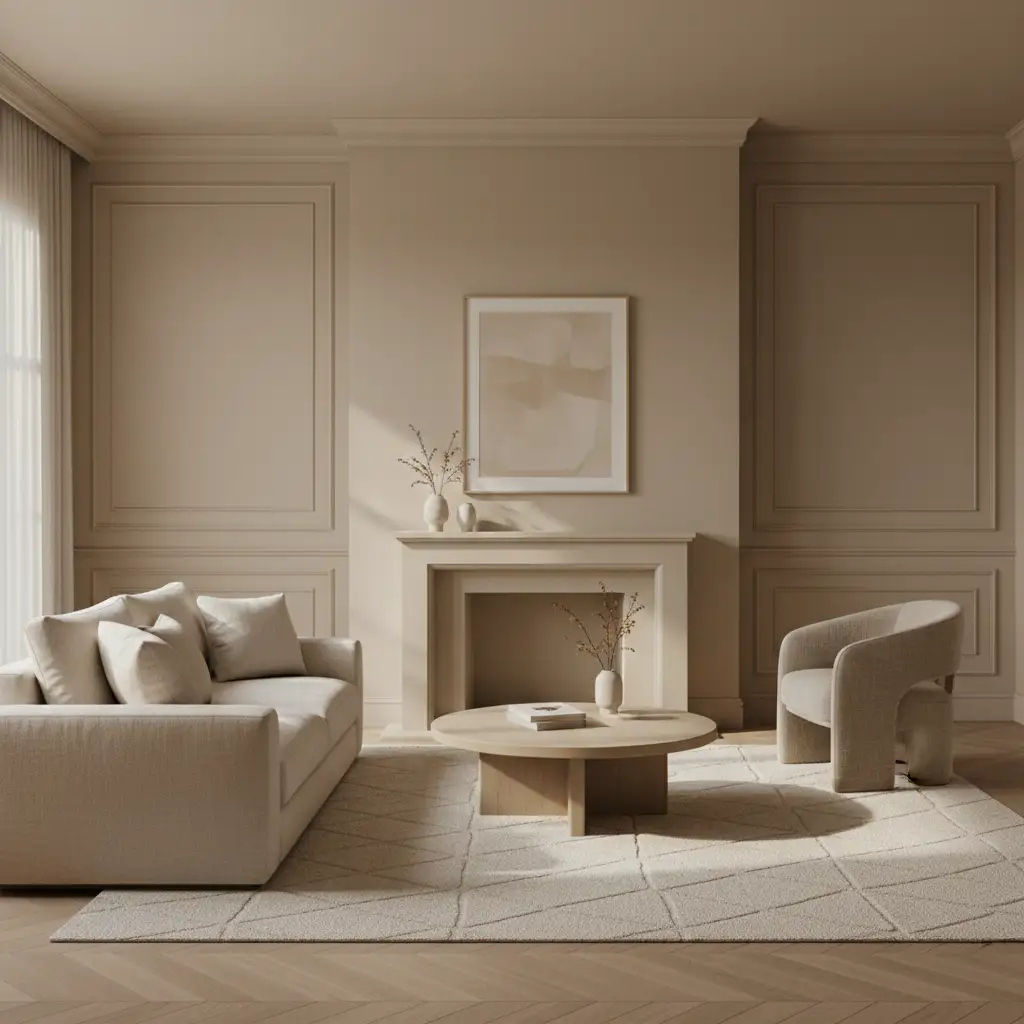
The modern classic living room is making a confident return, blending timeless proportions with updated finishes. Arches, subtle classic molding, and refined symmetry meet modern furniture silhouettes. This look resonates with homeowners who want elegance without feeling formal or outdated.
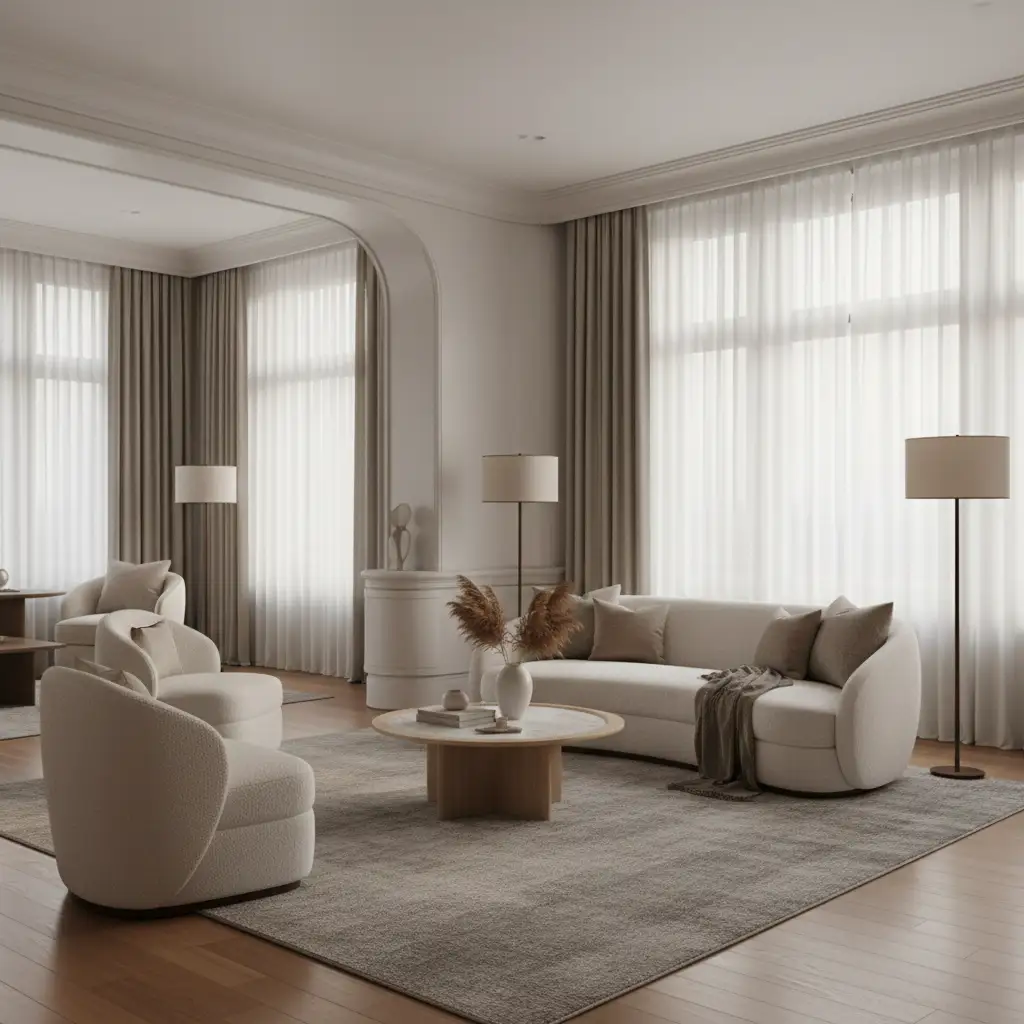
Where it works best: older American homes, condos with high ceilings, or new builds craving character. Even small architectural gestures—like a curved niche or framed wall—can elevate the entire room without overwhelming it.
3. Scandinavian Calm Meets Japandi Warmth
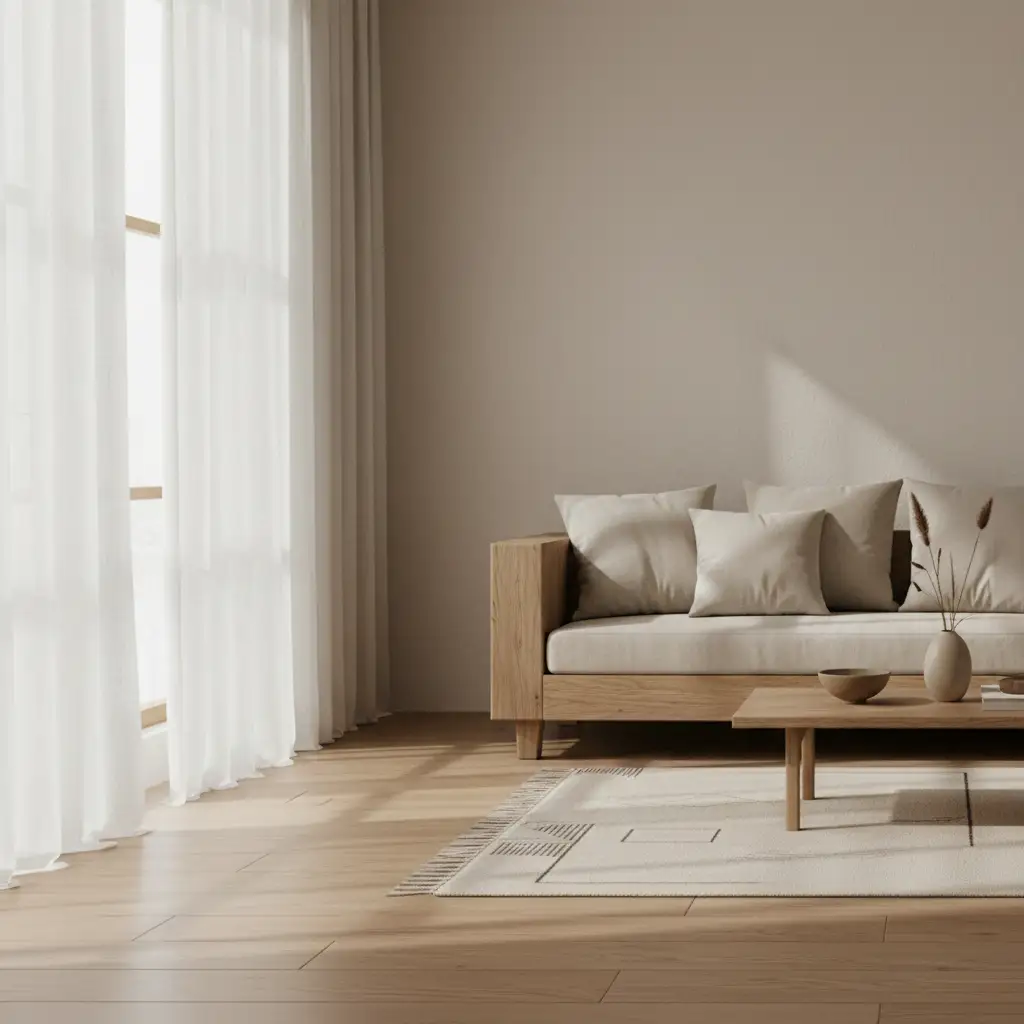
This hybrid of Scandinavian and Japandi styles continues to dominate Pinterest boards for 2026. Clean lines, pale wooden finishes, and low-profile furniture create living rooms that feel serene yet deeply livable, especially for design-conscious Americans craving calm.
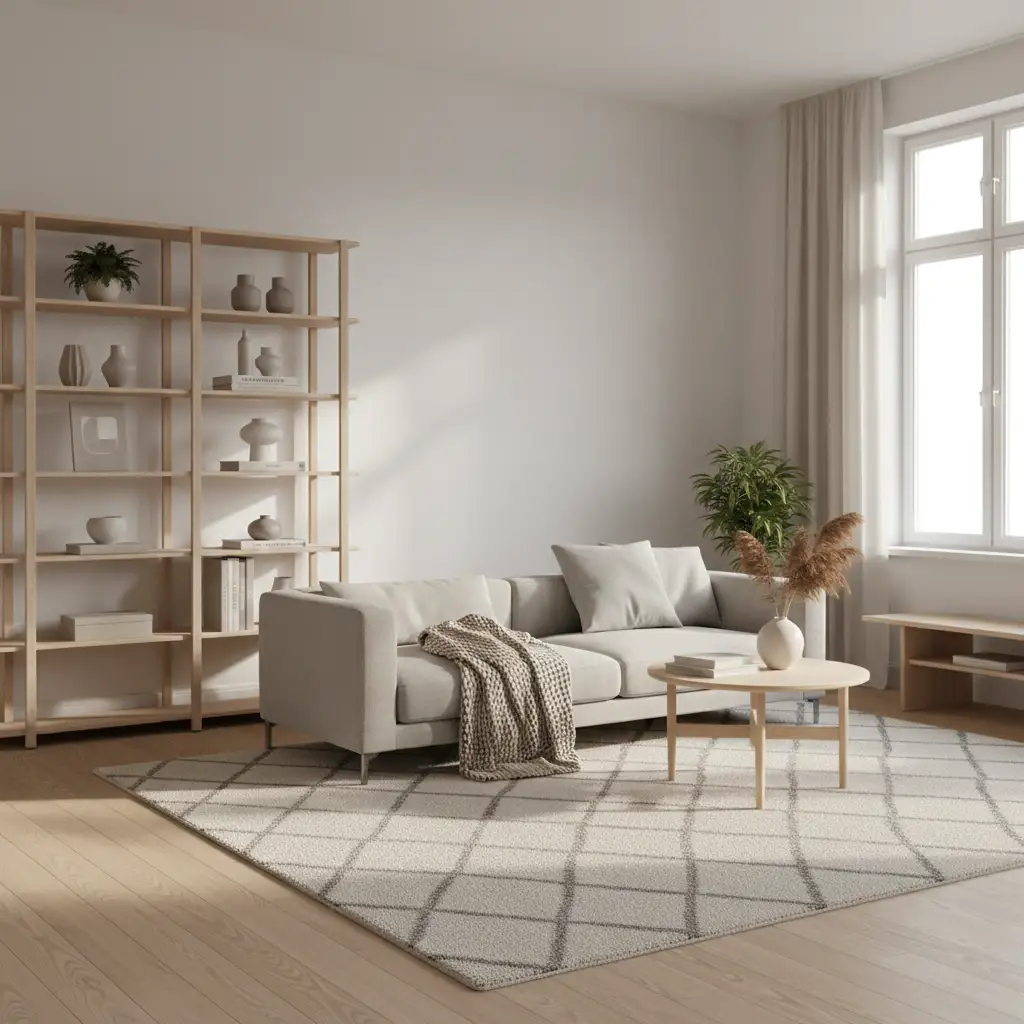
Designers often note that this style succeeds because it mirrors real homeowner behavior: fewer but better items, intentional storage, and furniture that encourages sitting on the floor, stretching, or slowing down.
4. Concrete and Industrial Softened for Living
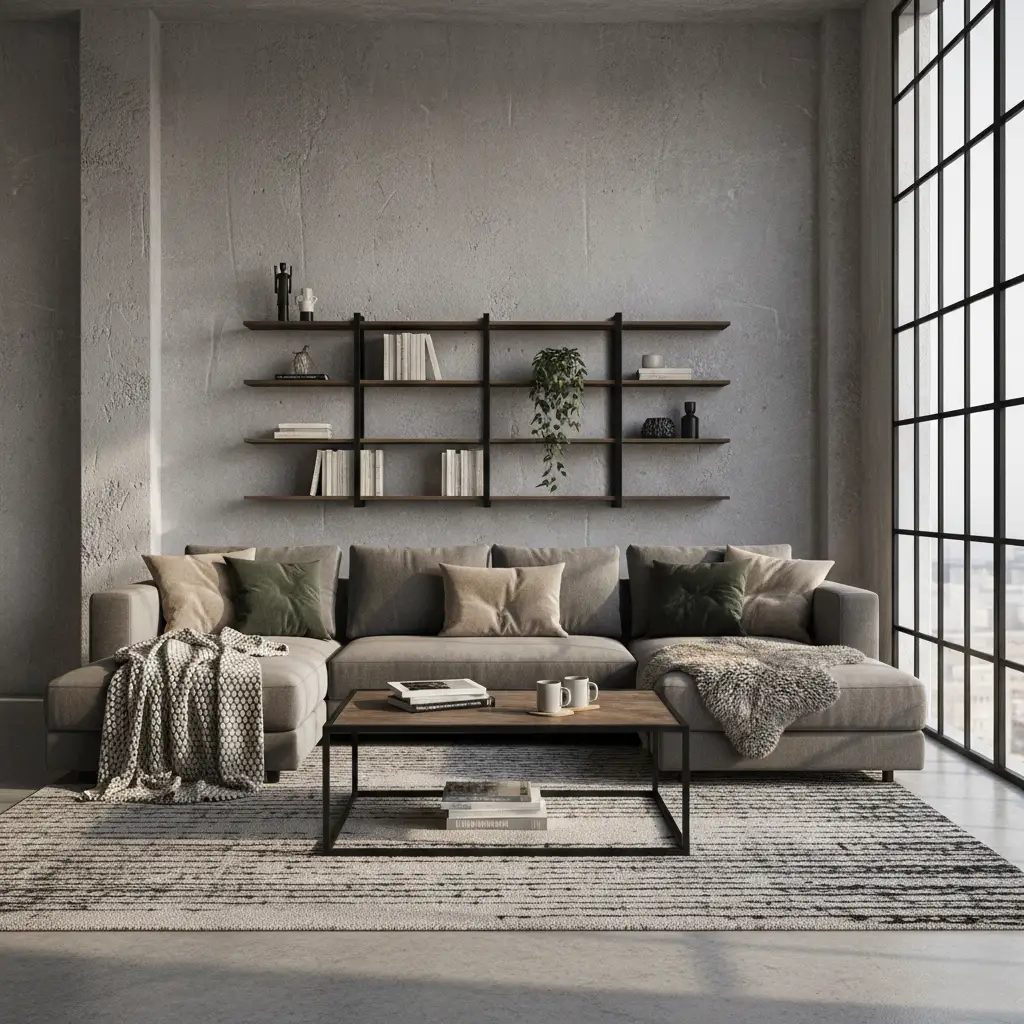
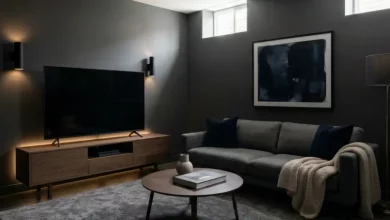
Raw materials like concrete and industrial finishes are being reimagined with warmth in mind. In 2026 living rooms, exposed textures are balanced with soft fabrics and muted grey tones, creating spaces that feel urban yet comfortable.
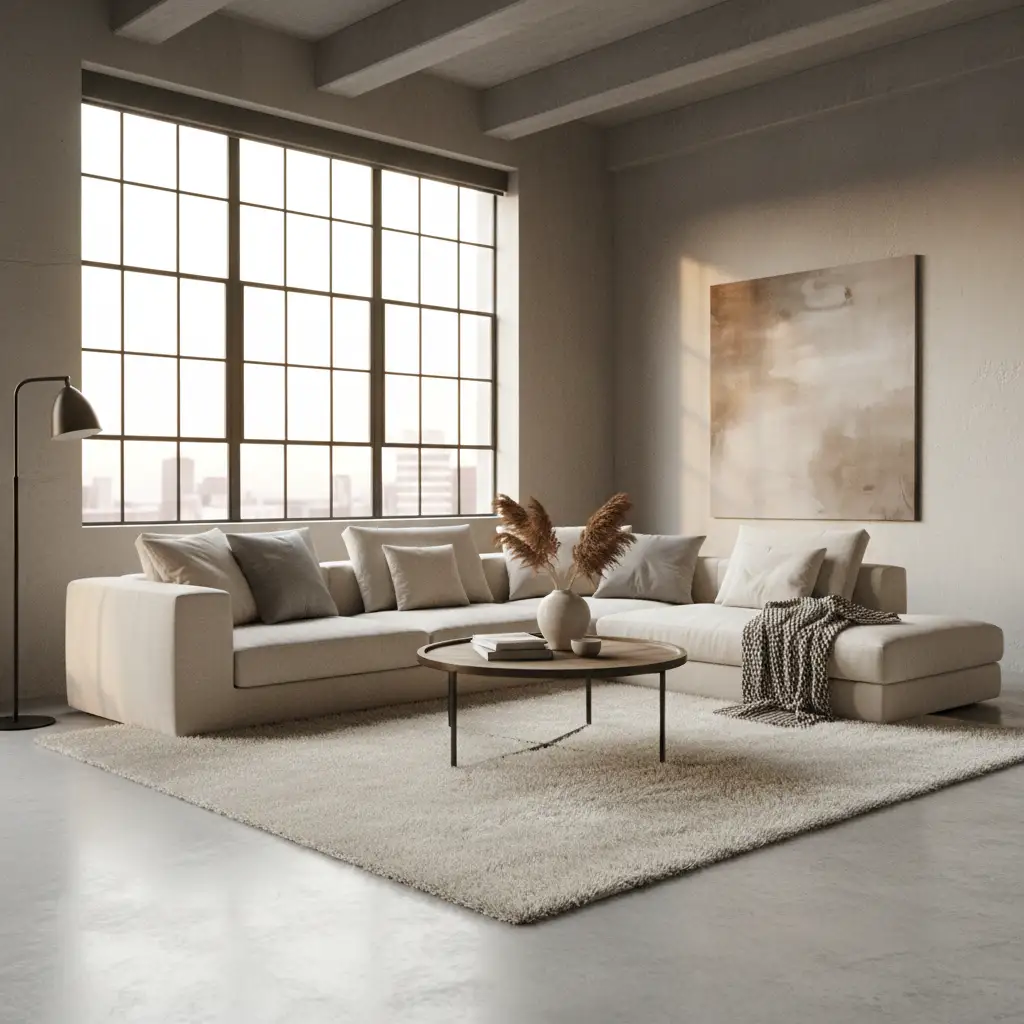
A common mistake is going too cold. The fix is simple: add softness through rugs, curtains, and upholstered seating to keep the space from feeling like a showroom instead of a home.
5. Modern Boho Layers with Personality
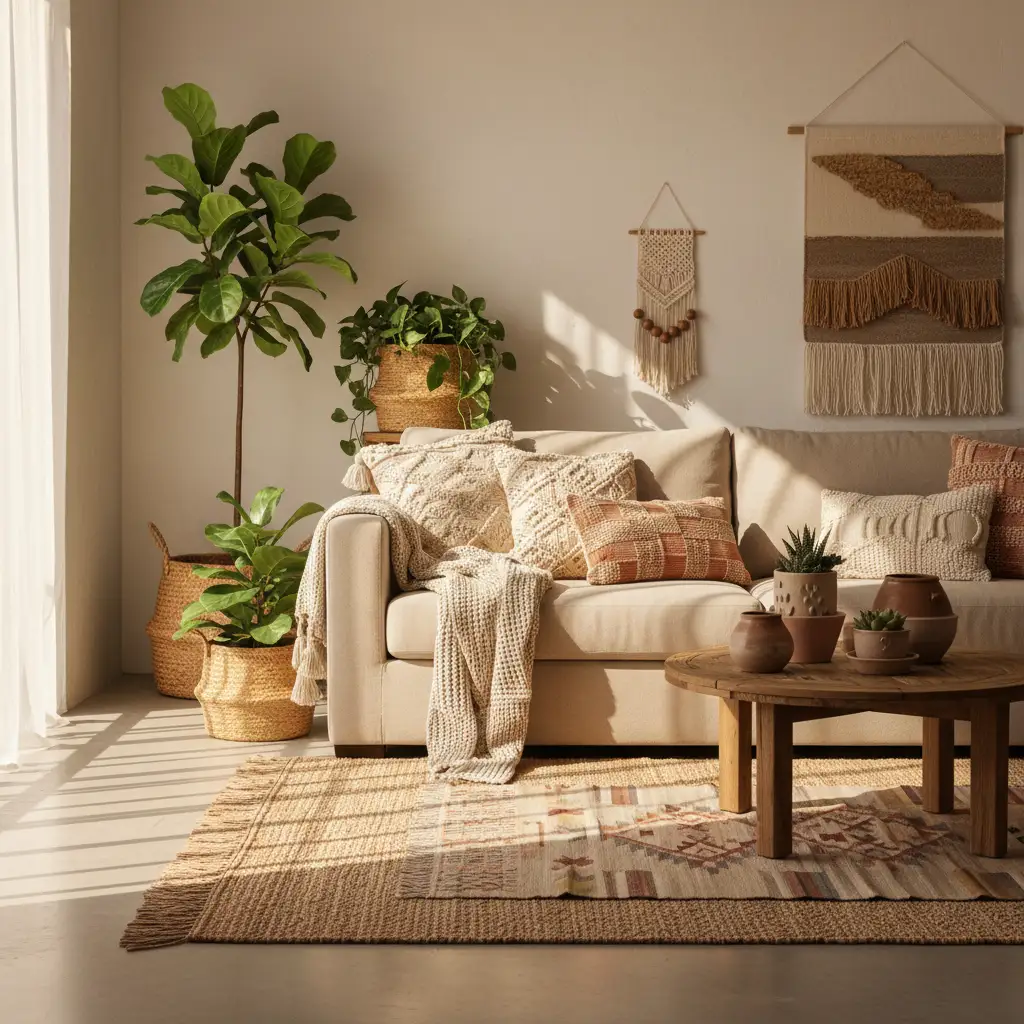
The updated modern boho decor bohemian style is less cluttered and more curated. Living rooms now mix global textures, relaxed seating, and grounded green accents while staying visually calm and contemporary.
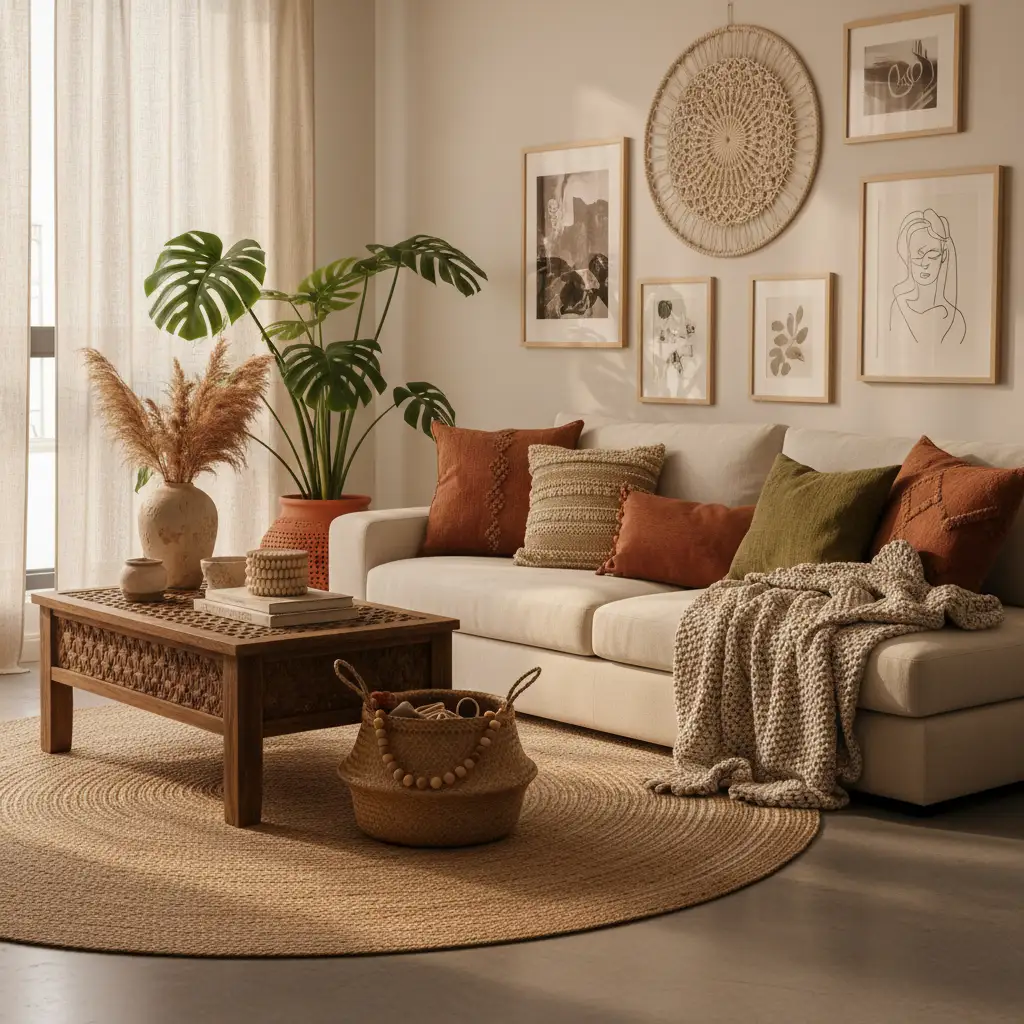
Budget-wise, this style is forgiving. Many homeowners build it slowly—mixing thrifted finds with new staples—making it accessible without feeling cheap or overly styled.
6. Neo Classic Elegance in Neutral Tones
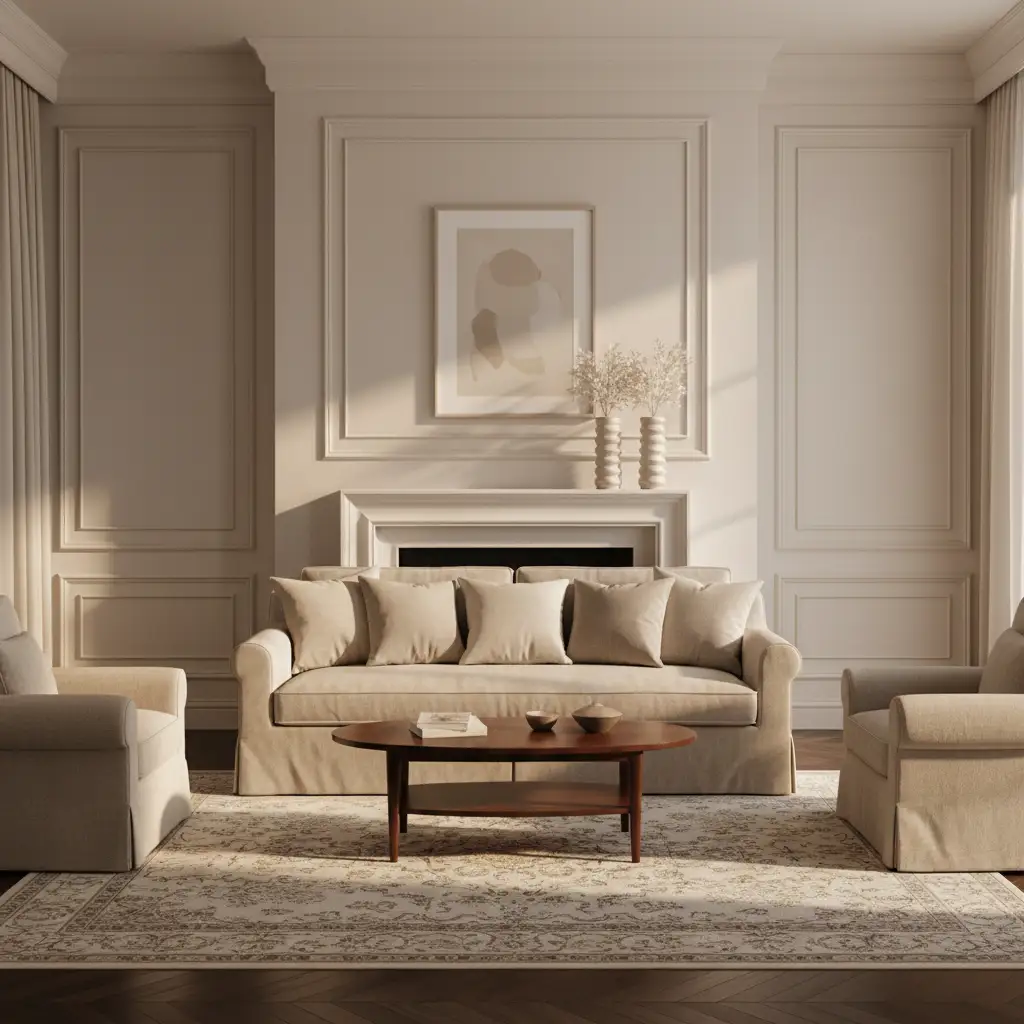
Neo classic living rooms blend traditional symmetry with modern restraint. Soft traditional references, elegant lines, and neutral palettes create spaces that feel elevated yet comfortable for everyday American living.
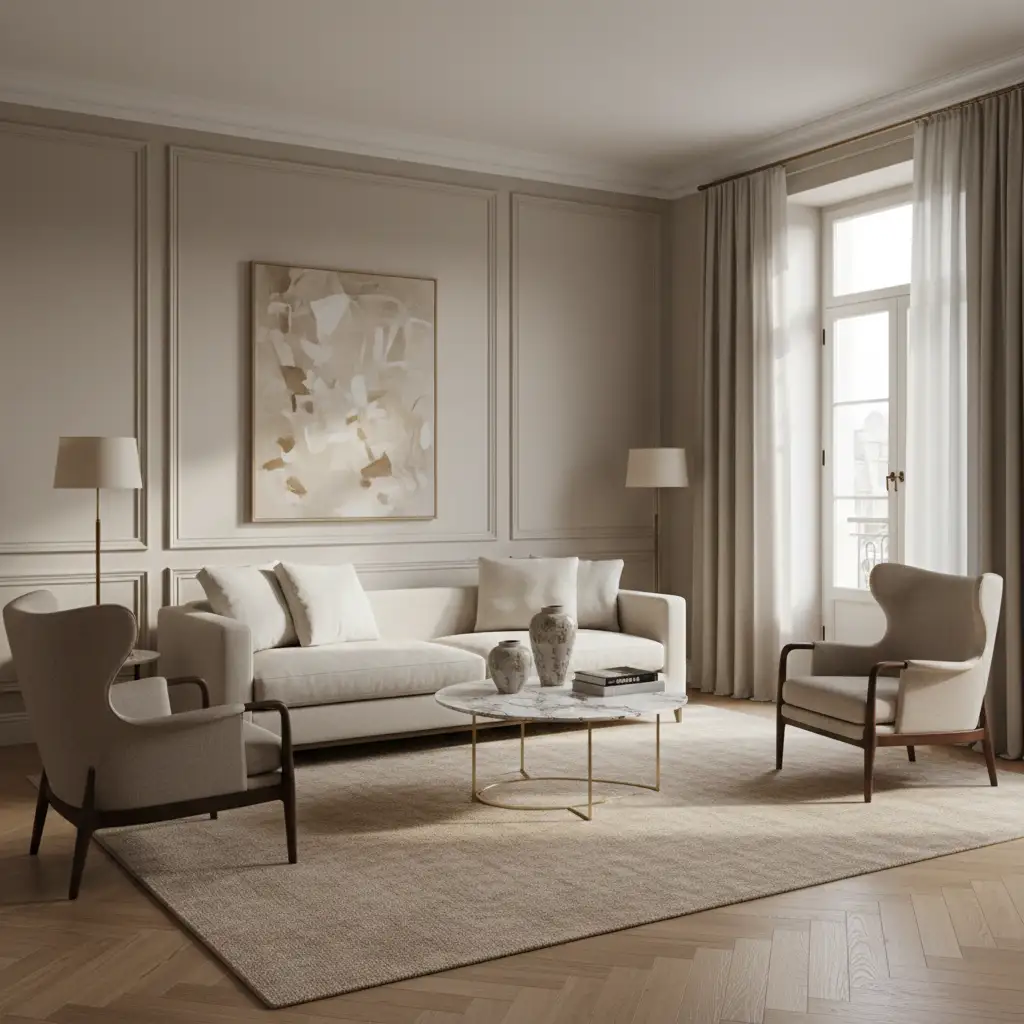
Expert designers often recommend this style for homeowners who want longevity. It avoids trends that age quickly and supports gradual updates over time.
7. Tropical Influence with a Modern Edge
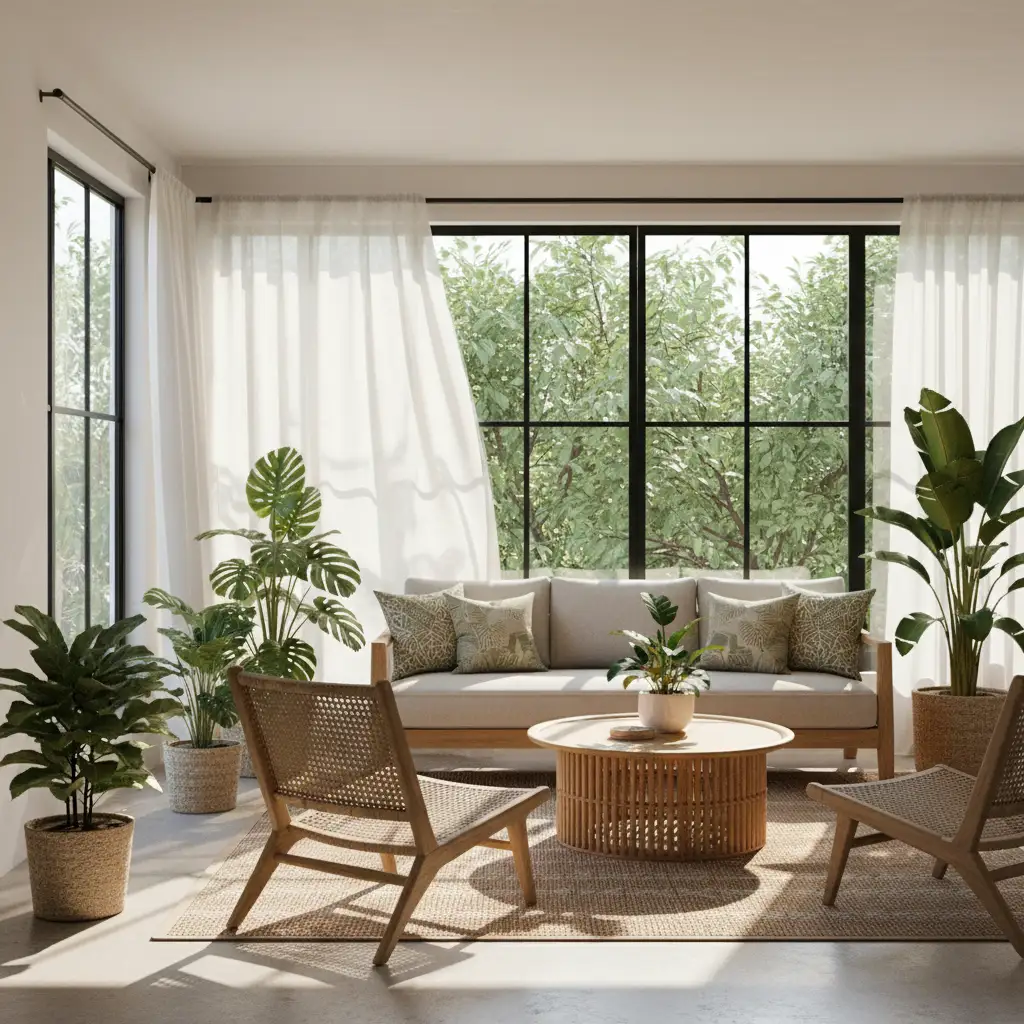
Tropical living rooms in 2026 are refined, not kitschy. Natural fibers, airy layouts, and subtle tropical references meet clean modern lines, making them ideal for warmer U.S. regions.
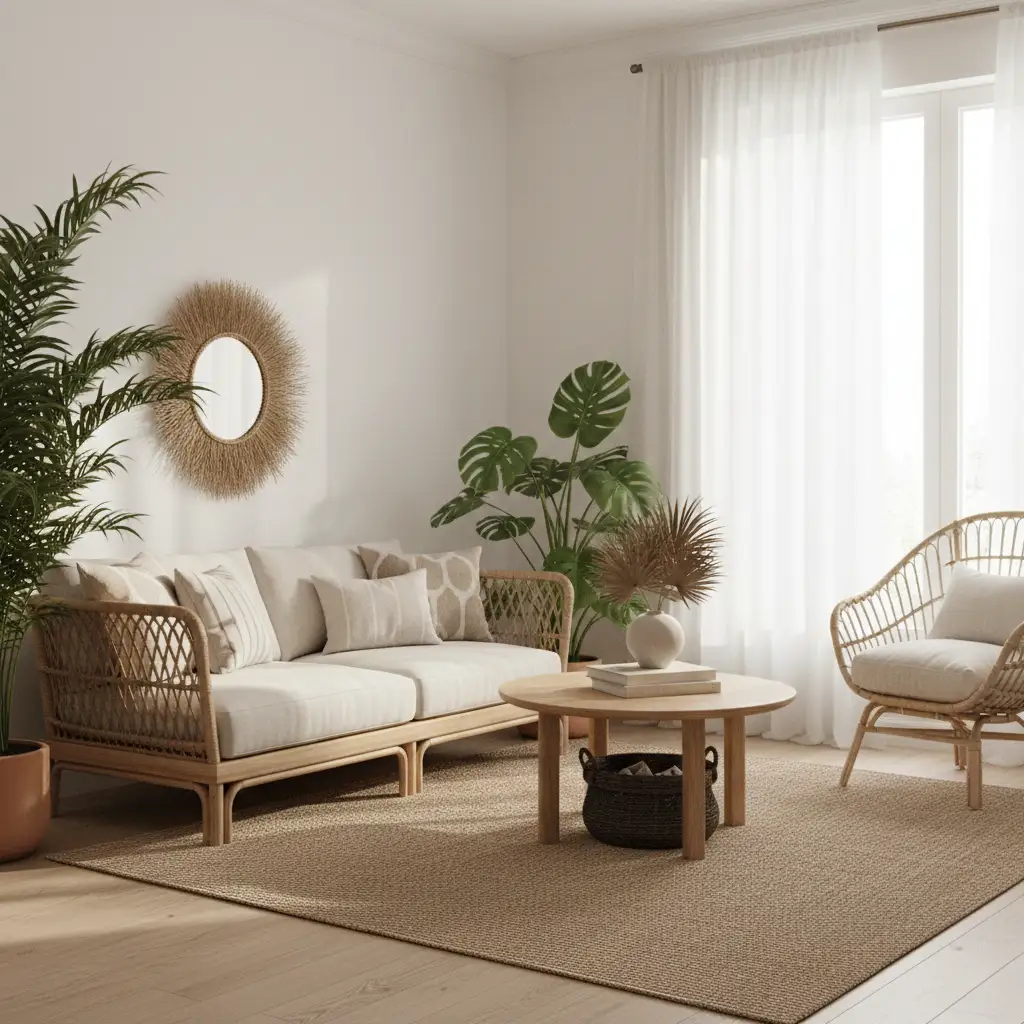
In many Southern and coastal states, homeowners gravitate to this look because it visually cools the space and connects indoor living with the outdoors.
8. 70s Revival with Controlled Color
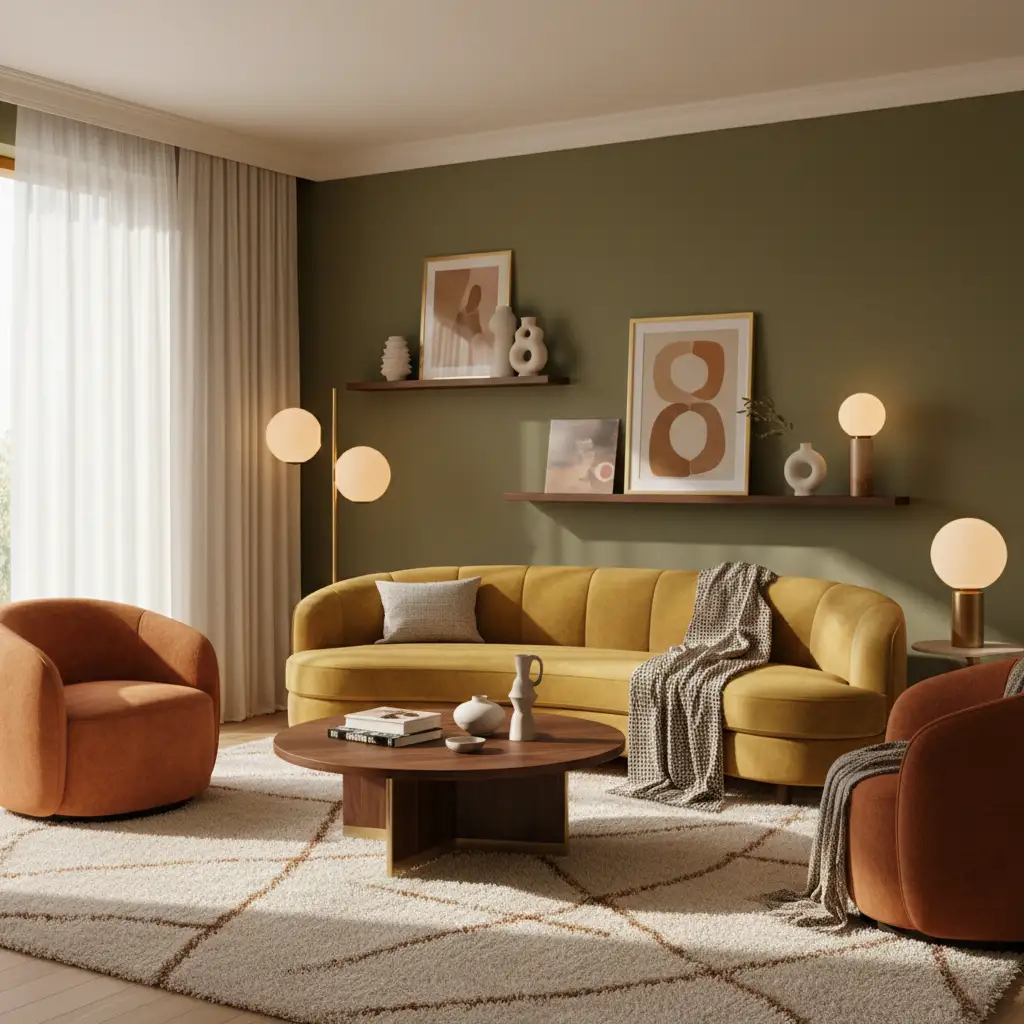
The 70s influence returns through curved furniture, tactile fabrics, and confident purple accents. Unlike past revivals, this version is edited and sophisticated, fitting seamlessly into contemporary living rooms.
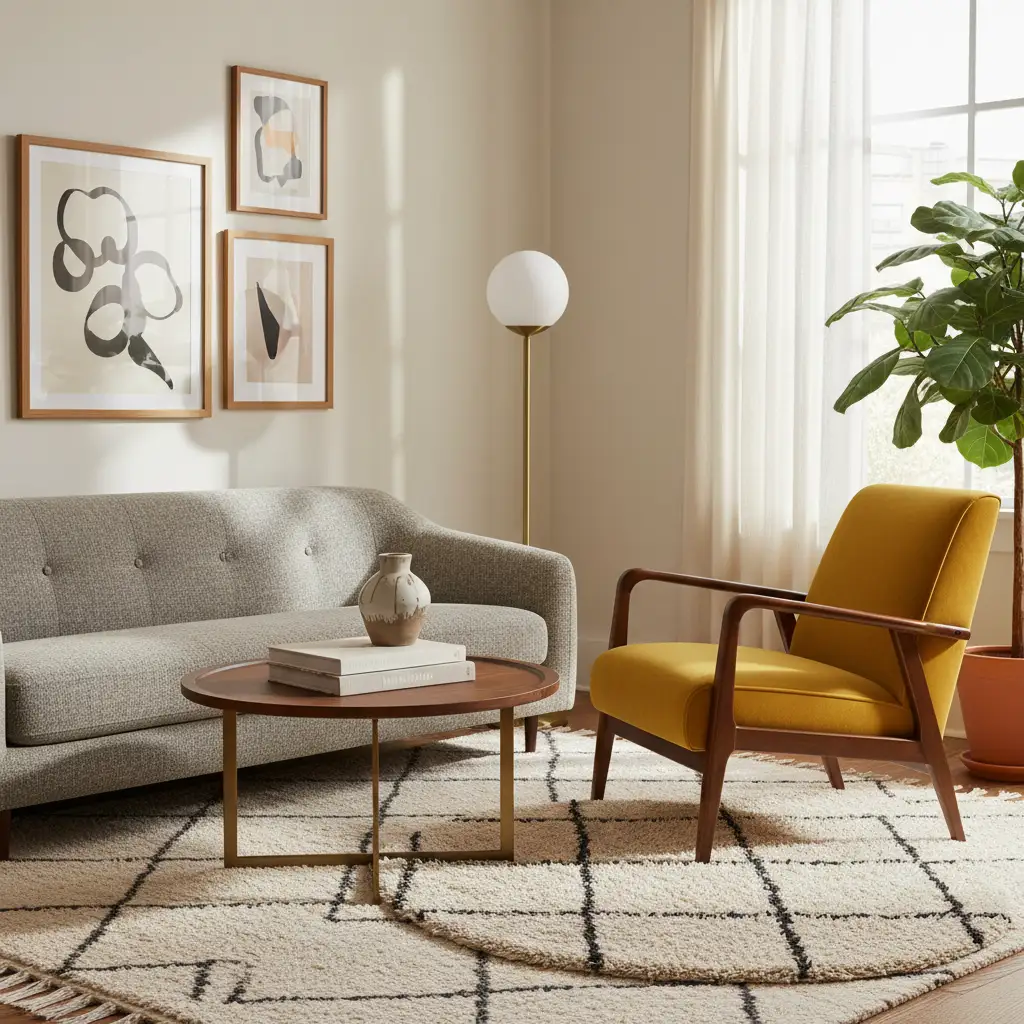
A micro anecdote designers often share: many clients start with one bold chair. Once they see how it energizes the room, confidence follows.
9. Rustic Comfort for Modern Homes
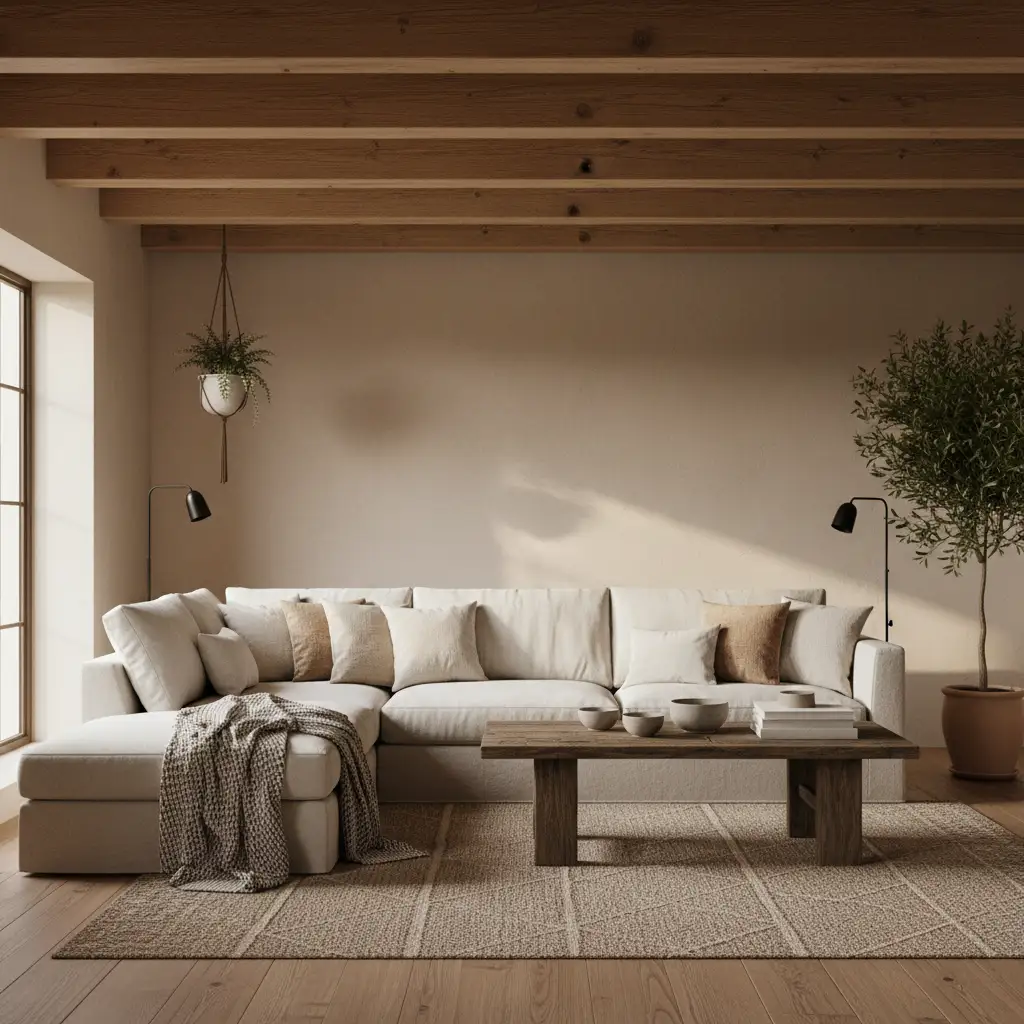
Modern living rooms are embracing rustic warmth through aged wood, tactile finishes, and relaxed forms. This style pairs beautifully with contemporary layouts, especially in suburban American homes.
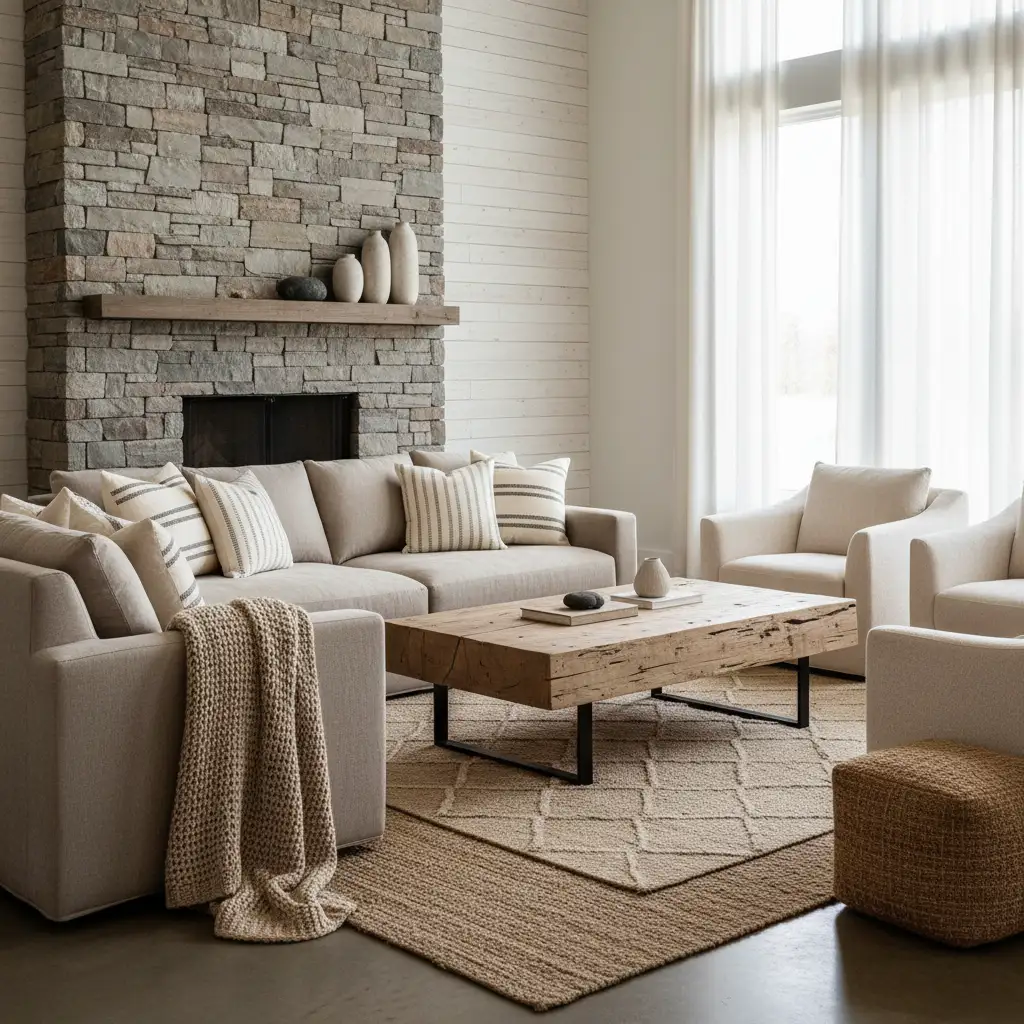
Where it works best: family homes where durability matters. These materials hide wear well and age gracefully, making them practical for real life.
10. Small Apartment Living Rooms That Feel Bigger
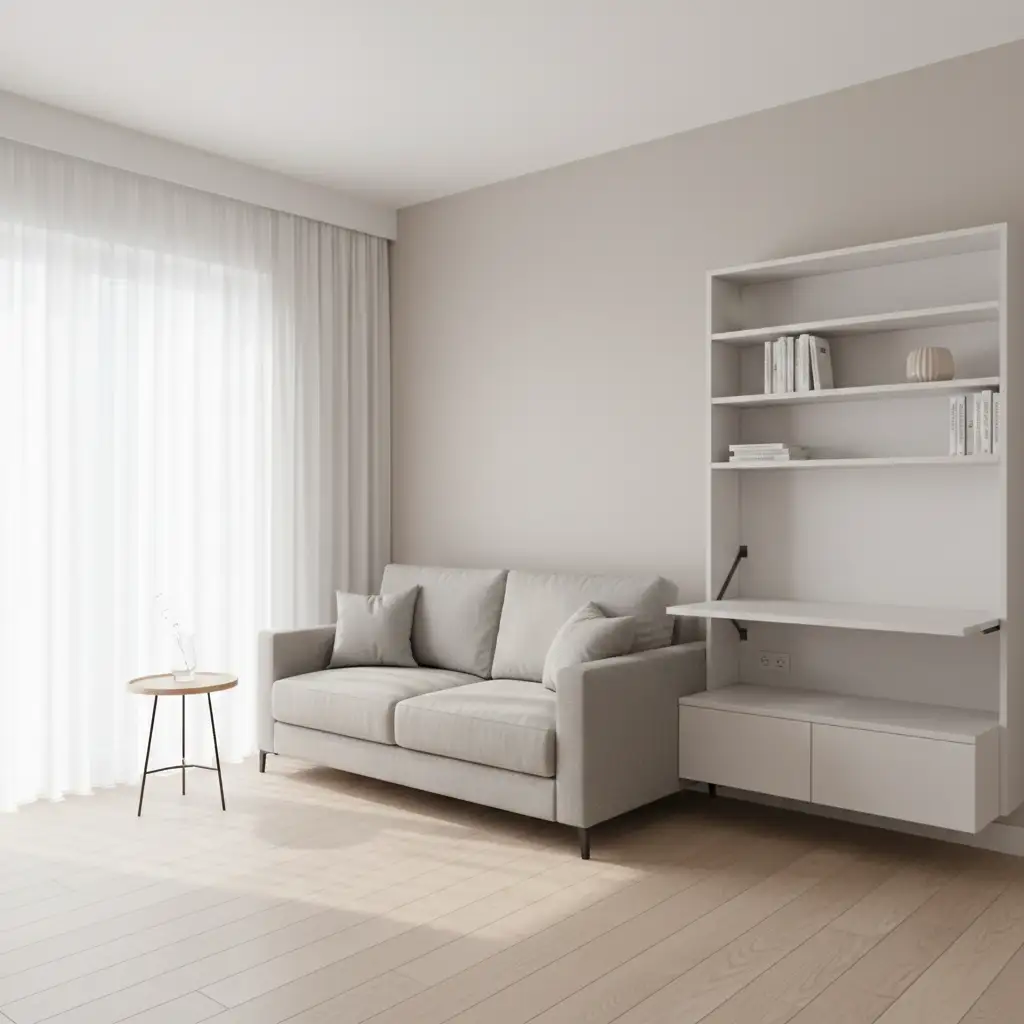
In dense cities, small spaces demand smarter design. Compact apartment living rooms in 2026 rely on visual flow, light palettes, and multifunctional furniture to feel open and intentional.
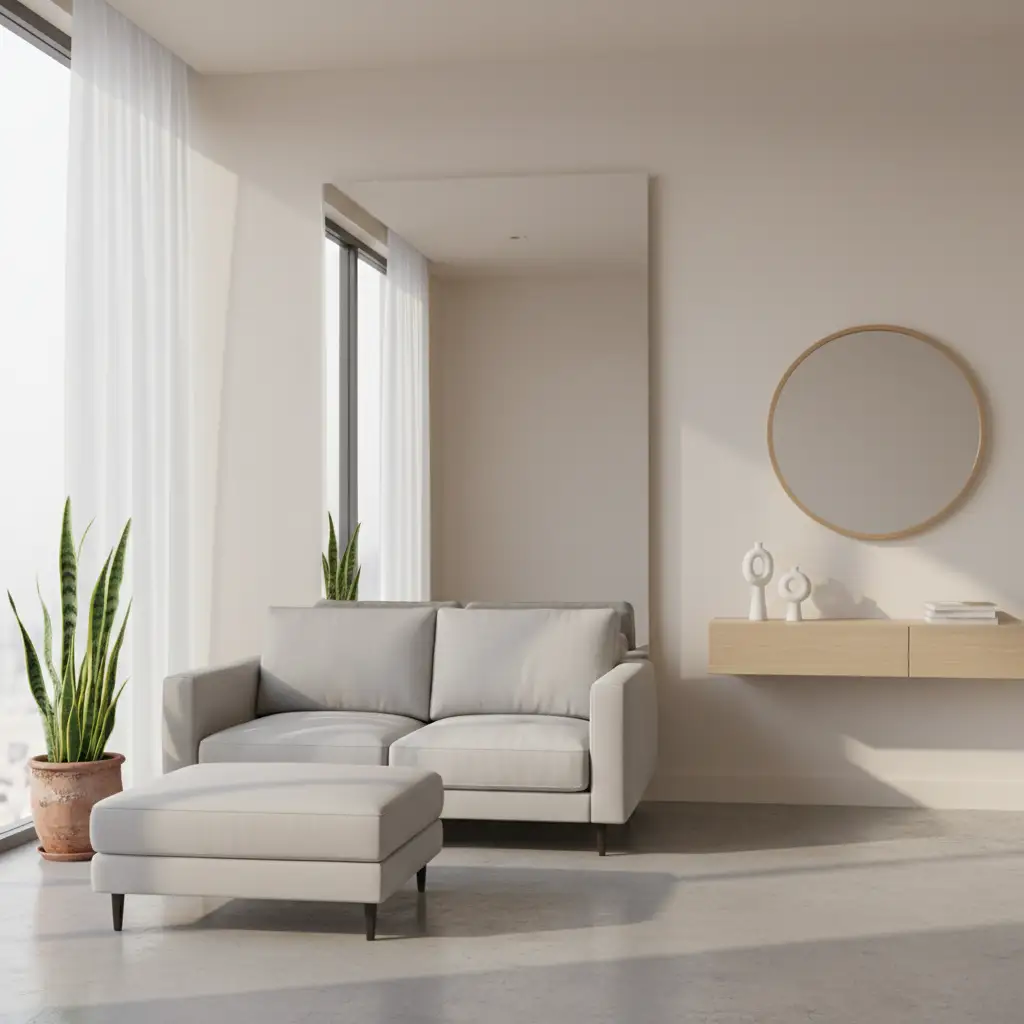
The most practical tip is scale. Choosing furniture that fits the room—not oversized pieces—instantly improves comfort and circulation without costly changes.
11. Quiet Luxury Without the Flash
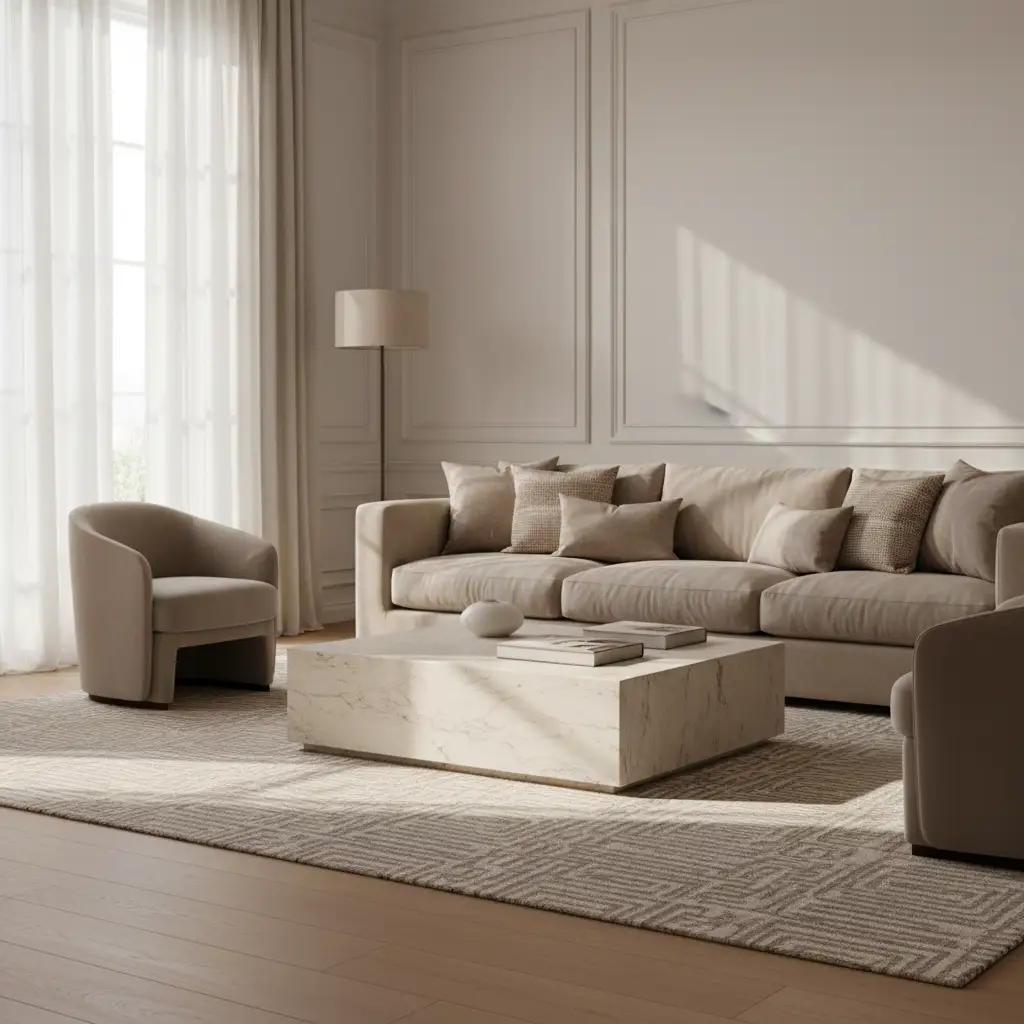
Living rooms are leaning into Luxury that feels subtle rather than showy. Soft tailoring, refined materials, and restrained colors define this look. It’s not about gold accents or excess, but about quality pieces that feel calm, elevated, and deeply comfortable.
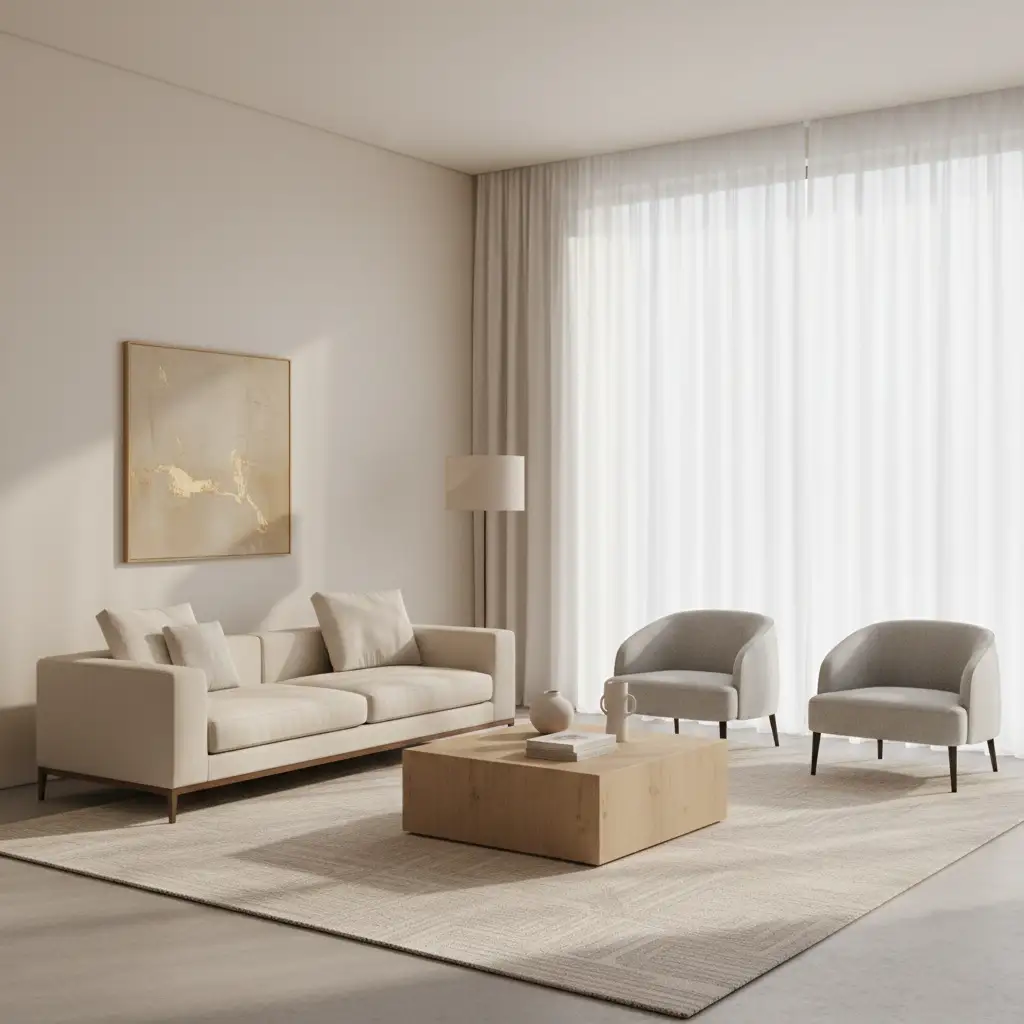
Expert designers emphasize that this style succeeds when homeowners invest in fewer but better items—prioritizing craftsmanship, comfort, and timeless silhouettes over trends.
12. Bauhaus Influence Returns in Softer Form
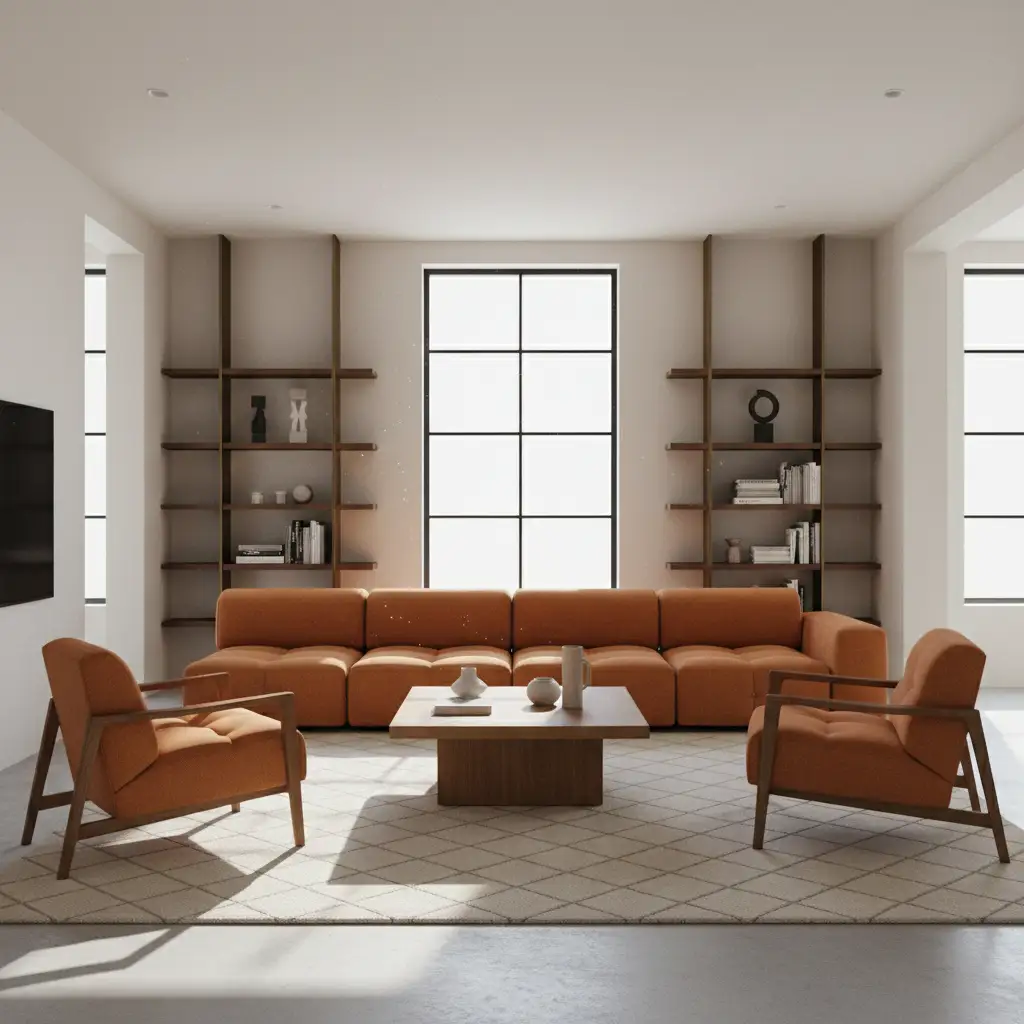
The iconic Bauhaus movement is reappearing in living rooms through geometry, balance, and purpose—but with warmer finishes. Clean lines mix with tactile fabrics, making this once-rigid style feel surprisingly cozy.
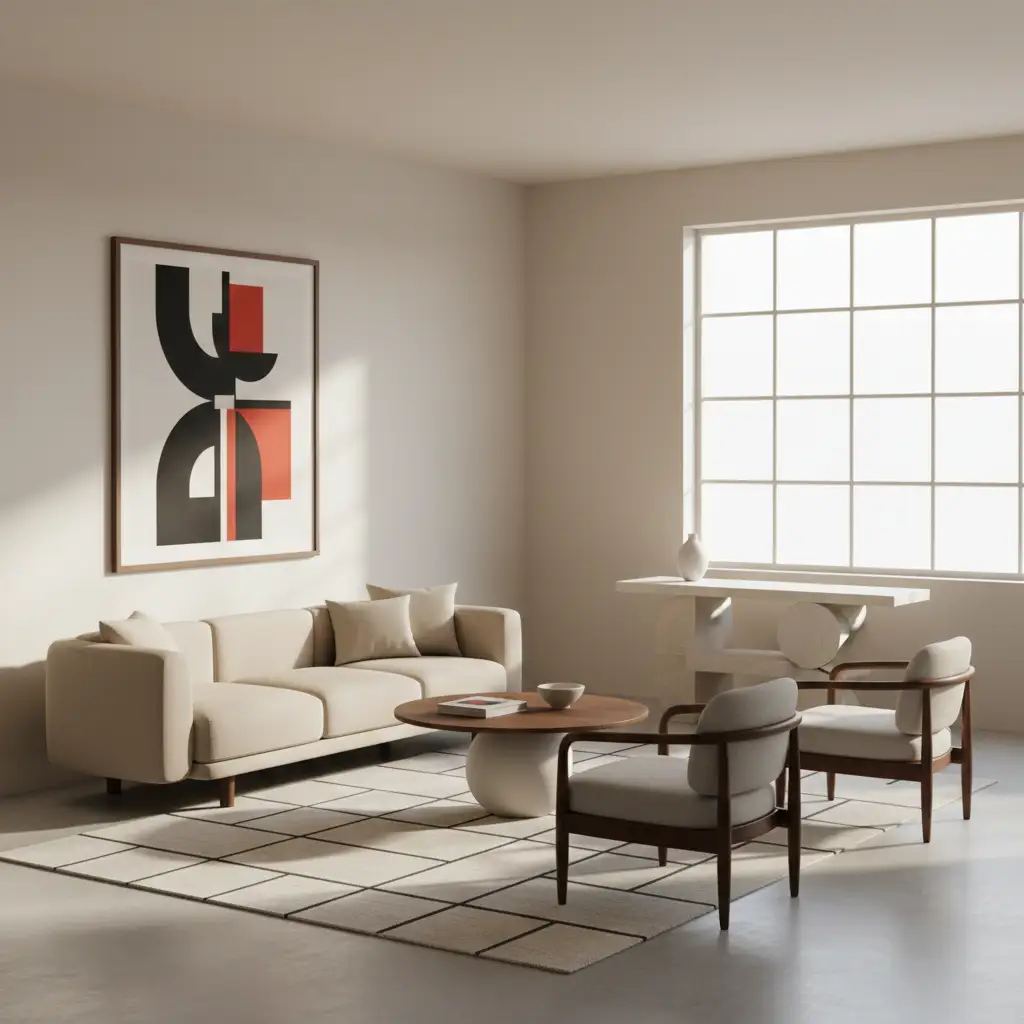
A common mistake is making the space too rigid. Adding softness through textiles and lighting keeps the room inviting rather than museum-like.
13. Contemporary Living Rooms That Feel Personal
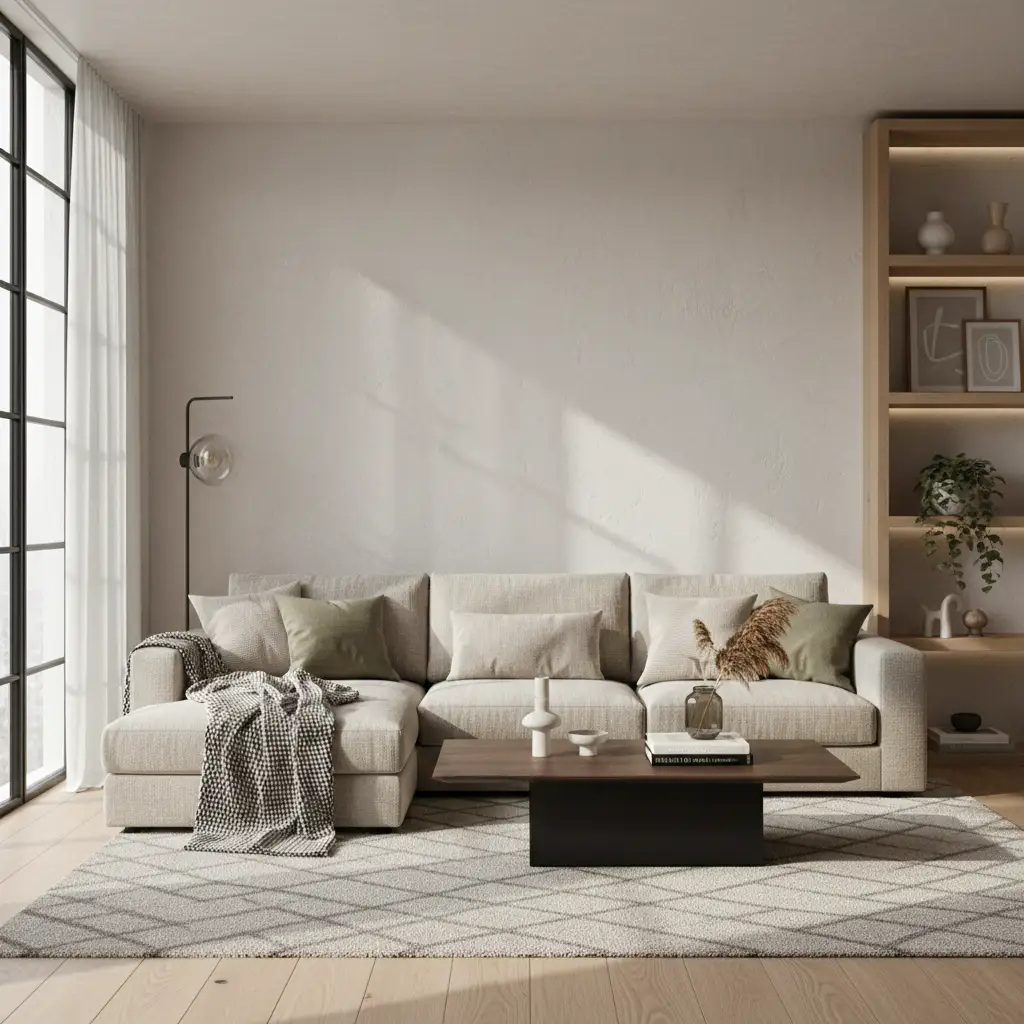
Contemporary living rooms in 2026 are less about rules and more about expression. Clean foundations meet personal artwork, layered textures, and intentional ideas that reflect how people actually live today.
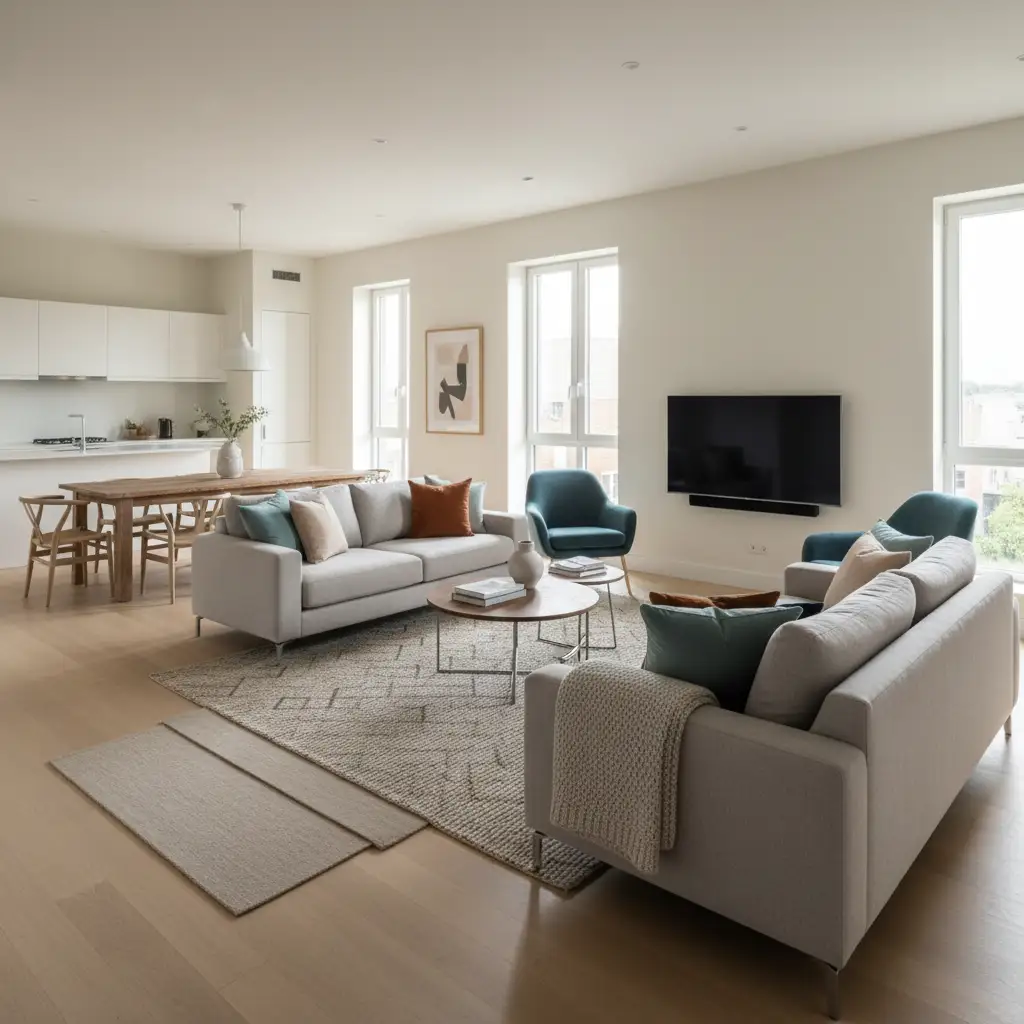
This approach works especially well for homeowners who evolve their space slowly, adding meaningful pieces over time rather than decorating all at once.
14. Mexican Craft Meets Modern Living
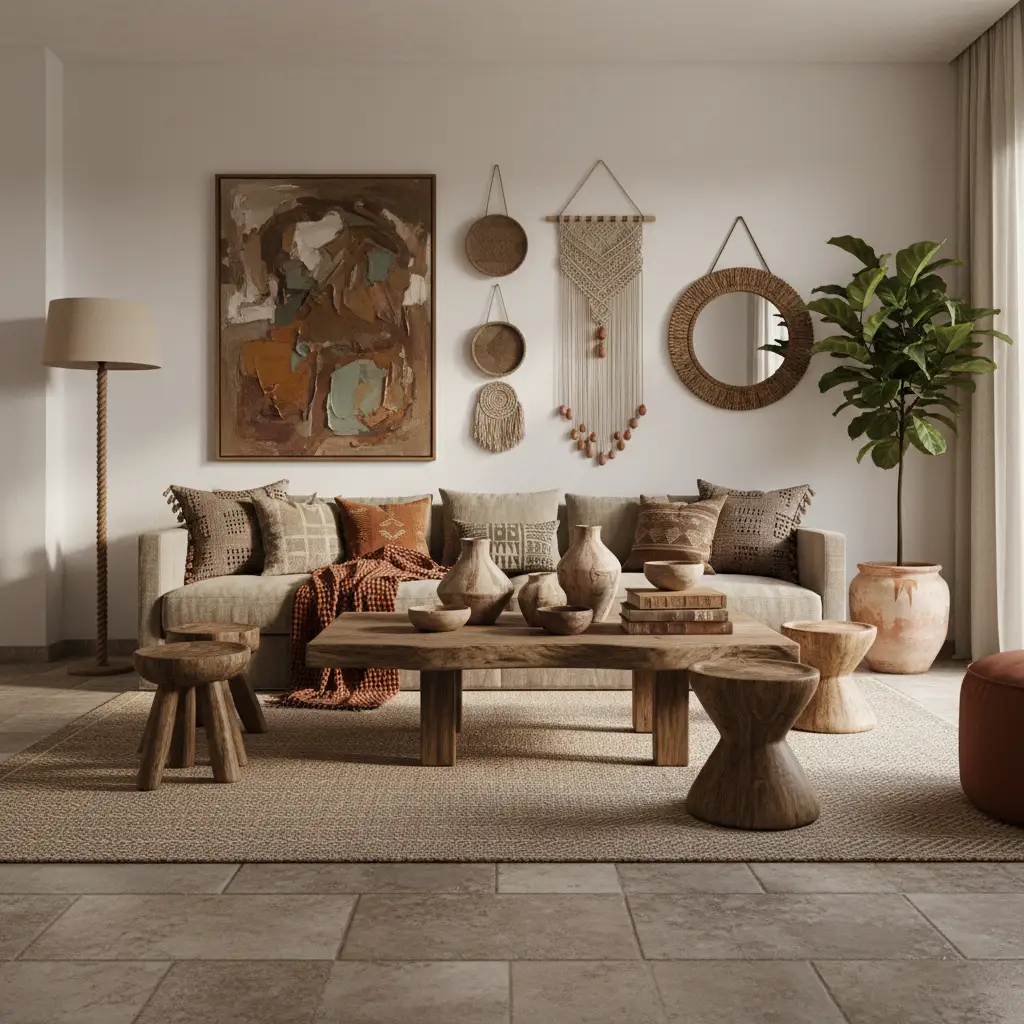
Influences from Mexican design are enriching American living rooms through handcrafted details, earthy materials, and expressive forms. Paired with modern layouts, the result feels grounded yet visually rich.
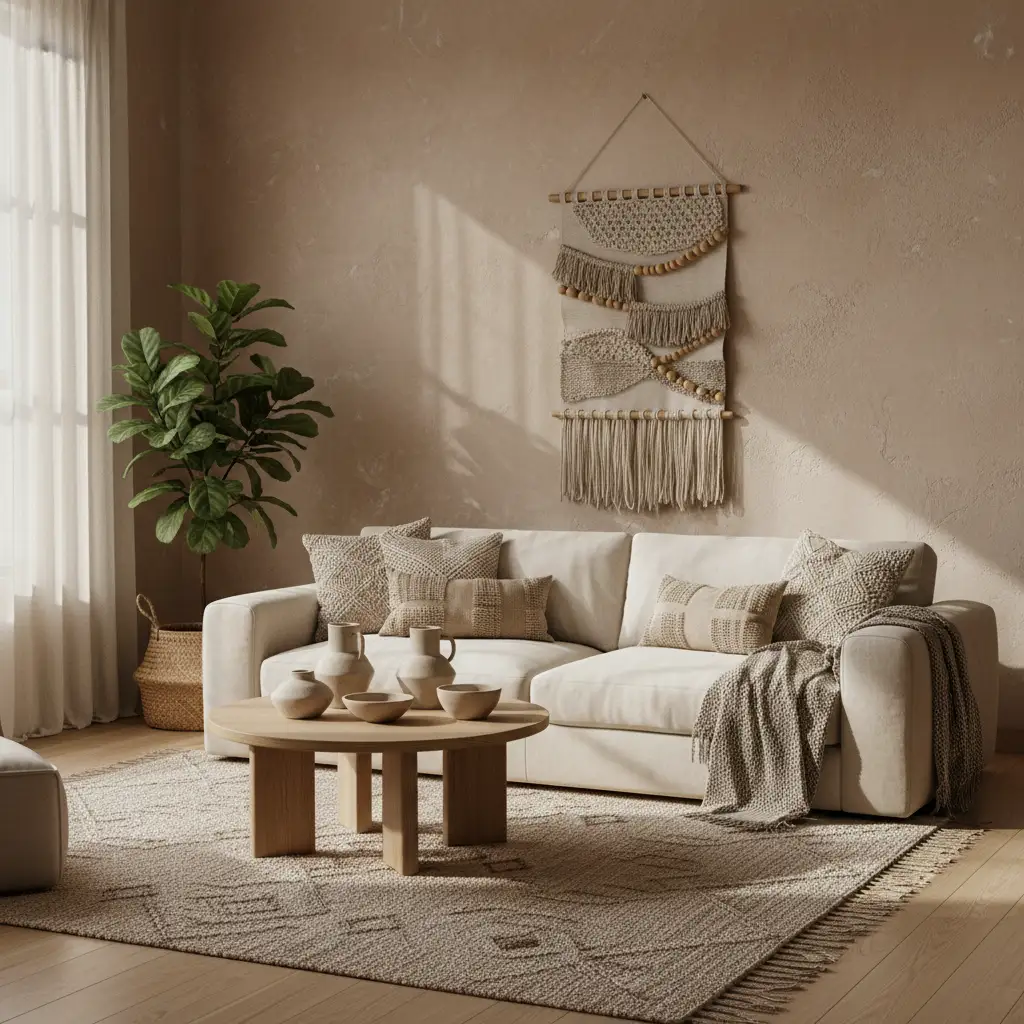
Where it works best: homes that already embrace texture—stucco walls, tile, or natural wood—allowing these elements to feel authentic rather than decorative.
15. Indian-Inspired Color and Pattern Balance
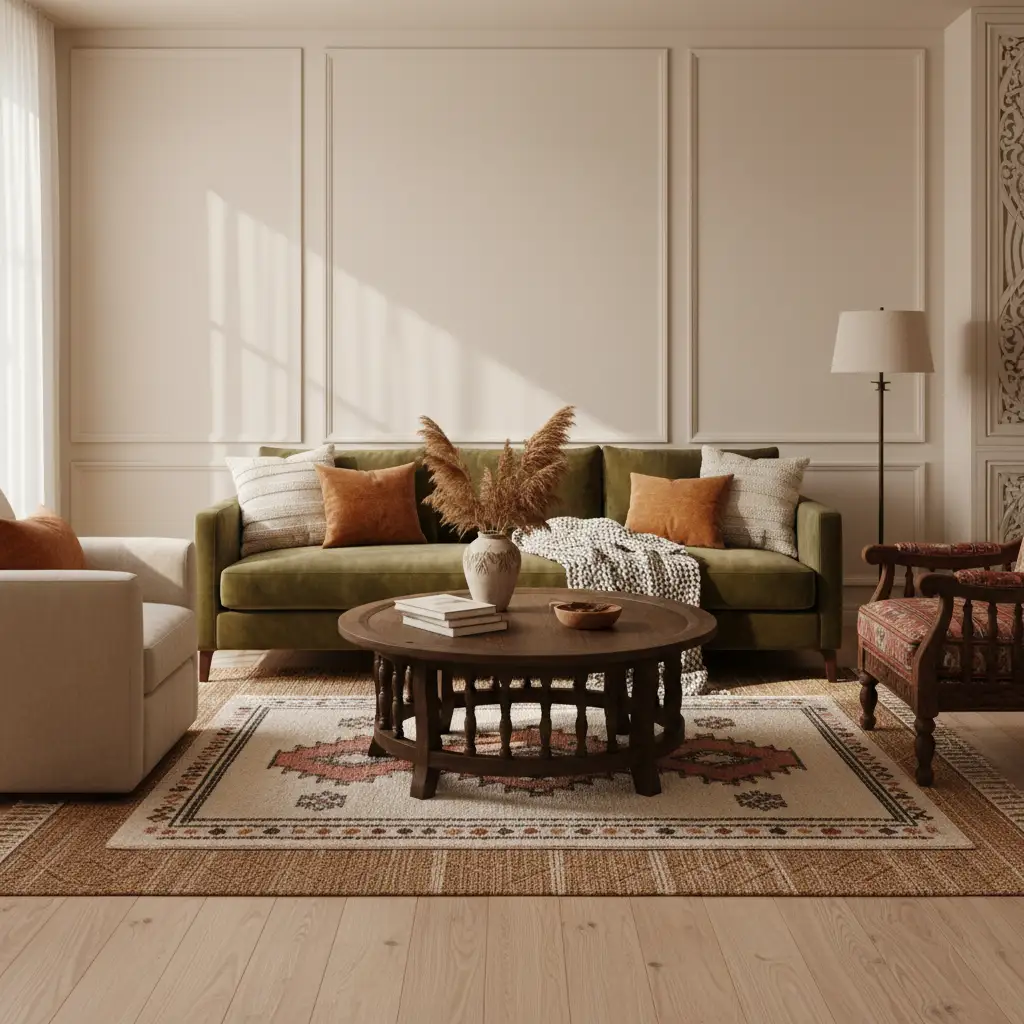
Indian design influence is appearing through layered textiles, rich hues, and thoughtful symmetry. In living rooms, these elements are edited carefully, letting colors shine without overwhelming the space.
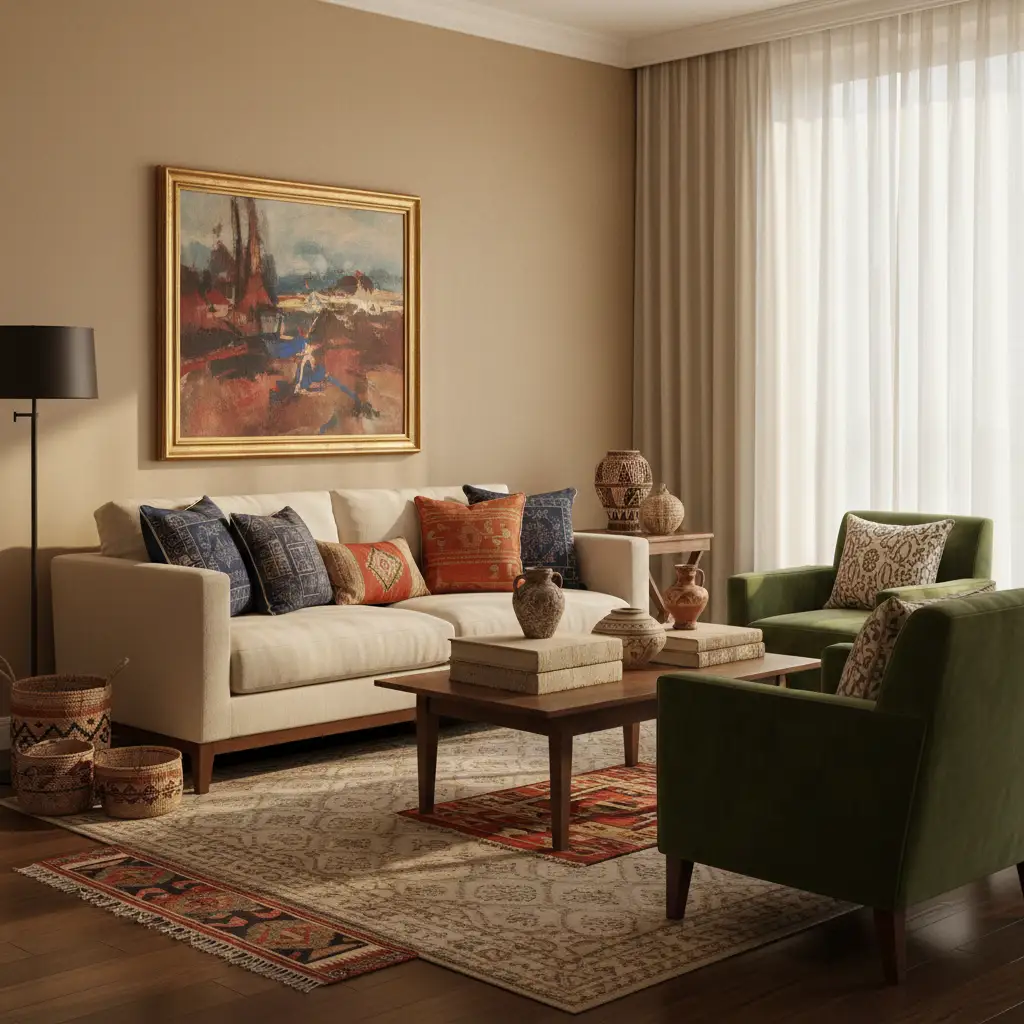
A budget-friendly approach is to start with textiles—pillows or a single rug—before committing to larger furniture or bold wall treatments.
16. Green Living Rooms That Feel Restorative
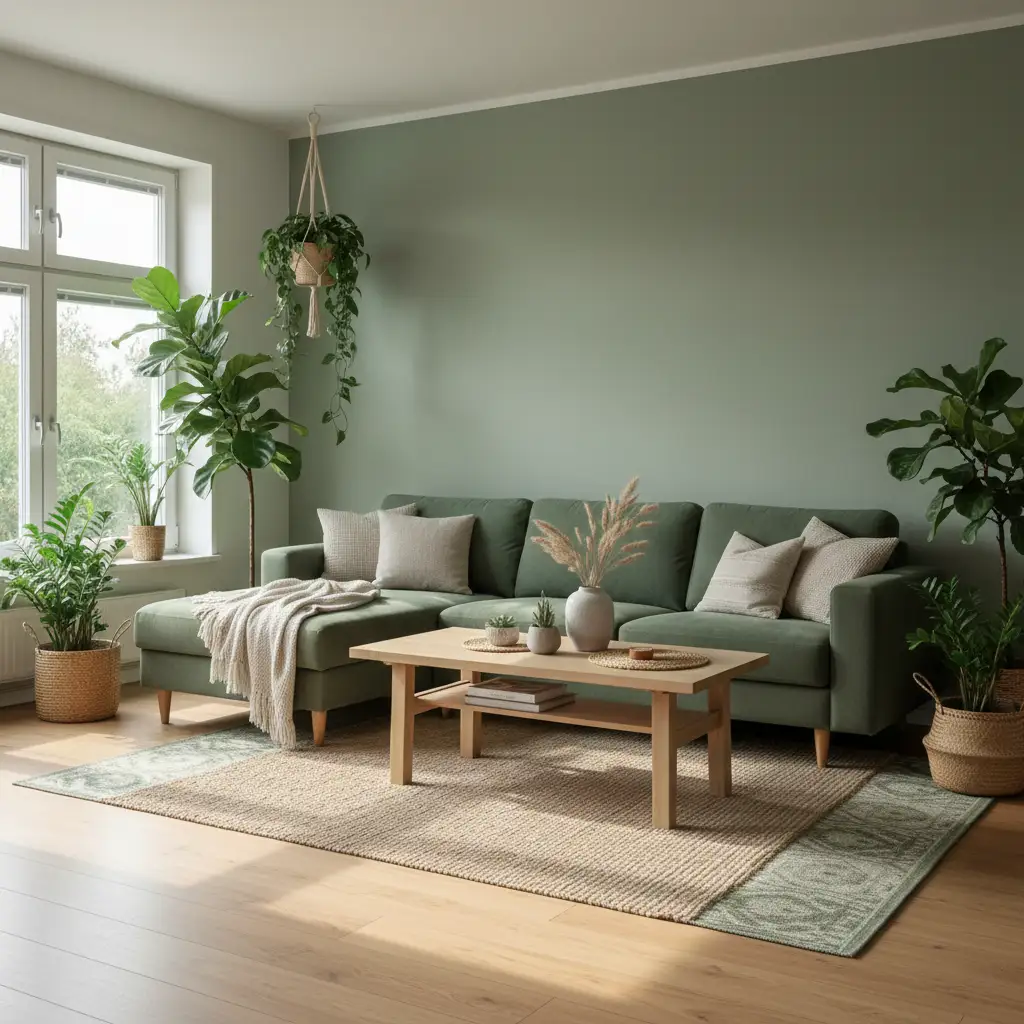
Living rooms centered on Green tones are becoming synonymous with calm. From soft sage walls to olive upholstery, this palette supports relaxation while pairing beautifully with natural light and organic materials.
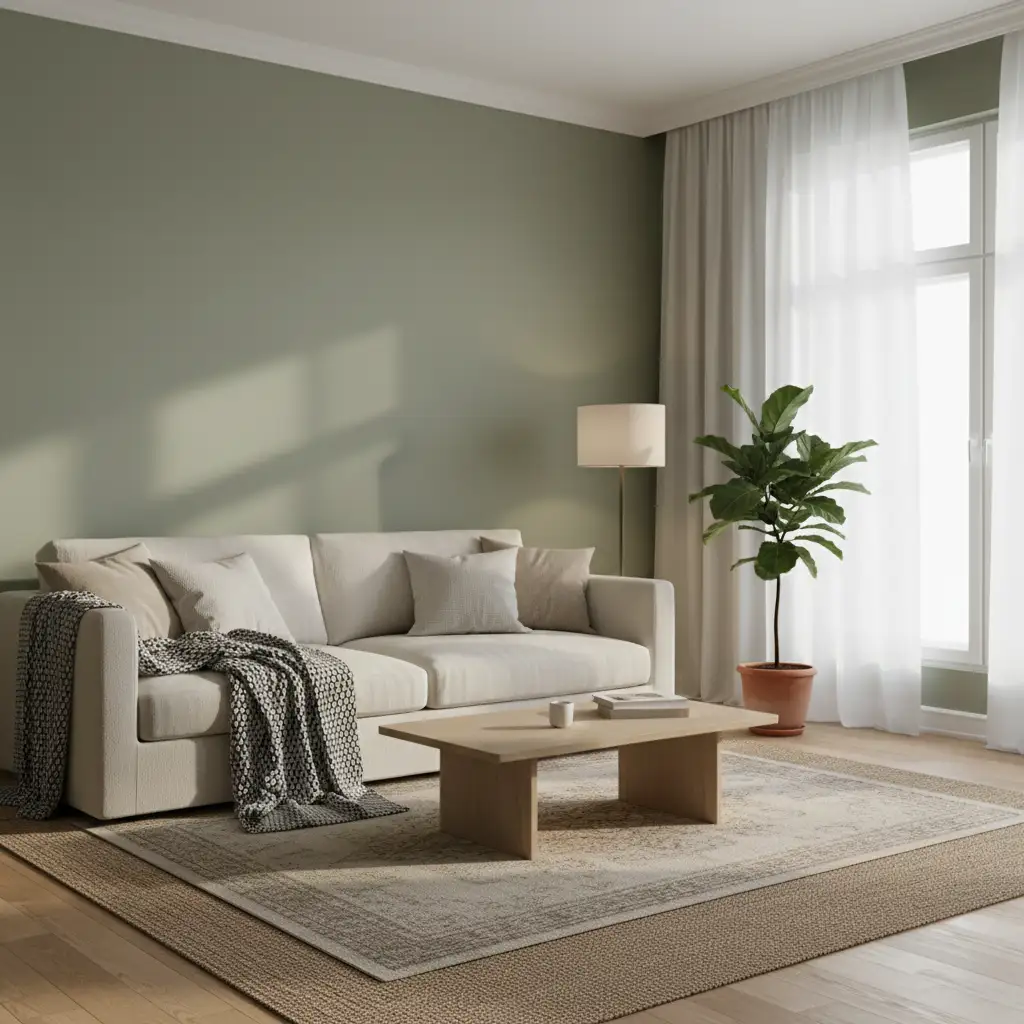
Designers often note that homeowners respond emotionally to green spaces, describing them as easier to unwind in after long workdays.
17. Grey Done Right with Texture
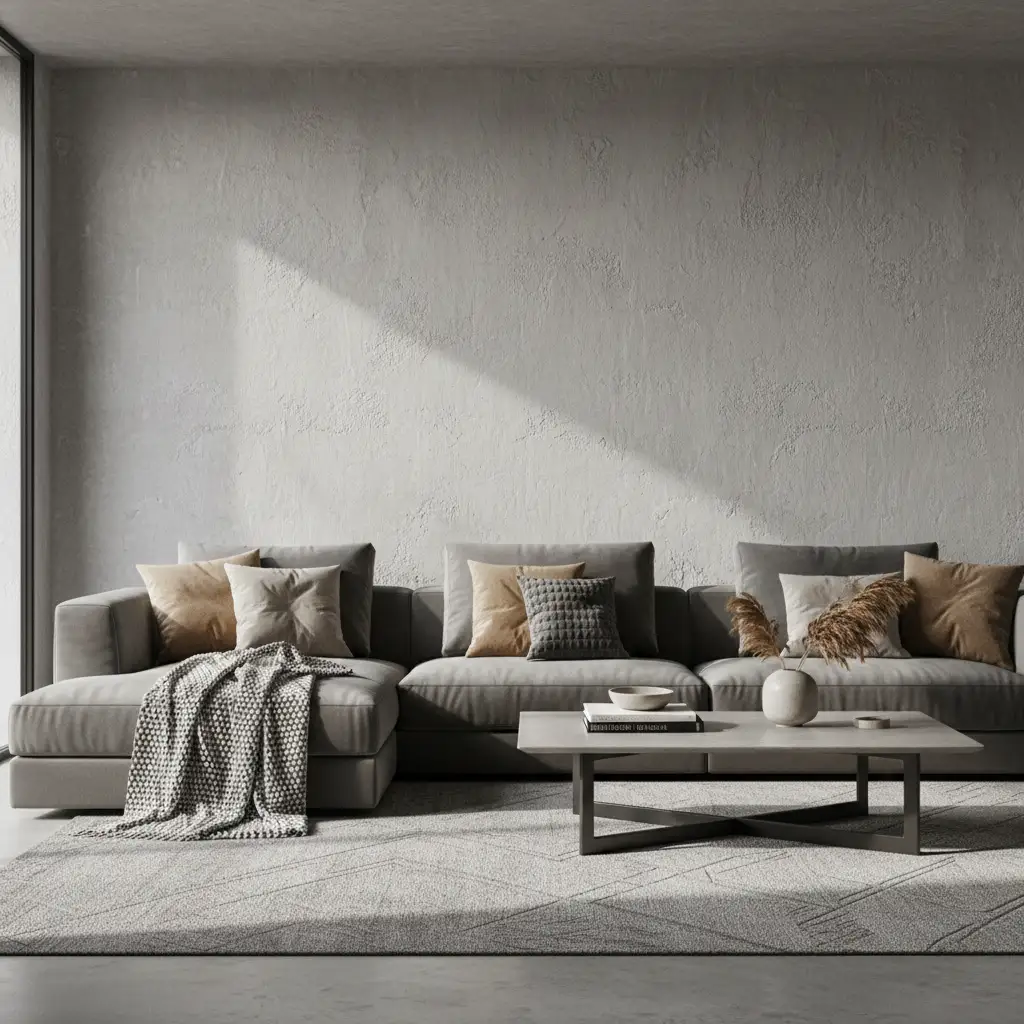
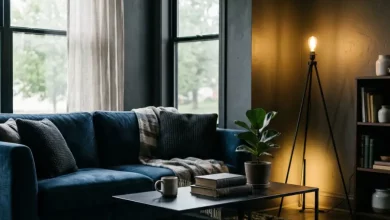
Grey living rooms are shifting away from flat finishes toward depth and texture. When layered properly, grey becomes warm, modern, and incredibly versatile across different home styles.
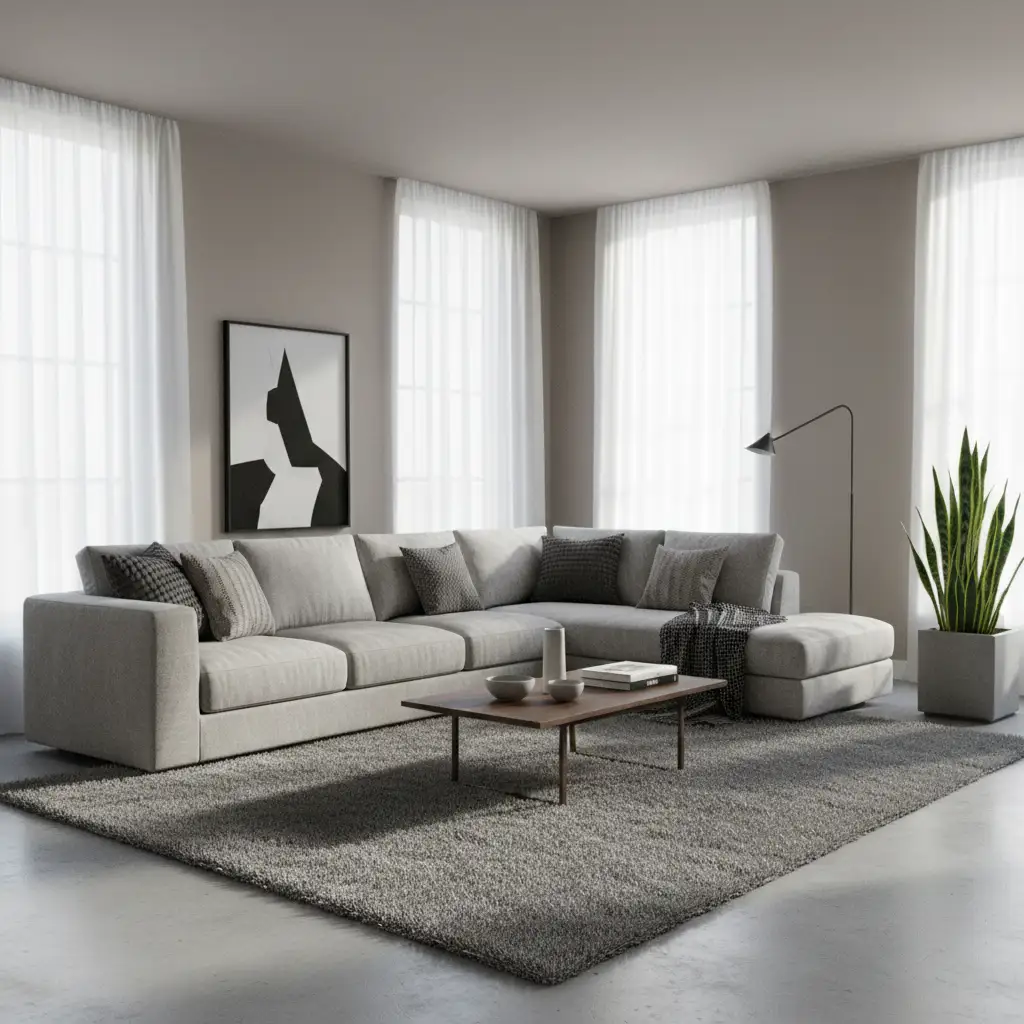
A practical insight: mixing warm and cool greys prevents the space from feeling flat or overly corporate.
18. Arch Details as a Soft Statement
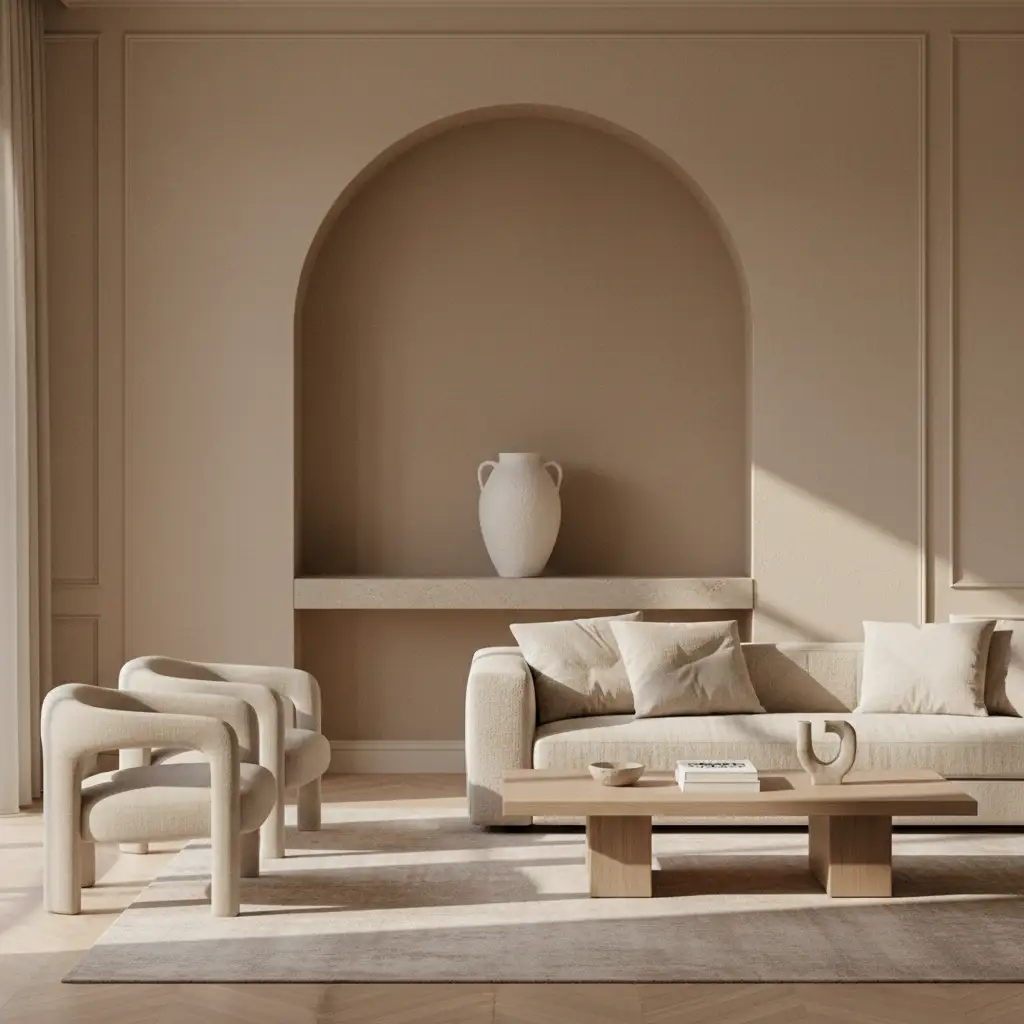
Architectural Arch elements are defining living rooms through niches, doorways, and wall details. These curves soften modern interiors while adding visual rhythm without clutter.
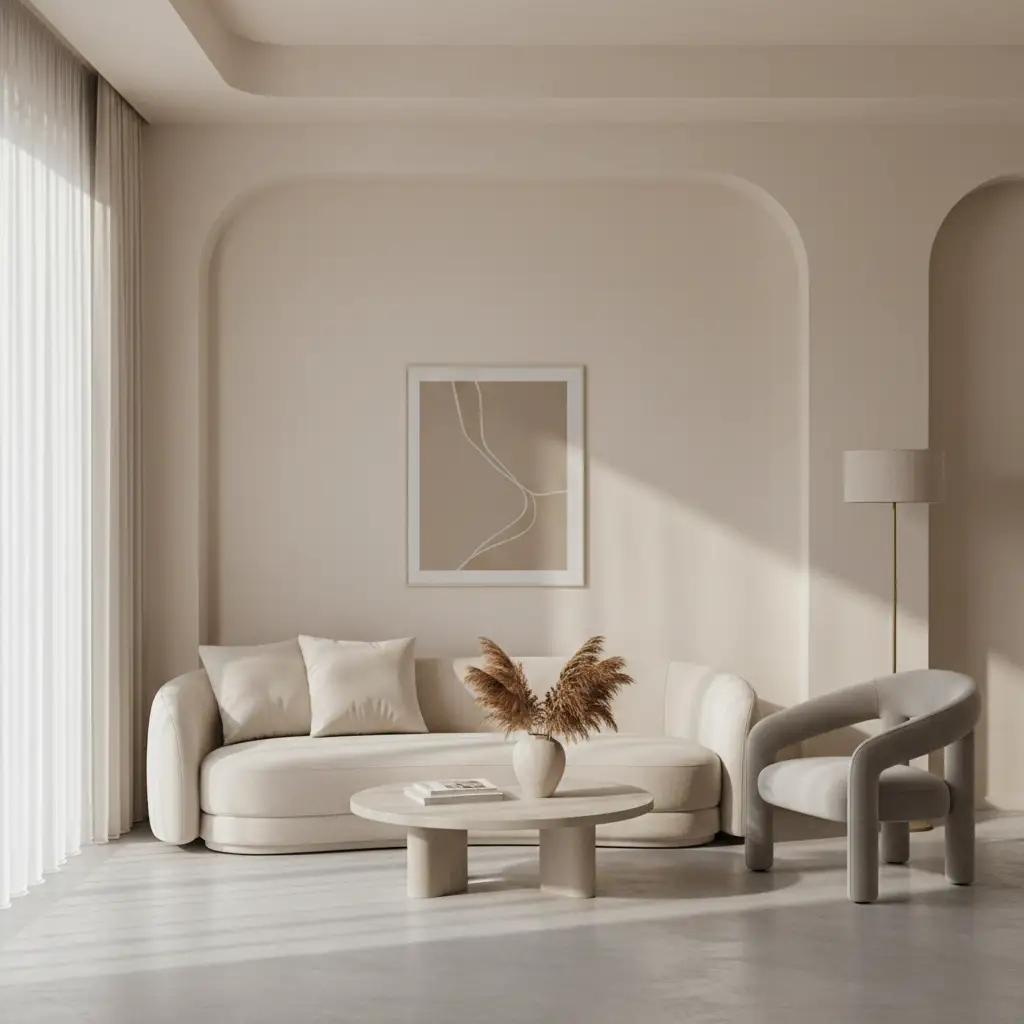
Many homeowners start small—adding an arched bookshelf or plaster niche—before committing to structural changes.
19. Minecraft-Inspired Modular Thinking
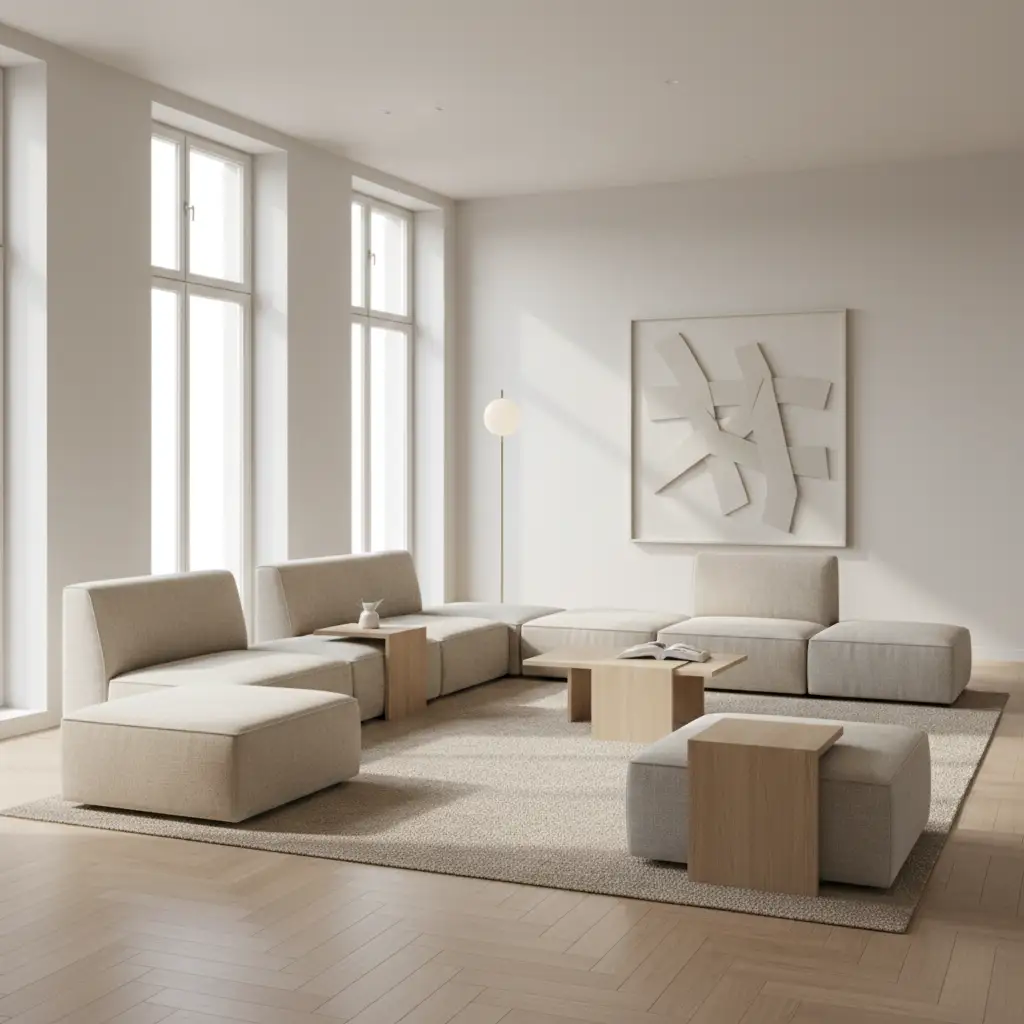
Unexpectedly, Minecraft-inspired modular thinking is influencing living room layouts. Block-like forms, flexible furniture, and playful structure support evolving needs, especially in family homes.
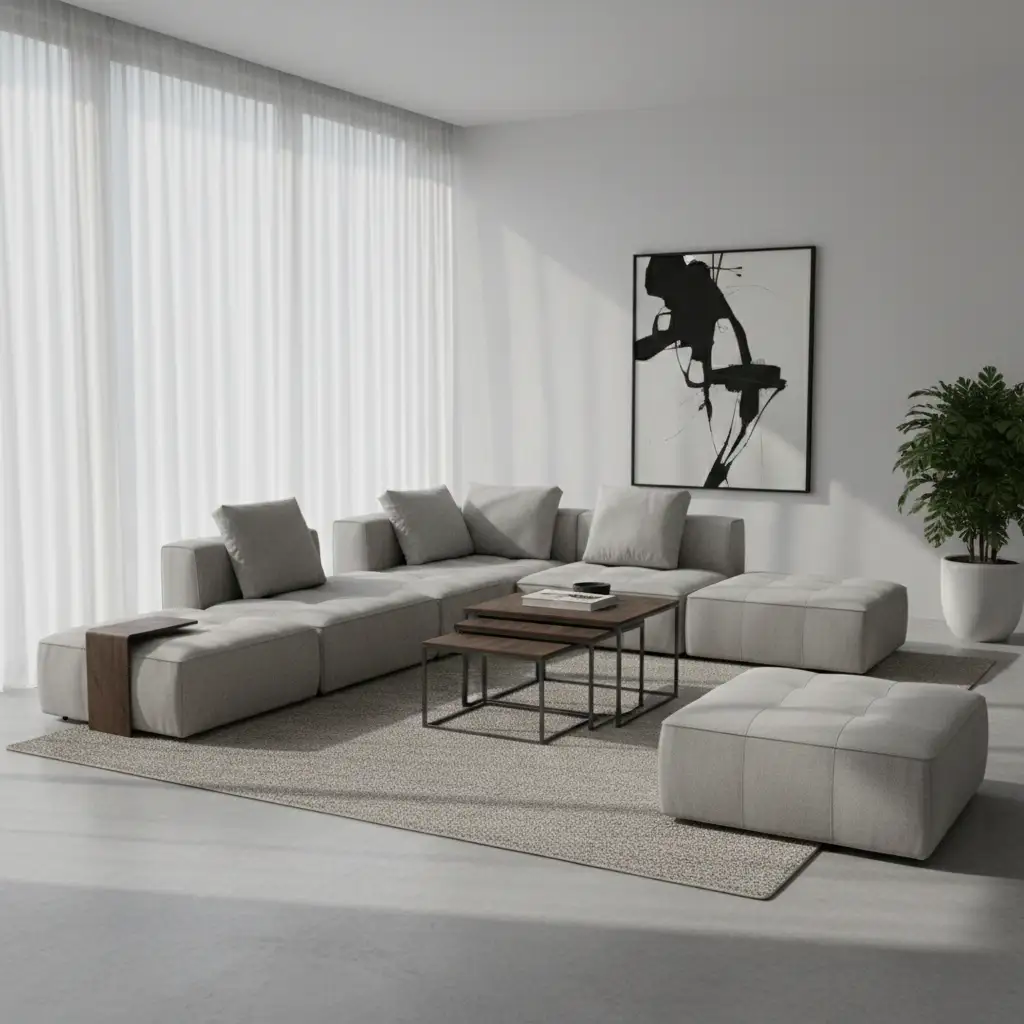
This approach reflects real homeowner behavior: rooms that change configuration for work, play, and entertaining.
20. Classic Foundations with Modern Updates
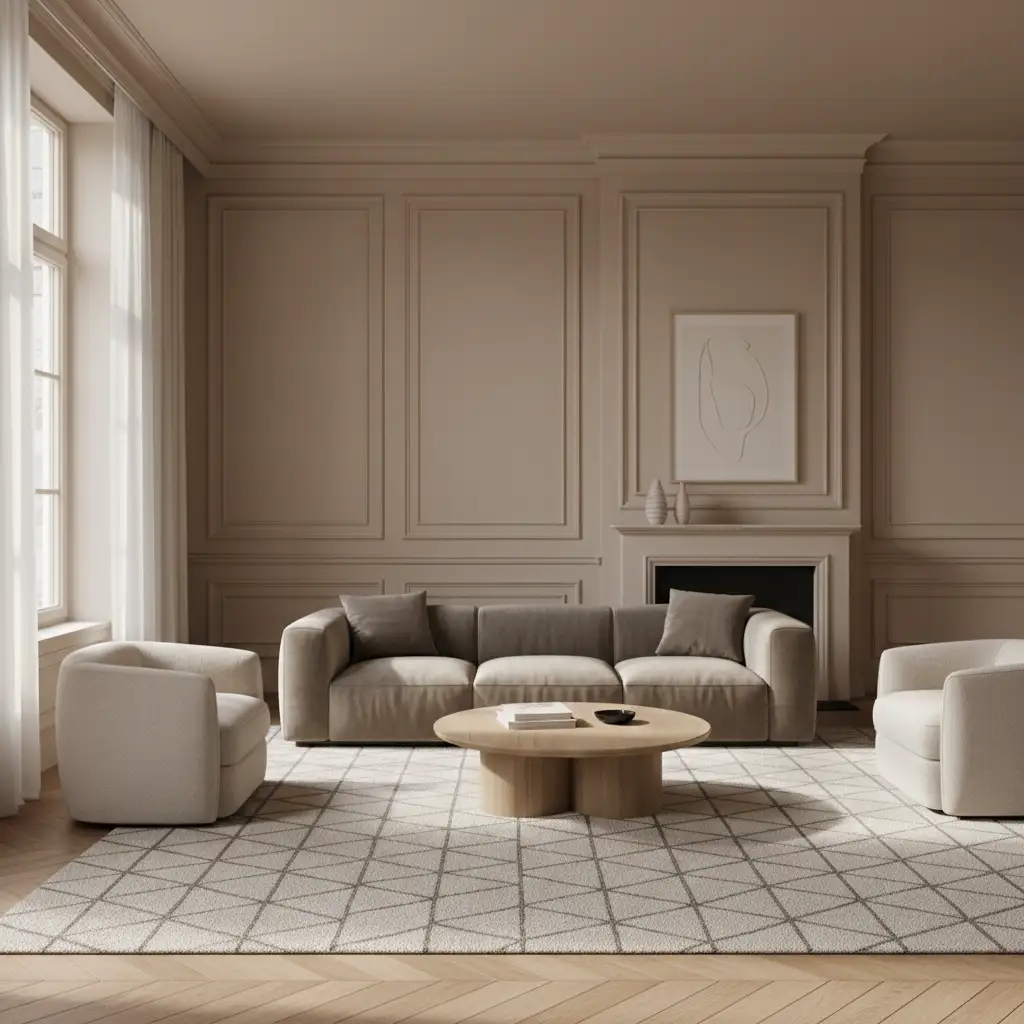
Blending Classic structure with modern comfort is a defining trend. Traditional layouts gain new life through updated materials, streamlined furniture, and thoughtful lighting choices.
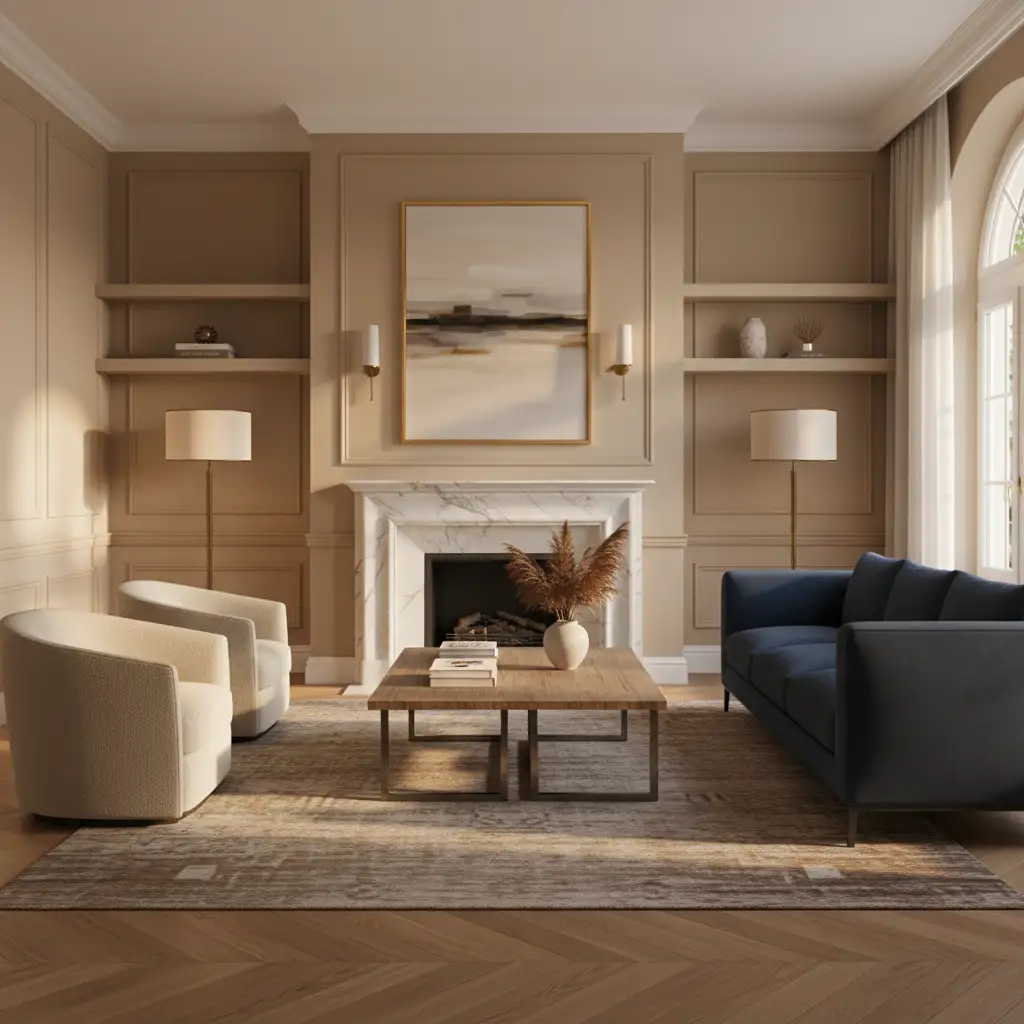
Where it works best: long-term homes where owners want flexibility to refresh decor without reworking the entire space.
21. Purple Accents Used with Restraint
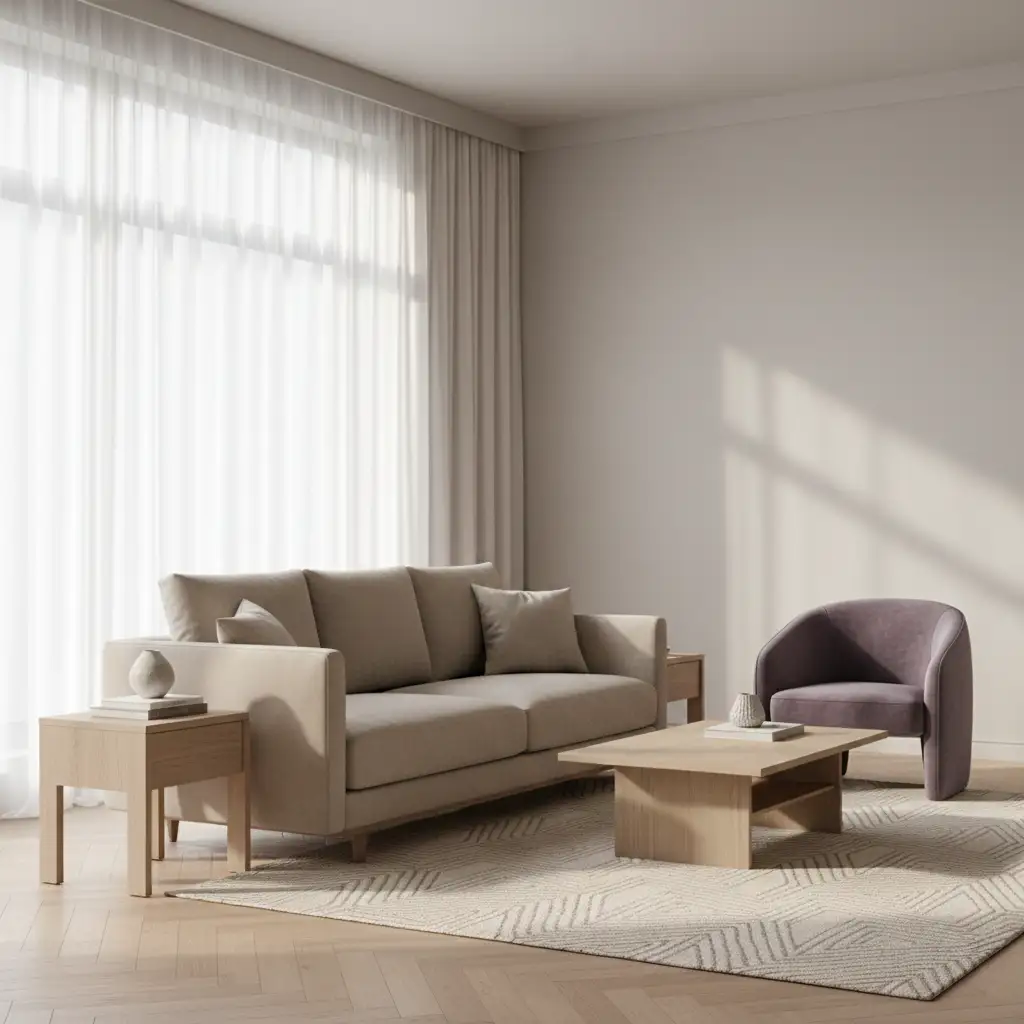
In 2026, Purple is stepping into living rooms quietly rather than boldly. Used in accent chairs, pillows, or art, it brings depth without overpowering the space. When paired with neutral surroundings, purple feels sophisticated, modern, and surprisingly versatile.
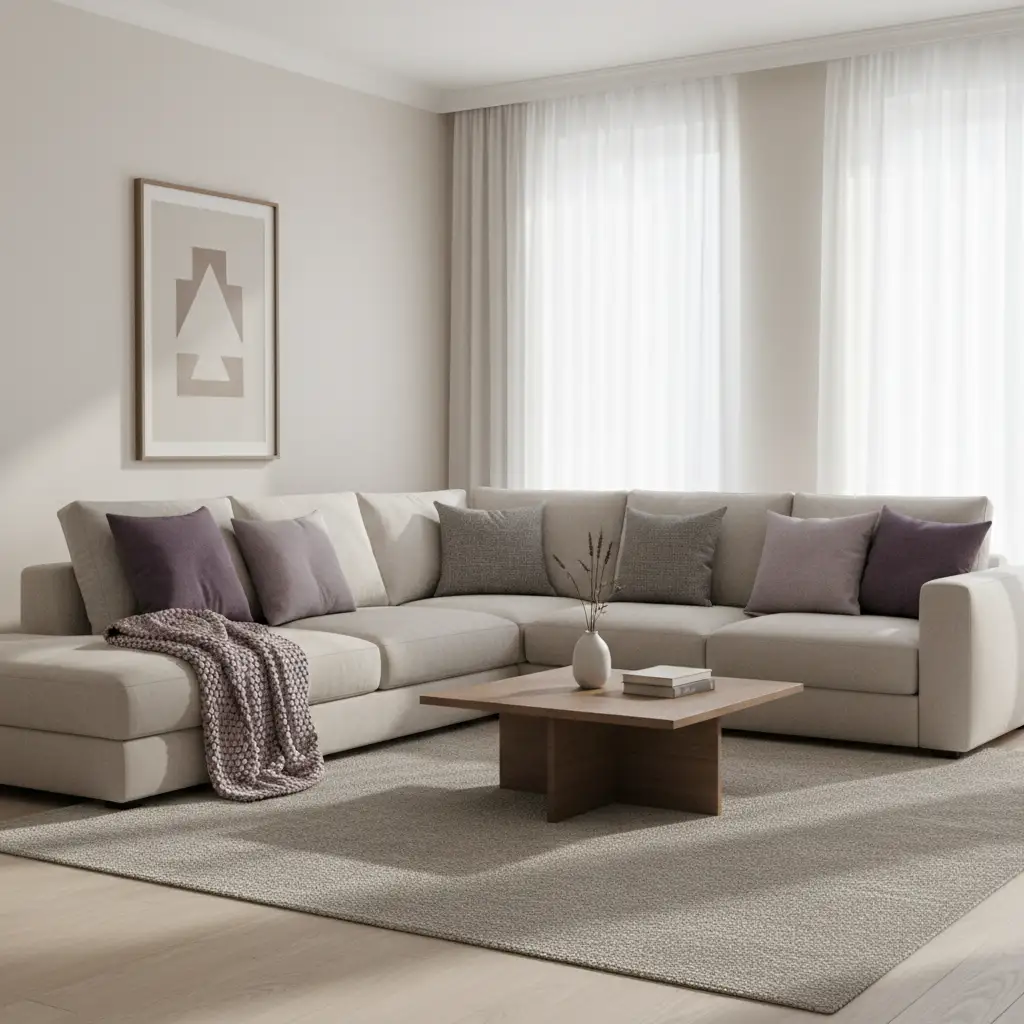
A common mistake is overusing the color. Designers recommend limiting purple to one or two focal elements so it reads as intentional rather than trendy.
22. Wooden Living Rooms with Modern Lines
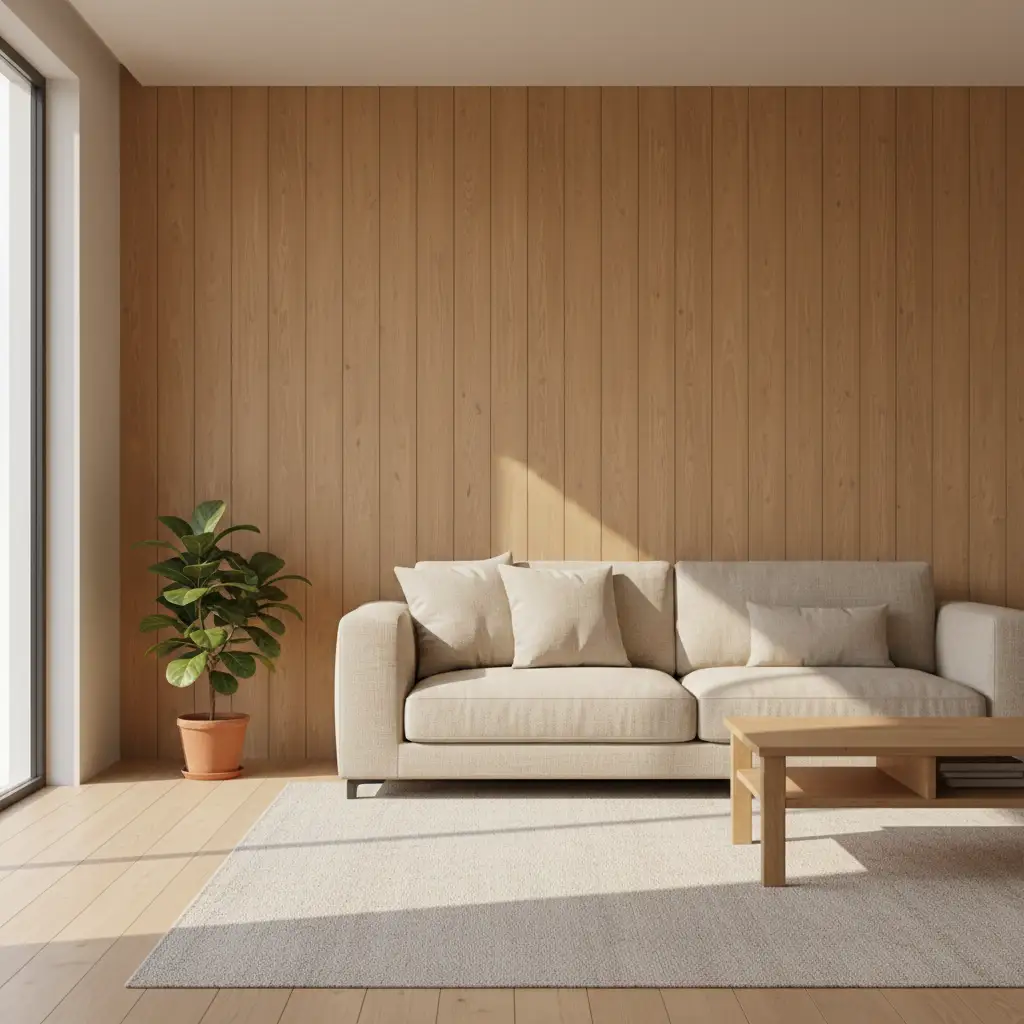
Wooden interiors are gaining traction as homeowners seek warmth and authenticity. In living rooms, natural wood finishes are paired with clean, modern lines, creating spaces that feel grounded but not rustic or heavy.
Where it works best: homes with good natural light. Sunlight enhances wood grain and prevents the room from feeling dark or enclosed.
23. Minimal Living Rooms That Still Feel Lived-In
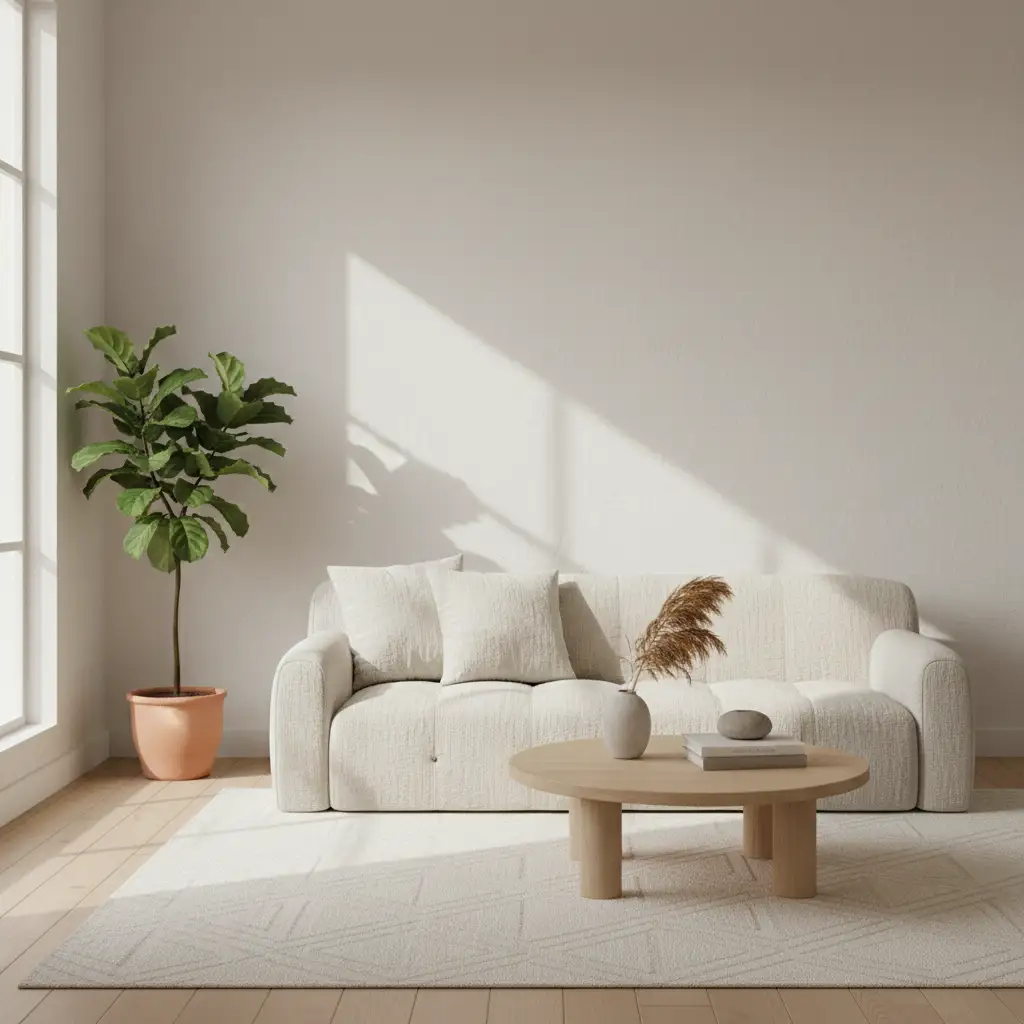
Minimal living rooms in 2026 are moving away from stark perfection. Soft fabrics, personal objects, and thoughtful ideas allow minimal spaces to feel human, relaxed, and genuinely welcoming.
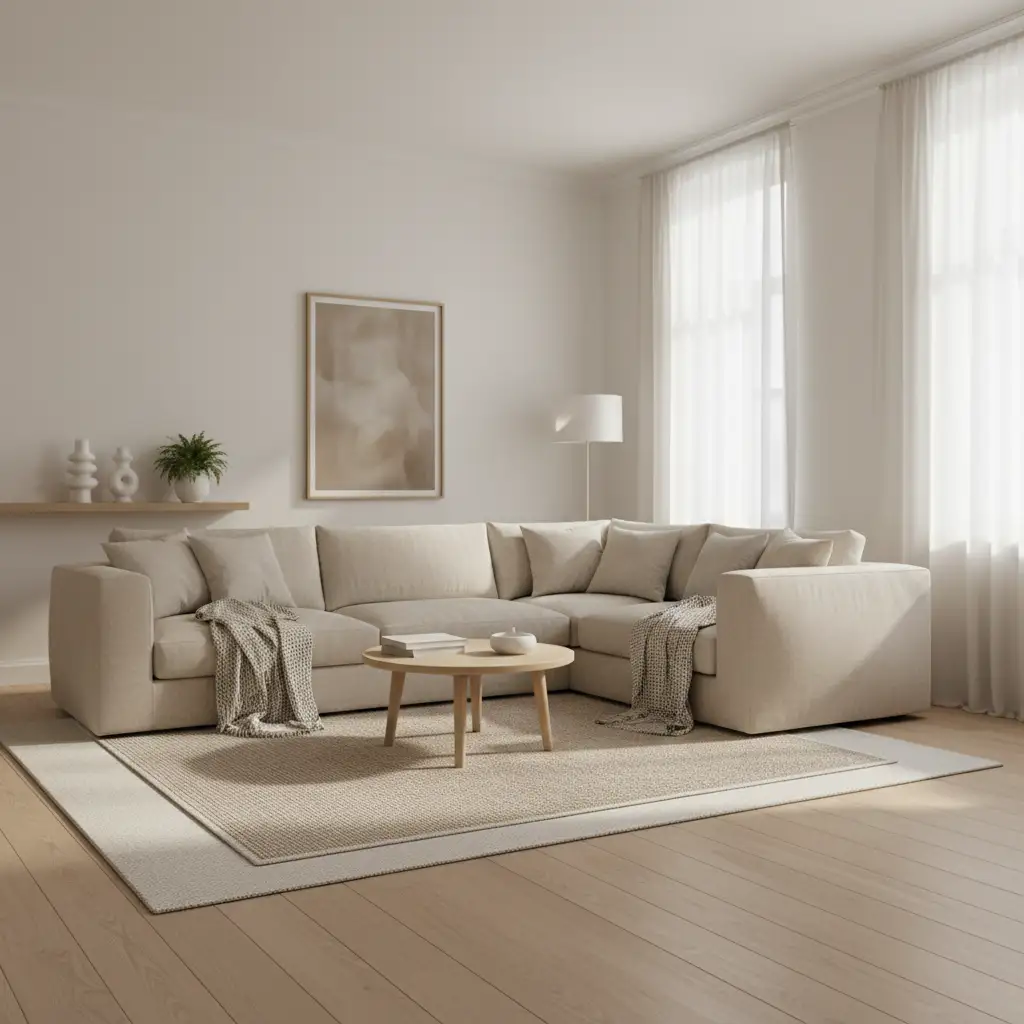
A micro anecdote often shared by homeowners: adding just one personal item—a book stack or ceramic bowl—makes the room feel instantly more livable.
24. Traditional Layouts Updated for Modern Life
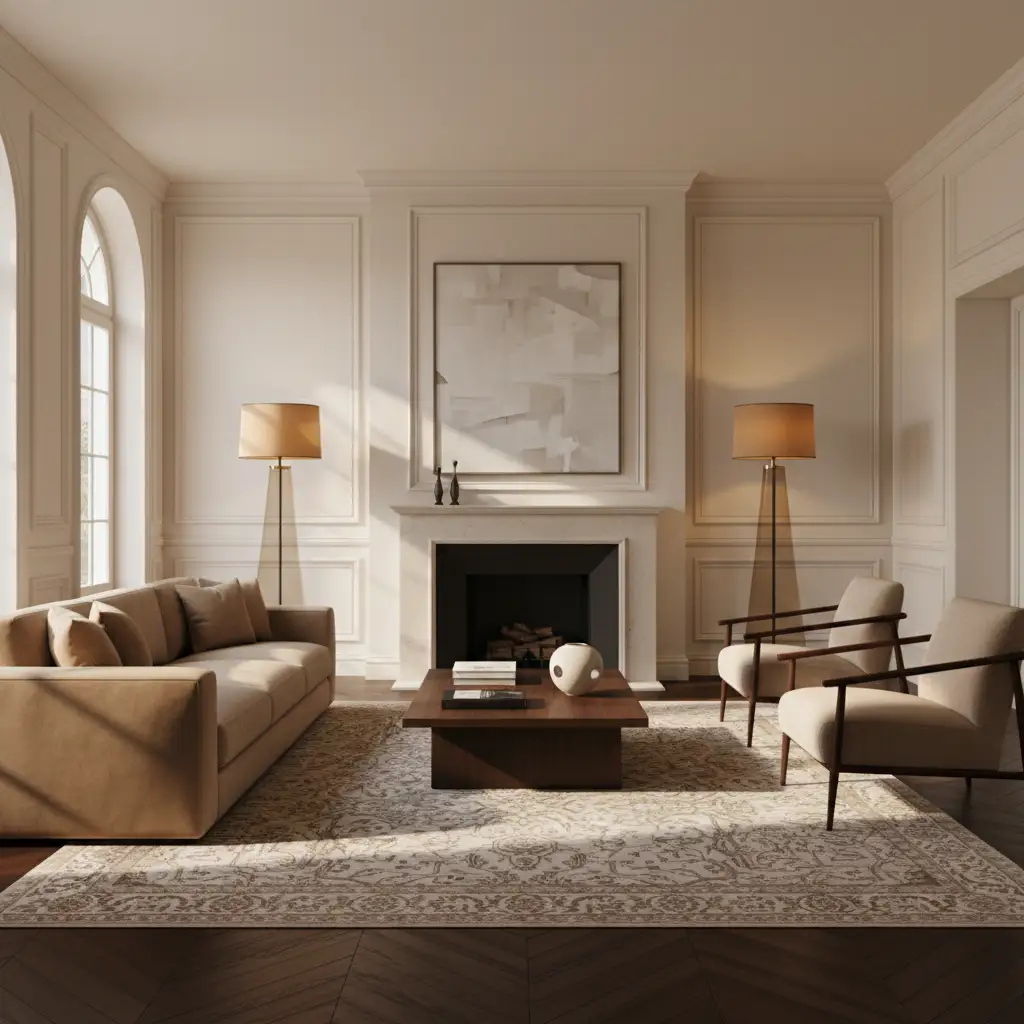
Traditional living room layouts are being refreshed to suit contemporary routines. Classic furniture arrangements remain, but updated materials, simplified forms, and flexible seating adapt them for today’s lifestyles.
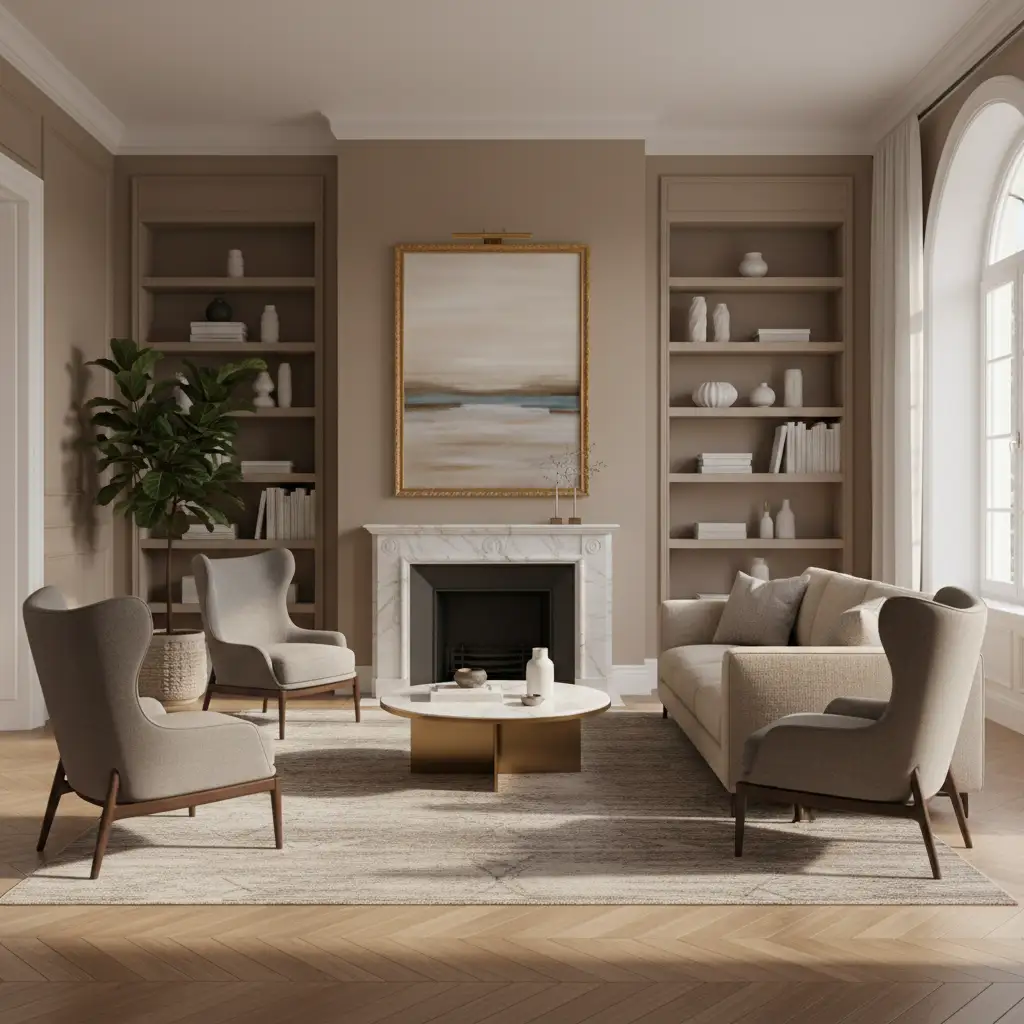
From an American lifestyle perspective, this works well for households that host often—maintaining familiarity while offering comfort and flexibility.
Living room design in 2026 is all about intention, comfort, and personality. Whether you’re planning a full refresh or saving ideas for later, these trends offer flexible inspiration. Share your favorite style or your own living room challenges in the comments—we’d love to hear how you’re shaping your space.